
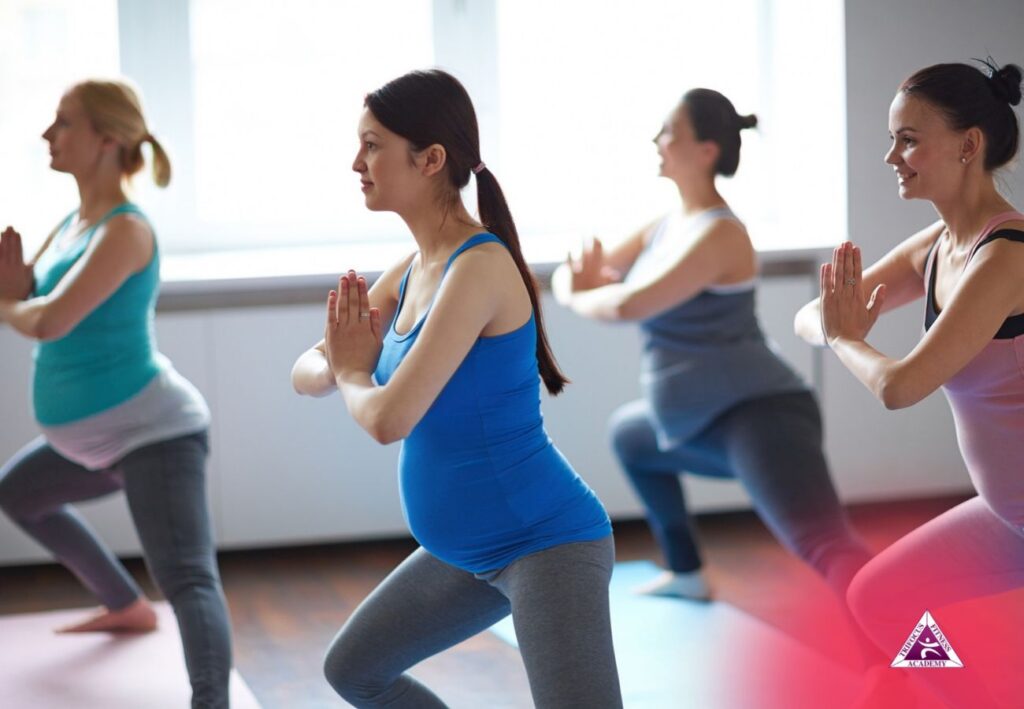
Multiple physical and physiological changes can impact balance, posture, mobility, energy levels and exercise tolerance during pregnancy. For fitness programming, pregnancy may be considered a Special Populations context in which physical activity needs to be screened, modified and considered for everyone’s pregnancy stage and health status. When exercised correctly, yoga can provide a flexible means of activity during pregnancy. Modified prenatal yoga usually incorporates gentle movements, stretching, breathing, relaxation, and body awareness. No two pregnancies are the same, so no two pregnancies should be treated the same in yoga practice. Past exercise history, medical condition, pregnancy issues, fatigue, discomfort, and medical advice may impact participation.
Adapt Special Population Yoga to Physical Changes During Pregnancy
As you progress through pregnancy, your posture, weight distribution, and how everyday exercise feels can change. Special Population yoga should acknowledge these changes and modify movement to suit the participant’s needs, rather than assuming they can still move the same way they did before pregnancy. As the abdomen grows, some positions may become uncomfortable or impractical, or balance may shift and affect confidence in standing poses. You can make exercises easier to control by widening your stance, adding support, reducing the range of motion, and slowing transitions.
Yoga can also provide gentle mobility in parts of the body like the shoulders, hips, upper back, and legs, which may have been affected by the changes. Don’t think of flexibility as a race. You don’t need to push for deeper stretches, because they may cause discomfort due to pregnancy-related changes in joints and tissues when you move. The main concern is to keep it controlled and comfortable. Also, positions that involve lying on your back for a long time should be adapted as pregnancy advances. For the rest, a diverse-population instructor may use side-lying, seated, supported, or standing substitutes as appropriate.
Use Breathing and Gentle Movement to Support Pregnancy Wellness
Yoga isn’t only about flexibility. Special Population pregnancy sessions may incorporate controlled movement with breathing/relaxation exercises as a manageable form of exercise when energy levels, comfort or mobility may shift during pregnancy. Breathing is often part of prenatal yoga, with gentle breathing exercises included with movement. These can help participants slow down, focus on their posture, and become more aware of how their body responds during exercise.
This slower pace can also help participants adjust the intensity more easily. Pregnancy is not the time to think you have to push yourself to the limit to get a good workout. NHS advice is that moderate activity is enough to keep you able to hold a conversation while exercising. Yoga can also help maintain regular physical activity. Exercise supports fitness and offers several potential health benefits during pregnancy. Consider diverse populations; however, teach yoga accurately. It is not recommended to be promoted as a remedy for pregnancy issues, anxiety disorders, pain disorders or other health-related concerns.
Modify Poses for Balance, Comfort and Changing Mobility
Balance can get harder as pregnancy progresses, as the body’s centre of gravity moves. Special Population yoga should therefore minimise the risk of falls and offer alternatives when a pose becomes unstable. Do standing poses close to a wall, a sturdy chair, or anything else that provides support. Participants should also keep a wider stance when needed and avoid ‘complicated’ balance postures when they no longer feel safe.
Make other changes based on comfort. Twisting (twists that go deep), stretching (stretching with force) or positions that compress or squeeze the abdomen should not be considered mandatory objectives. Simplify movements instead to help a person breathe easily and move without pain. Props may be helpful in some sessions. You can reduce a participant’s closeness to the other person by using cushions, blocks, blankets, walls, or chairs for extra support.
Diverse population programming must also account for a wide range of fatigue. If someone can do a longer session comfortably the first week, they might need more rest in a later session. Symptoms in pregnancy may vary from day to day. Teachers should thus promote open dialogue about comfort and ease. Never break or alter a pose to the point of failure. The goal is to keep body movement balanced and to respond intelligently to the changing needs of the body during pregnancy.
Prioritise Safety and Know When Exercise Should Stop
Safety is key when teaching yoga for Special Populations during pregnancy. Teachers should know their scope of practice and should never make a clinical judgement that goes beyond medical recommendations or affirm that a specific exercise is safe when there is a clinical concern. Individual guidance from an obstetrician, midwife, physiotherapist or other qualified health care professional may be necessary before a participant with medical or obstetric complications can participate.
The environment is also important. Encourage participants to drink, conduct sessions in moderate weather, and do not push participants beyond their comfort zone. Heed warnings when exercising. ACOG has provided a list of symptoms such as vaginal bleeding, abdominal pain, regular painful contractions, leakage of fluid, dizziness, chest pain, difficulty breathing before exercise, calf pain or swelling, and loss of muscle strength that affect balance as indications to stop exercise and seek appropriate advice.
Special Population instructors should have a basic understanding of referral procedures and emergency procedures applicable to their job site. New entrants should also start slowly. If a person has not done yoga before, do not expect them to start taking yoga classes that involve difficult poses suddenly.
Conclusion
Yoga is a flexible exercise that can be adapted for use during pregnancy when done properly and with awareness of the individual’s needs. Special Population yoga does not necessarily involve high intensity or competitive activity; it can include gentle movement, stretching, breathing, relaxation, and body awareness. It’s also easy to program. Teachers can use standing supports, shorten movements, avoid long periods of lying on the back, and add props as the pregnancy advances.
Contact the Trifocus Fitness Academy
The Trifocus Fitness Academy offers a specialised online and internationally accredited Exercise and Special Populations Course designed to equip professionals with all the skills and knowledge needed to succeed as a professional Personal Trainer.

Frequently Asked Questions
Special Population yoga may support gentle movement, mobility, breathing, body awareness, and relaxation during pregnancy. Modify exercises based on comfort, pregnancy, health, and professional advice.
Yoga can be appropriate during an uncomplicated pregnancy when poses are suitably modified. Movements should not cause discomfort, overheating, instability, or excessive strain, and participants should follow any relevant healthcare recommendations.
Balance, posture, mobility, and shape change during pregnancy, which can affect how movement feels. Adjustments can enhance comfort and decrease the risk of falls without causing too much strain.
Yes. Other supportive equipment, such as chairs, cushions, blocks, blankets, and walls, can provide extra support and make some movements easier. Props may also help participants adjust their positions as mobility and balance change.
If you notice any concerning signs or symptoms (bleeding, dizziness, chest pain, severe discomfort, fluid leakage, unusual difficulty breathing, or loss of strength), stop exercising. Then seek appropriate medical advice.
No. Yoga for pregnancy can be part of a wider yoga practice, but it is not a replacement for antenatal care, medical treatment, physiotherapy, or advice from a qualified health care practitioner when needed.