
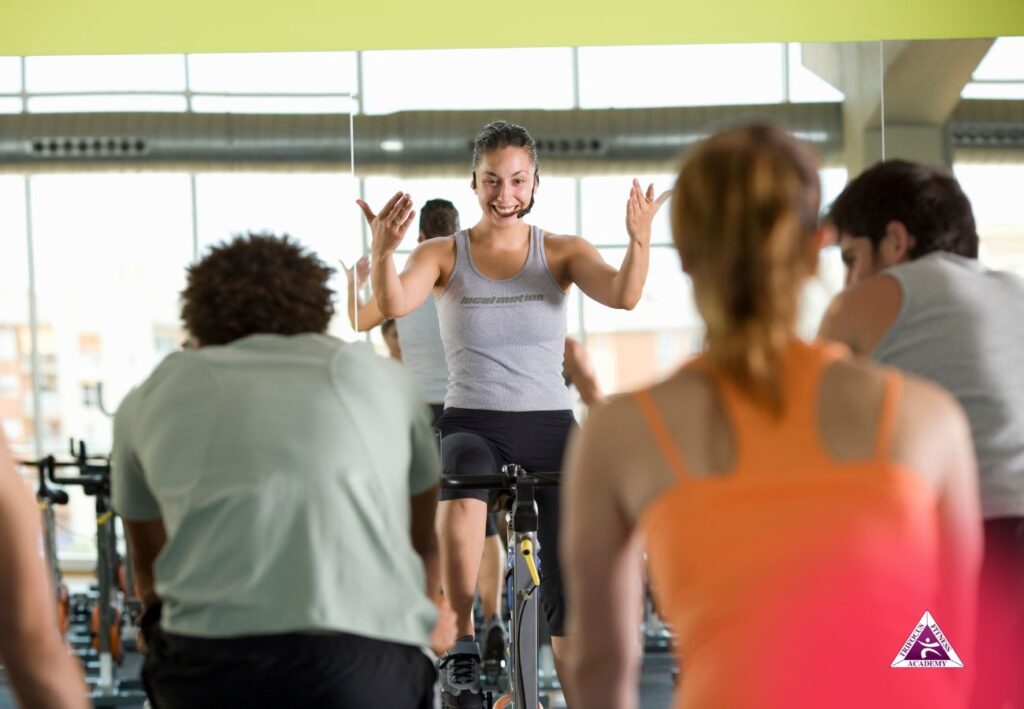
The ability to control energy and pace is an extremely important skill for successful group exercise teaching. Whether it’s high-intensity, strength-based, dance-inspired, or low-impact, participants look to the instructor to lead them through a routine that feels challenging but doable. Bad pacing can leave some people tired far too soon, while others feel underworked or bored. Energy is well managed, and classes feel balanced, motivating, and safe.
Group exercise space is a community of unique individuals who come in with different fitness levels, goals, and gas tanks. Newcomers to the gym and regulars who want intensity. A good pace allows teachers to accommodate that diversity without the class losing its momentum. It keeps participants in the room, helps them unwind, and ends the session with a sense of achievement rather than leaving them feeling depleted.
Energy management isn’t only a matter of physical force. It’s also the focus, the music choices, the instructor cues, and the flow between moves. It builds gradually, peaks at the right moments, and then gives space for recovery without losing momentum. This pulsation helps maintain a sense of connection and regular attendance.
Understanding Energy Demands in Group Exercise Settings
There are energy demands that every group exercise class places on participants; recognising this is a starting point for accurate pacing. The energy cost depends on factors such as class format, duration, intensity, and types of movement. “In a high-intensity interval class, for instance, you need to work in short bursts of high energy followed by rest, while in steady-state classes you’re dependent on maintaining power or output over time.
Teachers should also think about how energy ebbs and flows over the course of a class. People start at a medium energy level, pump up the volume during the main workout and then go into somewhat of a recovery mode by the end. When we try to go against such natural inclinations, we may exhaust ourselves prematurely or lose interest. A potent warm-up sends a message to the body and makes nervous system adjustments that help minimise later energy troughs (and overflows).
Mental energy is just as vital. That taxing of focus can be draining in complex choreography or fast instruction, particularly as class length increases. Simple instructions and clear, predictable patterns conserve attendees’ mental energy so they can continue the physical effort. When individuals are confused or overwhelmed, their energy plummets, even if they can handle the physical demands.
Energy levels are also influenced by the environment. Temperature, musical tempo, class size, and the room layout will all affect how participants perceive effort. Experienced teachers pace between these circumstances, increasing the intensity or setting a more gentle pace. By being attuned to the physical and mental energy demands, instructors can create classes that feel challenging without being exhausting. This sensitivity may promote improved adherence, greater participant gains, and more positive group exercise experiences.
Structuring Classes for Balanced Energy Output
The class structure is one of the most powerful ways to control energy, transition speed, and pacing. An effective group exercise class takes attendees through phases of enhancing, challenging and recovering energy in the proper order. This framework can prevent burnout and ensure that players stay engaged from the beginning of a game to the end.
The most effective classes have a distinct flow: warm-up, progressive build, peak effort, and cool-down. The warm-up should be used to raise the heart rate and increase mobility without expending energy. This stage manages expectations and primes participants both physically and psychologically. Attempting not to, or rushing through, this stage of preparation, will usually result in fatigue too early in the class.
The main phase should have periods of elevation followed by recovery. Nonstop, high-intensity with no breaks can be overwhelming for participants, he said, while too much recovery can disrupt the flow of the class. Levels of intensity can be switched out for participants to reboot without checking out, and intensity options can be provided for members to shift control of their energy while remaining part of the group.
Manage pace. It is not just the exercises you are doing, but also the transitions between them. Sleek transitions save energy and rhythm, while long breaks or vague directions destroy both. Music choice and cut can help create these transitions, adding and maintaining the right energy level you are striving for.
The cool-down is essential, as it allows your body to gradually decrease its energy output and recover. It all feels a little unfinished, and we are just tired. A good ending is essential because it allows your body and mind to feel as though the experience is ending on a high note.
Instructor Presence, Cueing, and Energy Management
The instructor is a key person in managing energy sources during group exercise sessions. The instructor’s physical presence, voice, and cueing style affect how participants perceive and utilise their energy. A relaxed and assured instructor makes participants feel supported, while too-hurried or inconsistent cueing can be stress- and fatigue-inducing.
Verbals need to echo the class level of intensity you want. Cues during high-intensity sections should be brief and to the point, helping participants think less about what they are doing and more about how they are doing it. Cues here can be more specific and instructional during recovery or technical parts. Cue complexity matches onset to intensity and operates as a means of managing both physical and mental energy.
Non-verbal communication is equally important. Show, posture, and facial expression all cue people on how hard we want them to work. Teachers who are seen to pace themselves demonstrate the appropriate balance of effort and recovery. Instructors may unintentionally push participants past the point of safety.
Your choice of music and the pace are both significant ways to help you manage your time. Faster music may enhance the perception of intensity, while slower music allows for recovery and the maintenance of control. Use music intentionally, rather than relying on it to create energy for everything.
Teachers, by knowing their own energy and how they communicate, can manage the class environment. This awareness is used to design sessions that feel invigorating rather than draining, with a positive impact on participants’ confidence and continued engagement.
Adapting Pacing for Diverse Fitness Levels
One of the challenges in group exercise classes is that participants are at different fitness levels and have varying energy levels. Successful pacing is not getting everyone to work at the same pace but helping all students find a place where they all feel included and meaningfully challenged.
Offering clear options is key. Those changes in intensity, impact, and/or range of motion will help participants conserve energy while remaining in the class. Teachers need to present these as legitimate options, not inferior ones. Suchan’s approach fosters self-awareness and decreases the motivation to push too hard.
Pacing prescriptions should be based on effort and not performance. Participants are also urged to work at a level that feels challenging yet sustainable to facilitate self-energy management. By using language that normalises rest and adaptation, the participants can listen to their bodies without feeling guilty.
Energy differences should also be included in class evolution. Progressive intensities attract novices looking to ease in and advanced players looking to step it up. An abrupt increase in difficulty can be frustrating and intimidating for some members of a squad. It is invaluable to have eyes on students during class. If an athlete is exhausted, confused, or disinterested, adjust your pacing. With trained instructors, pacing can be moderated live by adjusting tempo or repetitions, and recovery can be used to balance the workload.
Conclusion
Energy management and pacing in group exercise classes are paramount to providing safe, practical courses and programs. Pacing is intentional to support participants’ physical work, focus, and emotions in each session. It takes energy, knowledge, deliberate class structure, instructor presence, and the ability to accommodate multiple needs. When you manage your energy well, classes are invigorating rather than exhausting, difficult without being overwhelming. Exercisers are more likely to remain motivated, train safely, and form good long-term exercise habits. For teachers, this is an essential professional skill that enhances the quality of the class and the community experience for participants.
Contact the Trifocus Fitness Academy
The Trifocus Fitness Academy offers specialised online and internationally accredited Group Exercise courses that have been designed to outfit professionals with all of the skills and knowledge needed to find success as a professional Group Exercise Specialist.

Frequently Asked Questions
Pacing is key, as contestants need enough energy for the final class without running dry prematurely. The well-paced courses provide a balance of effort and recovery, encouraging members to work hard without pushing them too far. Correct pacing also minimises the risk of injury and accommodates varied levels of fitness among participants. With effective energy management, participants will have a good time in class, stay with it, and come back for more.
The management of energy plays a significant role in participants’ perceptions of the group fitness experience. With optimal energy management, classes feel balanced and attainable rather than exhausting. Participants are more likely to stay focused, have fun, and leave feeling invigorated! Bad management can result in burnout, disengagement, or injury. Careful pacing contributes to a successful group exercise class that encourages participation from week to week.
Music significantly influences perceptions of effort. Higher tempos favour increased energy and intensity, lower tempos favour control and recovery. Music can guide pacing, align with the workout’s phases, and maintain flow. Bad music can overcharge or deplete participants, while good music can improve their rhythm and engagement in class.
Mixed fitness levels should be managed by providing precise regressions and promoting self-paced exertion. Offering a choice about the activity’s intensity, impact, or complexity enables participants to regulate their own energy while remaining connected to the group. The language that normalises and adjusting helps make us all feel included. The perfect pace for novices and seasoned users!
Yes, Poor pacing can also make a slump in motivation much worse. Overly rigorous classes can leave participants drained or disheartened, and poorly organised ones may seem monotonous or disjointed. When pacing is thoughtful, the people you are with will feel supported and successful, which increases confidence and enjoyment. Positive pacer experiences enhance the likelihood that members will return for subsequent workouts and sustain their participation intentions for group exercise.
Good pacing can lift the spirits and morale of group exercise participants by making them feel successful and supported. Sufficient pacing makes it less likely that participants will be deterred or overwhelmed. They finish feeling energised rather than drained, which leads to confidence and enjoyment. Positive pacing experiences will encourage return to and retention in group exercise classes.