
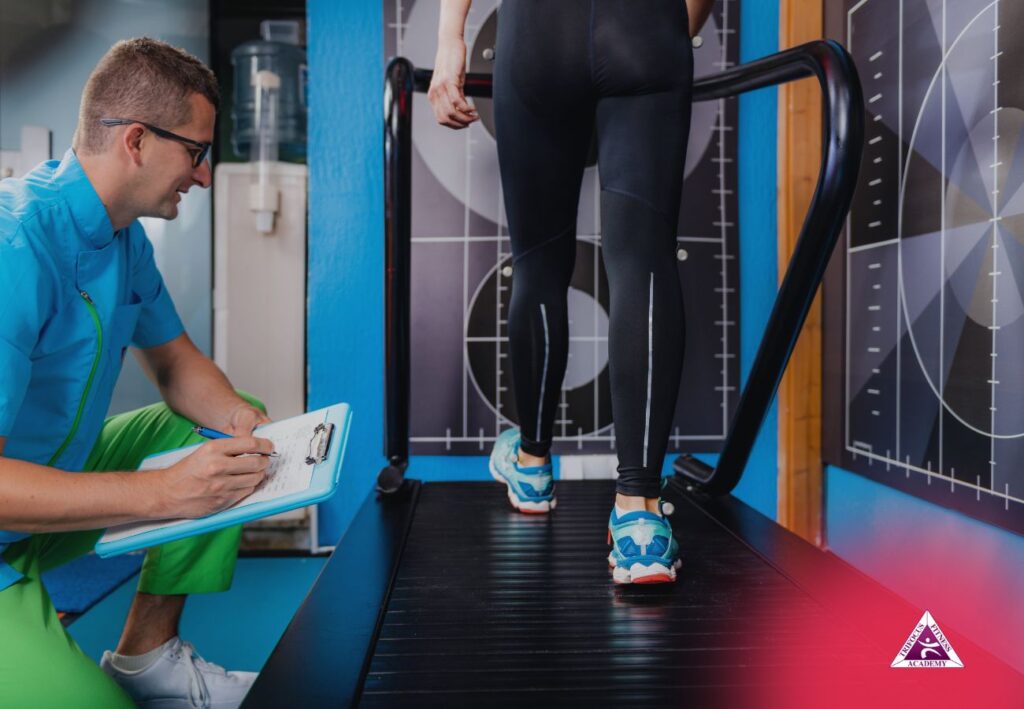
Fitness assessment is the cornerstone of fitness coaching. These techniques enable trainers to assess a client’s level of fitness, monitor progress, and anticipate risks, and to develop a personalised training schedule. Without evaluation, Fitness Coaching can become cookie-cutter, as trainers do not have the information needed to customise the plan to an individual. Whether you are training a novice client, an amateur, or someone recovering from rehabilitation, fitness assessments are the map to achieving safe and effective results.
Fitness Coaching is about more than writing workouts. You must know which dragons you are feeding when a client enters that moment, which is where exercise testing and assessment can be beneficial. These tools enable trainers to assess a client’s heart and lung fitness and endurance, measure strength and flexibility, determine body composition, and evaluate movement quality. With this knowledge, trainees can establish attainable goals, gauge progress, and modify their conditioning as needed.
The Importance of Initial Client Assessments in Personal Training
In personal training, the first step is the initial consultation, where trainers gather the client’s baseline information and learn about their anatomy, sports injuries, general health, diet, lifestyle, previous training experience, and fitness goals. A properly structured evaluation establishes trust and lays the groundwork for an individually focused training regimen with specific aims.
In private training, standard parameters of the initial assessment include the PAR-Q (Physical Activity Readiness Questionnaire) and similar health screening questions regarding the client’s history, medical issues, or other reasons they should not exercise. This is for your safety and to accommodate any medical problems or physical limitations you may have. Unique exercise specialists will customise your program.
Trainers also conduct interviews to assess a client’s daily habits, sleep patterns, nutrition, stress levels, and previous training history. Such factors may have a heavy impact on both recovery and progress. Knowing these clues means that a Fitness Coaching professional can deliver more comprehensive advice.
At the initial visit, physical examinations typically include assessments of resting heart rate, blood pressure, and body composition. Instructors may also measure body height, body weight, and BMI to establish the client’s overall health profile. The gathered data serves as a baseline for comparing future progress.
Initial evaluations create a baseline and allow clients to feel seen and heard. They eliminate guesswork and enable trainers to develop safe, progressive programs with confidence. In personal training, whether a long-term plan achieves its objectives usually depends on how well the initial assessment was done. This marks the beginning of a data-driven journey to achieve demonstrable, impactful outcomes.
The Common Fitness Tests Used in Personal Training
After the initial triage is done, personal training pros proceed to more formal fitness assessments. The above evaluations provide specific quantification of a client’s cardiovascular endurance, muscular strength, muscular endurance, flexibility, and, potentially, agility or speed, if these are goals.
To assess cardiovascular endurance, consider using the Rockport Walk Test, the Cooper 12-Minute Run, or the 3-Minute Step Test to track your progress. These evaluations enable personal trainers to assess their clients’ aerobic capacity and establish a baseline for maintaining appropriate and safe exercise intensities. The statistics can also be used to estimate VO2 max, which is very important in endurance-based training.
Muscular strength is typically assessed by testing one-repetition maximum (1RM) or submaximal strength for specific exercises, such as the bench press, leg press or deadlift. Muscular endurance tests consist of exercises such as push-ups or sit-ups, which are repeated until fatigue sets in. These measures help coaches identify imbalances, create resistance training plans, and coordinate initial loads using a colour system.
The sit-and-reach test and shoulder mobility test are examples of flexibility assessments that indicate range of motion deficiencies that could result in compensation or potential injury. These findings can inform mobility or stretching protocols in Fitness Coaching programs.
If possible, body composition testing should also be included. Techniques include skinfold callipers, bioelectrical impedance analysis, and circumference measurement. These tests aren’t always 100% on-point, but can provide valuable data points if you’re trying to monitor fat loss or muscle gain over time.
Movement Screens and Functional Assessments in Personal Training
Quality of motion is more important than quantity of motion. The fittest or strongest clients can even be vulnerable to injuries if their movement patterns are inefficient or unstable. That is why movement screening and functional assessments are crucial in Fitness Coaching, especially before implementing high-intensity or multi-joint exercises.
The Functional Movement Screen (FMS), an assessment of seven fundamental movements, including deep squats, lunges, and shoulder mobility, is one of the most used assessments. The FMS exposes potential asymmetries, restrictions, or instabilities that may lead to poor technique and increase your risk of injury. Results from this test direct strategies for correction and exercise design.
An even better tool is the overhead squat assessment, a popular Fitness Coaching assessment used to measure hip mobility, core stability, and shoulder position. Trainers stand to the sides and to the front to assess compensation patterns, including heel rise, knee valgus, or trunk lean.
Gait analysis can also be beneficial for patients who are runners or have a history of lower extremity injury. The use of gait or running analysis is another way to identify biomechanical discrepancies, asymmetrical loading, and postural imbalances.
Tests of balance, like the single-leg stand or Y-balance, also assess proprioception and coordination. Weakness in these tests can often be an indication for core training and joint stabilisation.
Functional assessments go beyond numbers, providing context about how a client navigates real-life situations. This information is crucial for personal training practitioners, as the goal of these programs extends beyond improved physical fitness to enhanced functioning in daily life and increased mobility over the long term.
Interpreting Results and Applying Data to Personal Training Programs
Gathering fitness data is only beneficial if it yields actionable insights. Great trainers vs. average. Anyone can execute a test and even understand what the numbers mean, but the real difference between good and great trainers involves what you do with that information. Every test should have a purpose, at the very least, to help guide exercise selection, set intensity, and inform recovery.
Trainers assess cardiovascular testing in one or more ways, through heart rate zones or VO2 max estimates, to determine aerobic conditioning. Based on this information, personal training programs may incorporate steady-state cardiovascular conditioning, interval training, and/or sport-specific conditioning. Desired Clients will increase their aerobic capacity by progressively overloading their aerobic system.
As tests of strength and endurance are available, you can then modulate load, volume, and frequency. If a trainee performs well on upper body endurance but poorly on lower body strength, the coach should allocate time to leg strength training through compound movements and heavy weights.
Movement assessments are especially valuable. Tight hips, weak glutes, or a lack of core control can be identified and corrected with targeted exercises. The sooner these fundamental issues are addressed in Personal training, the less likely it is to experience an injury or limitation when performing compound lifts or sports-related movements dynamically.
Body composition numbers can guide those goals and measure fat loss or muscle gain. When a client plateaus, these new results can be compared to their initial measurements, allowing trainers to modify caloric intake or training variables. The proper handling of data demonstrates professionalism and inspires confidence in the client. Fitness Coaching is no longer about simply working out; it’s about a strategic process with evidence that involves changes and results you can measure.
Conclusion
Exercise testing and prescription are crucial to the success of personal training. They provide you with the formula for safe, customised, effective fitness programming. Without such tools, trainers are at risk of using a one-size-fits-all approach, which fails to consider client variations in areas such as health status, mobility, and performance objectives. From depersonalised health screenings to goal-setting questionnaires, to ordered fitness tests, to functional body analyses, the methods covered in this blog post enable a thorough evaluation to support your client properly.
While Fitness Coaching students and professionals need to understand how to assess cardiovascular fitness, muscular strength and endurance, flexibility, and body composition, the use of screening movement patterns to identify relative risks and guide the implementation of preventive interventions is equally essential. By understanding how the body works both statically and dynamically, trainers are better equipped to prescribe prudent and reasonable programming decisions.
Contact the Trifocus Fitness Academy
The Trifocus Fitness Academy offers specialised online and internationally accredited Personal Training Courses designed to equip professionals with all the skills and knowledge needed to succeed as a professional Personal Trainer.

Frequently Asked Questions
Workout assessments are crucial in the Fitness Coaching industry, as they help assess a client’s current fitness level, identify potential risks, and plan a safe program. These assessments serve as objective measures of strength, flexibility, endurance, and mobility. And with that information in hand, Fitness Coaching can be more targeted and effective. Weaknesses can be addressed, injuries can be averted, and measurable progress can be monitored. “Without assessment, programs can not fit the needs of clients or their (clients’) abilities.
Typical fitness assessments in personal training include cardio assessments, such as the Rockport Walk Test, muscular strength assessments, like the one-repetition maximum (1RM), and flexibility assessments, like force–velocity tests. The trainer can also test muscular endurance by having the individual do as many pushups or squats (where weight is against gravity) as they can without becoming tired. “These are all actual tests to determine a client’s level of fitness and use them to structure an effective program. In one-to-one settings, combining these assessments allows you to build a holistic assessment and adopt a precise approach that aligns with the trainee’s goals.
In personal training, movement assessments are crucial as they enable you to identify imbalances, mobility issues, and poor movement patterns that can lead to injury. Tools like the Functional Movement Screen (FMS) or overhead squat tests enable trainers to evaluate how clients move during basic exercises. This provides an opportunity to correct poor or unsafe technique before it becomes necessary to load or intensify the exercise. For personal trainers, emphasising the importance of quality of movement will lead to safer and more effective training sessions in the long term. The performance building black hole board helps create a better, more stable base for high-level training.
Fitness evaluations are performed on the first visit and should be done every 4-8 weeks. It keeps coaches informed and enables them to make evidence-based alterations while keeping clients motivated through a sense of measurable progress. Adapting training programs can be tedious, depending on the methods of testing (e.g., Critical Power tests), and plateaus can be quickly identified. During Fitness Coaching, assessments aren’t just one-time jobs; they are continually helping to tweak your program and keep your client involved. By frequently assessing fitness indicators, trainers can keep pace with their clients’ progress and ensure relevance based on their goals and capabilities.
Yes, evaluations are the key to setting goals in Fitness Coaching. They also provide a starting point based on an objective comparison of the client’s current fitness to their goals. For instance, when you know a client’s body composition or their endurance level, it helps you determine timelines for fat loss or stamina increase. In personal training, applying assessment results to establish goals is an excellent way to build trust and help clients understand their progress. It also offers ways to monitor progress and keep clients on track, responsible, and motivated for the continued duration of their experience.
Absolutely. Evaluations are appropriate for all Fitness Coaching clients, regardless of age, ability or condition. They can accommodate beginner, athletic, senior and rehab clients. Bespoke assessments help trainers detect weak links and steer clear of exercises that might be harmful. For personal training, this means developing objective assessment means to ensure that each client receives a customised, safe and effective program. Whether you are seeking recovery, weight reduction, or sports performance, assessments lay the groundwork for tailored and efficient training strategies.