
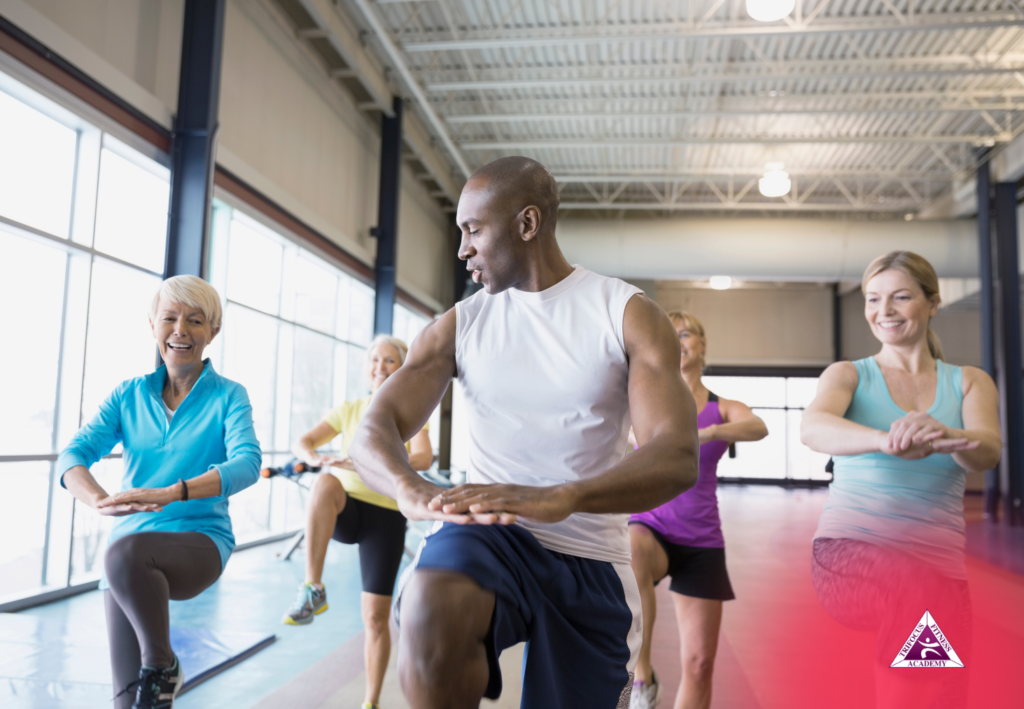
Enter a group fitness class, and you’ll find a range of ages, body types, levels of ability and goals. Some could be training for a marathon. Some are there to become more flexible, take away stress or simply because they have coldly appraised their lives and find that it’s time to start moving after decades of passivity. This diversity is what makes group fitness special and also a skilful profession.
For group exercise instructors, managing participant needs extends beyond simply offering a good workout. It demands meticulous planning, flexibility and a thorough grasp of how to lead in a manner that is safe, inclusive, and empowering for everyone in the room. The idea isn’t to produce a one-size-fits-all experience, but to meet people where they are and provide access so that at any given time, they have those options for growth.
In today’s fitness culture, inclusivity isn’t just an option. Attendees need to feel visible, supported, and respected, regardless of their background or ability. Those who do seem to be able to navigate this complexity are the ones who make spaces feel motivational, not intimidating; challenging but not devastating.
Planning with Purpose: Inclusive Programming from the Start
Good group exercise instruction starts before anyone walks into the studio. It begins with thoughtful program design that works for all levels of fitness, goals and abilities. Trainers who foresee diverse participation in programme planning are better equipped to facilitate inclusive and balanced events.
A successful plan entails layered exercises, movements that can be made harder or easier. For example, squats can be done with or without weighted resistance in various depths of motion, or you could use a chair-assistive version for seniors or beginners. It might offer high-impact (jumping jacks) and low-impact (step taps) versions of cardio drills, so everyone has a safe option.
Breaking the class into distinct portions is a good pacing and adds some predictability to the otherwise chaotic experience. Educators can add variety to every section, so advanced pupils remain challenged while beginners are not left behind.
And then there’s the need to appreciate what each class aims to achieve. A bootcamp will draw different requirements than a yoga or low-impact circuit group. Developing sessions that complement the class format can help prevent conflicting images.
Finally, planning for inclusivity is a state of mind. It’s about asking, “How can I ensure that everyone leaves this class with something, no matter their starting point?” With that as their mission, the foundation that group exercise instructors set is one where everyone feels empowered, not left behind.
Cueing and Coaching for Every Level
When the class begins, however, it’s a matter of how instructors cue exercises and manage participants’ diverse needs. Straightforward, welcoming and adaptable cueing makes it easy for participants to learn how to move safely and effectively, whether they’re stepping into class for the first time or are long-term regulars.
Good group exercise instructors use something called layered cueing, meaning that they start with the base version of a movement and then either offer progressions or modifications. For lunges, for example, the instructor might begin by saying something like: “Bodyweight lunges. If it’s within your comfort zone, include a jump. Need less impact? Take a step back instead.” That way, everyone has an opportunity to join in without picking on anyone.
Auditory and visual stimuli are combined in the instructions. Teach in a way that reflects each variation along the way so that those trying to process x speed don’t get lost. This is particularly useful for participants who do not have English as their first language, non-neurotypical learners or visual learners.
Tone matters too. Not using comparative, competitive language (like “If you’re strong enough, try this”) but rather focusing on empowerment (“Choose the version that best works for you today”) keeps the class psychologically safe.
Responsive coaching also involves keeping an eye on the room and adjusting on the fly. Suppose half the class is getting stuck in a movement; it’s probably time to simplify or slow down. If the energy wanes, you can insert a short motivational push or change up the format.
Through a combination of smart cueing and respectful coaching, group exercise instructors ensure they see not only the person in direct eye contact but also everyone else in the room; each person feels seen, supported, and encouraged to move fearlessly at their own pace.
Building Emotional Safety and Confidence in Class
Managing the varying needs of participants is more than just about physical adaptations. Group exercise instructors are also essential to establishing emotional safety,a place where individuals feel supported, welcomed, and driven, regardless of their background or ability.
It might involve someone who has recently given birth, someone recovering from an injury, or a newcomer to fitness after years as a couch potato. For those people, entering a room packed with swirling bodies and blaring music can seem terrifying. That’s why empathy and emotional awareness are key teaching tools.
They build relationships by welcoming participants, memorising their names and recognising them for showing up and giving it a whirl. Providing positive feedback fosters encouragement without putting individuals on the spot.
Creating an environment free from judgment is also essential. By the same token, press for breaks, normalise modifying exercises and get rid of the “pushing through pain” narratives. Emphasise that “listening to your body is a strength and doesn’t show weakness.”
Making room for vulnerability can also include opening up about your own journey. Teachers who are open about their own struggles help calm participants’ nerves and make the practices feel more relatable.
In the end, emotional safety is what transforms a one-time visit into lifelong loyalty. When exercisers feel psychologically supported in a class setting, they get more than just exercise; they gain confidence, a sense of community and long-term motivation.
Balancing Energy and Expectations in a Mixed-Level Room
It’s not uncommon for us instructors to face having all fitness levels in the same group exercise class. Some people may want something fast and sweaty, while others need a slower tempo or more rest. The key is managing energy, pacing, and expectations so people feel successful.
The first step is to manage expectations from the start. Make sure the class feels it’s OK to work at their own pace and that everyone’s variation of an exercise is just as valid as anyone else’s. Positioning it as “your workout, your way” grants permission for self-directed effort without shame.
Then you can progress participants and teach them more interval-based or station-style formats to self-regulate intensity. That would naturally introduce variation in pace, which is a good thing when people are working at different speeds. Timed rounds have the additional benefit of mitigating pressure not to “fall behind.”
Another tool is multi-level layering. Dual-stack exercises so people can progress or stick to a foundational level. So, for instance, you could cue in a core workout: “Begin with a plank. Ready for more? Add shoulder taps. Want a challenge? Try knee-to-elbow cross taps.” This structure allows participants to tailor the WODs according to their skill level and energy for that day.
Observe body language and energy shifts. If a section feels too intense, modify on the go. Group exercise is fluid, and so will your teaching be! When teachers keep tuning in, they create a dynamic balance where everybody is pushed out when needed but also supported.
Conclusion
Group exercise classes are still among the most effective ways to build fitness, confidence, and a sense of community. But the real power lies in its unifying effect on people of all kinds (and in making absolutely everyone feel welcome). And they can only do that when teachers are adept at responding to the wide range of participant needs with skill, compassion and intention. From the planning stages through the final cool-down, great group exercise instructors build inclusivity into their class offerings by adjusting the pace up or down, providing clear cues, offering emotional support, and thoughtful programming.
They know fitness isn’t one-size-fits-all and that true success is when people feel comfortable moving at their own pace, in their own way. It’s not easy managing a classroom full of diverse abilities, goals, and energy levels. It requires training, empathy and an ability to adapt. But the payoff is big: participants who are engaged, feel respected and supported and are motivated to keep coming back.
Contact the Trifocus Fitness Academy
The Trifocus Fitness Academy offers specialised online and internationally accredited Group Exercise courses that have been designed to outfit professionals with all of the skills and knowledge needed to find success as a professional Group Exercise Specialist.

Frequently Asked Questions
Group exercise instructors accommodate a range of fitness levels by providing modifications and progressions for every exercise. They design workouts with gradient intensity so players can pick the version best suited to their ability level. Teachers also use timed intervals so that students can work at their own speed. A “your workout, your way” environment, it says in its marketing material, which means low pressure and high confidence.
Cropped cues are cumulative instructions to lead your athletes toward their ideal level of cueing. Instructors begin with a base movement, then offer beginner modifications and advanced options for those seeking more challenge. For instance, a squat could be advanced to a jump squat or regressed to a wall sit. Layered cues help make classes inclusive and adaptable so everyone can participate safely.
The key to group exercise’s success is emotional safety, which allows participants to feel accepted, supported and motivated (no matter your fitness level or background). When people feel emotionally safe, they will return, take risks and stretch without fear of being judged. Lecturers can foster emotional safety by expressing encouragement, avoiding language that tends to compare learners and normalise modification, and praising participation over performance.
Group exercise classes that check all the boxes begin with preparation. Workouts are made as challenging or friendly as you desire with scalable movements for all fitness levels. They’re designed with a variety of formats to accommodate various paces. Clear cueing, demonstrations of multiple levels, and non-judgmental cues make everyone in the room feel welcome. Teachers also collect feedback to hear what works and adjust over time.
To regulate energy during mixed-level group exercise classes, instructors may employ interval formats, offer varied movement options, and control pacing through music or timers. They lay out expectations early, asking participants to listen to their bodies, recognising that everyone has personal needs. High- and low-impact versions of exercises roll alongside each other, so everyone stays involved without pushing themselves too hard.
Teachers cater for those with injuries or restrictions by offering safe options and are available to chat before and after class. They preemptively program for apparent modifications, such as reduced range of motion, impact avoidance, or turning to joint-friendly movements. In class, they offer choices and never single out anyone. Encouraging your followers to listen to their bodies and take breaks can build trust and lower the risk of injury.