
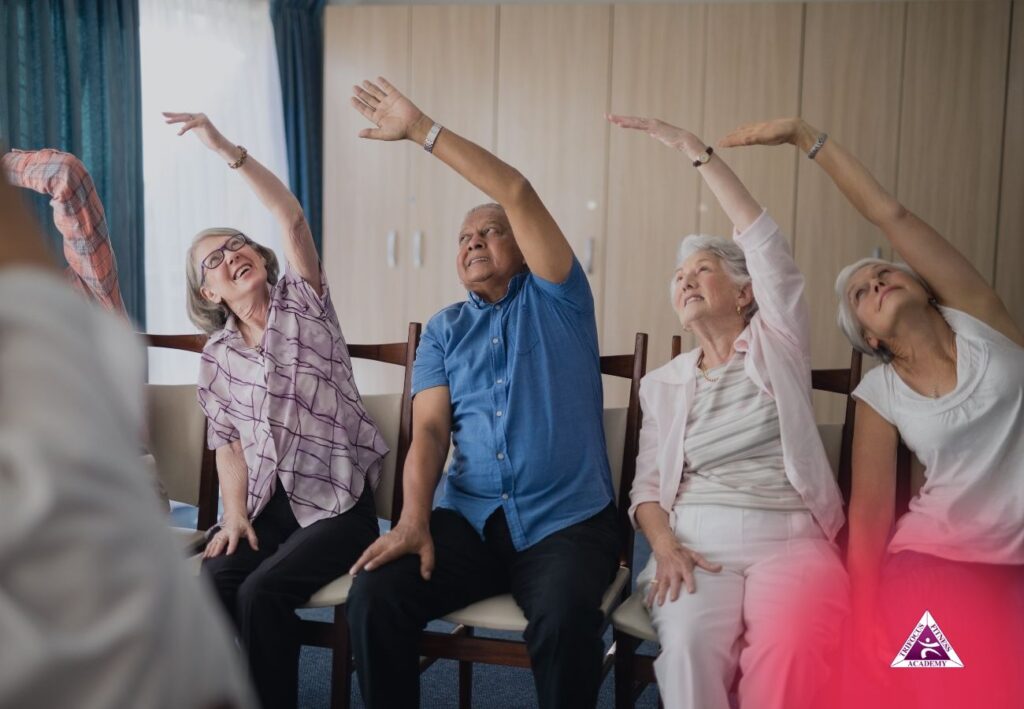
Physical health, mental well-being, and social engagement are even more critical when people age. This is especially true for those who live in assisted living facilities. Group Fitness is one of the most effective and enjoyable ways to meet all three needs simultaneously. It should be mentioned that the impact of this type of work with older adults is much broader than “simple” physical exercises or routine.
Group Fitness in assisted living promotes physical strength and mobility, emotional connections, mental sharpness, and a sense of a greater purpose. These programs are not just “workouts” – they are structured opportunities to help residents socialise, laugh, move their bodies, and feel like they are part of something bigger.
Why Group Exercise Matters in Assisted Living
Group Exercise offers more than physical activity. It also serves as a comprehensive wellness tool for assisted living residents, emphasising their physical, emotional, and cognitive well-being and enabling social engagement. Primarily, such activity allows older adults to stay more mobile, maintain their equilibrium, and remain independent.
Muscle mass, joint flexibility, and cardiovascular responsiveness all decline with age. Group exercise programs for seniors address all these issues by focusing on low-impact exercise, strengthening the body, developing coordination, and raising endurance without injury. However, it is not simply the motion that motivates seniors; it is the organisation.
Exercising as a group fosters accountability and mutual support. Seniors are more likely to continue attending classes when they are fun, meet new people, and see positive interactions with their companions and coaches. Group Fitness transforms what may be a lonely task into a fun activity to which they look forward every week due to the social atmosphere.
Group Fitness aids in mental well-being. The brain is kept active by coordinated movements, rhythm-based exercises, and verbal instructions. Recognising patterns, multitasking, or dancing to music might help resist cognitive deterioration or reduce its speed. Several classes also include memory or counting prompts to add to participants’ challenge.
Types of Group Exercise Programs for Older Adults
Using precautions within the Group Exercise programs is common in assisted living communities because these settings offer various suitable programs for their residents. Indeed, all of them are low-impact and accessible to anyone, even if they are not yet a senior or have a chronic condition:
Chair-Based Exercises
Many elders struggle to use their lower body, so many choose chair yoga, sitting tai chi, and using resistance bands. Such lessons improve flexibility, posture, and circulation without the need to stand up, decreasing the risk of falling. Movement encourages blood flow to the spine, reversing signs of hunching, and external work distinguishes it from other forms, which depend on inner strength rather than engaging the external muscular fibres.
Balance and Mobility Classes
Balance is an essential component that promotes the reduced risk of falling. Proprioception and reaction time are increased when getting in and out of drills, movements with a stability ball in your hand, seated leg lifts, and standing single-leg exercises. Fall recovery learning and light stretching to safeguard joints are usually included in these classes.
Cardio Fitness and Dancing
Low-impact aerobics and movement to music or dances specifically created for older people, like Zumba Gold or regular line dancing, keep the heart going and make exercise enjoyable and cheerful. Music boosts mood and helps people move in rhythm, which might facilitate greater participation and spending even more calories.
Mind-Body Wellness
The “softer” alternatives, including yoga, tai chi or meditation, might lessen stress and improve mental clarity. Such classes might be ideal for elders who demonstrate anxiety, insomnia, or high blood pressure.
Each program can also be customised to address specific health issues such as arthritis, osteoporosis, or Parkinson’s disease. A certified instructor ensures that every move is completed safely and that each participant gets attention. Multiple options allow residents to choose something that best fits their unique interests and aspirations, making assisted living Group Fitness an enjoyable and sustainable activity.
Social and Emotional Benefits of Group Exercise
Although Group Exercise is typically seen as an excellent way for older adults in assisted living to achieve and maintain physical health, the emotional and social benefits are equally important, if not more so.
Many residents become reinvigorated when they learn they can once more be part of a group. Social isolation is common among older adults and assisted living residents due to mobility constraints and lifestyle changes.
Group Fitness offers a secure, supportive setting for older adults to connect with their peers, make new friends, and feel a part of a group. Shared laughter, teamwork, and modest or significant victories among peers during Group Fitness classes are sources of joy.
These fun times create shared experiences that contribute to a less lonely lifestyle, taking away the burden of ageing. Routine has an intellectual impact as well. People establish a sense of normalcy and develop a regular schedule when attending Group Exercise sessions multiple times weekly.
This consistency and stability contribute to mood regulation, which can lead to a significant shift in sleep quality and, as a result, in overall health. There is also a psychological benefit of empowerment. Doing anything will help you feel good about yourself and give you the confidence to participate in other activities.
Implementing and Sustaining Effective Group Exercise Programs
Establishing and maintaining an effective Group Exercise program for assisted living facilities requires planning, competent instruction, and a supportive community. Group Fitness should become a cornerstone of resident wellness and satisfaction when done right. Hiring certified instructors who train in senior fitness is the first step.
Senior fitness instructors know how to appropriately modify specific exercises based on the fitness level, utilise positive reinforcement, and keep our participants safe while challenging and encouraging. Instructors create enjoyable experiences with fully engaged modifications, reducing or eliminating the need for substitutions.
Instructors who make exercise a welcoming and engaging part of the residents’ lives will develop trust and retention. Take an interest survey. Different types of group exercises will be appealing to various kinds of residents. Some will love chair yoga or stretching mid-morning, and some will dread it. Others will want something more upbeat, like a dance class.
Offering different types of group fitness programming means more residents will participate, and those who enjoy it can attend more classes and become more involved. Consistent scheduling is essential. Schedules should be posted and announced to ensure participants can attend.
Regularly scheduled classes should occur at the same time every week so that your resident can plan for them. Some students may require transportation due to a lack of mobility. Regardless of the occasion, it should be commemorated. It can be anything from ten consecutive classes to displaying what they learned during them. Focusing on their commitment fosters a positive reinforcing loop.
Themed classes may be helpful on occasion. A spring stretch sequence or 60s dance day may be excellent, depending on what fits your community. Participation levels should be closely followed, and feedback should be encouraged. Regular evaluations should also determine if the program should be continued and, if so, whether any changes are necessary.
Conclusion
Group Fitness is more than just a method to get seniors in shape – it is a multifaceted tool for improving their quality of life. As discussed here previously, Group Exercise promotes physical fitness, mental acuity, emotional vitality, and social bonds.
In many ways, Group Fitness is a “one-stop shop” for many of the most pressing problems facing the ageing population, from loneliness and infirmity to depression and cognitive impairment. By arranging each class to be appropriate for people of various abilities and preferences, assisted living communities can guarantee Group Exercise for everyone.
Contact the Trifocus Fitness Academy
The Trifocus Fitness Academy offers specialised online and internationally accredited Group Exercise courses that have been designed to outfit professionals with all of the skills and knowledge needed to find success as a professional Group Exercise Specialist.

Frequently Asked Questions
Group Fitness is necessary for assisted living residents due to its multiple benefits for older adults. Specifically, physical strength, balance, and mobility concerns are linked to the fears of falls and associated morbidity. Just as importantly, it relates to the concern for emotional well-being and socialising. Engaging in group classes helps alleviate loneliness, improves mood with action in more ways than one, and establishes a sense of purpose and community.
The retinue of Group Exercise options for older people includes chair exercises, balance practice, cardio, and mind-body, including yoga and tai chi. Each is advised for those in assisted living, as they are centred on the specific physical condition and may be adjusted due to limitations. These activities may not enhance but retain strength, resist the loss of harmonious body movement, and cardiovascular health. Each mentioned form may be manageable for each resident; they can complete the workout and benefit socially and cognitively.
Group Fitness also benefits seniors’ emotions significantly. While regular movement reduces isolation and loneliness, depression, and anxiety, the classes themselves stimulate participants’ emotions. Exercising with friends provides seniors with social support, sociality, and esteem. Exercising releases endorphins, the happiness hormone, lifts moods, and boosts stress resistance. In assisted living facilities, where new living conditions may stress mental health, Group Fitness becomes a way to inject joy, routine, and purpose into their lives.
Yes, group exercise also has a positive impact on cognitive functions. Moving in sync, routine, working memory, and focus are stimulated, enhancing the blood supply to the brain, supporting vital brain tissue, and building new connections. Inhale in exercises and maintaining rhythm, dance routines or challenges, or adding weights or dance steps, while coordination overload work participants’ mental skills. These classes are among the favourites in assisted living facilities, as they help ageing adults support their emotional wellness.
Absolutely. Group Fitness includes older adults with limited mobility. Most classes offer chair-based options, allowing participants to increase strength, flexibility, and circulation while seated. History franchise-certified instructors to modify movements and focus on safety. As a result, Group Fitness provides low-impact routines that reduce the risk of injury. Group Exercise in assisted living communities is designed with access in mind. Therefore, participants are encouraged to enhance biotic processes regardless of any limitations.
To create an effective Group Fitness program, assisted living communities should employ certified instructors with experience or training in senior fitness. Moreover, residents should be offered a variety of class types that are available on a set schedule. Their input should be considered to ensure that classes are based on interest and need. The facility should have a clean, safe space easily accessible to participants. The program can be fiercely promoted via announcements, flyers, and word-of-mouth.