
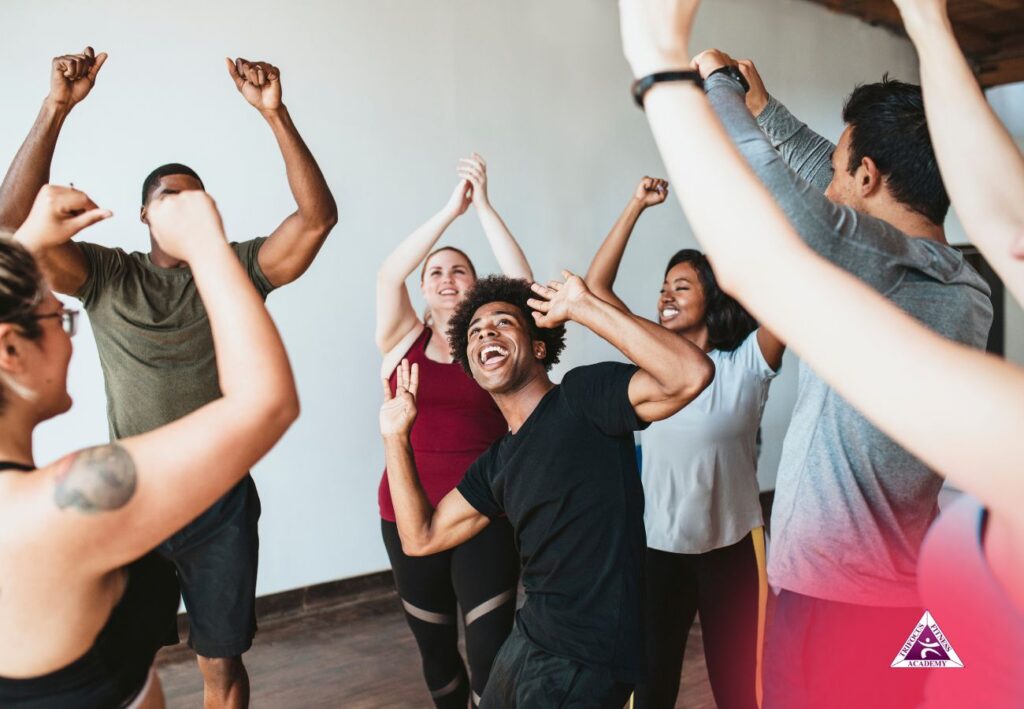
Confidence as a leader isn’t built on theory alone. It is developed through practice, dialogue, self-awareness, and the capacity to support others in everyday contexts. Group exercise is a profound and often underutilised way to develop leadership. Whether you’re the one teaching a class or simply showing up to a class on the regular, group exercise, in and of itself, cultivates confidence, presence, and accountability.
Group fitness environments are dynamic. They call for good communication, emotional understanding, flexibility, and the knack for inspiring others. Teachers are facing heterogeneous groups with diverse abilities, motivations, and expectations, sometimes in turbo-charged or stress-laden conditions. Participants also learn to take ownership of their efforts, follow guidance, and contribute to group energy. These are remarkably similar to leadership situations you have in your professional and personal lives.
Group exercise provides immediate feedback, unlike traditional leadership training. Responses from students, changes in group energy, and live problem-solving all help develop confidence quickly. There are apparent successes, and the hurdles need to be addressed on the spot. This helps build confidence that you can lead, communicate, and execute under pressure.
Developing Presence, Authority, and Clear Communication
One of the easiest paths to seeing through group exercise is that it builds and reinforces leadership confidence by strengthening your presence and communication skills. It demands that participants be fully ‘present,’ in touch with their environment and the others around them. This presence is a fundamental leadership quality.
The teachers must be confident in their stance, voice level, and movement. Unambiguous word cues, assertive body language, and a steady voice tone conspire to create power without overpowering. Eventually, teachers come to have faith in their voice and breath, no matter how large or unfamiliar a class may be. It is with such constant exposure that self-doubt and natural confidence are eroded, respectively.
There is no scope for long, drawn-out communication in group exercise. Directions have to be read and followed in a flash. This creates the power of clear articulation when you’re on the spot, a vital leadership capacity. When students react positively, teachers get instant feedback and are reassured that they are good leaders.
Participants also benefit. Following queues, integrating impulses, and responding to group movements increase attention to responsiveness. The more comfortable participants are in such spaces, the more willing they are to speak up, help others, and take on leadership roles. Presence and authority are enhanced in group exercise through repeated practice. Leaders learn that confidence is not rooted in perfection but in clarity, consistency, and guiding people with calm assurance.
Building Emotional Intelligence and Group Awareness
Leadership confidence is strongly correlated with emotional intelligence, and group exercise training fosters it. Emotional intelligence is about identifying emotions in yourself and others and knowing how to respond to them. And group workouts involve a lot of emotional signalling because it’s all so visible.
Instructors must read the room. Have an energy level, facial expression, body language and engagement all provide feedback. This kind of matching also fosters empathy and responsiveness as one adjusts intensity, pacing, or encouragement in response to these cues. Reading group needs and responding in real time are confidence-inspiring when one can see the impact on results.
Managing emotions is also essential. Teachers can encounter obstacles such as a no-show crowd, technical problems, and unwilling participants. Learning to maintain a level head, remain optimistic, and focus on getting better during these times all help build emotional resilience. With every challenge successfully dealt with comes self-trust and leadership confidence.
Participants also enhance their emotional intelligence. Shared space, respect for others, and cooperation are necessary in group exercise. Helping friends, adjusting to group flow, and being a good-vibe source can foster a sense of shared responsibility. Simply by regularly working through group dynamics, people feel more at ease leading in the face of messy emotions. This confidence spills over into business and social leadership situations where emotional competency is key.
Strengthening Decision-Making and Adaptability
Confident leadership requires the ability to make decisions and adapt quickly. In group exercise, you have the chance to practice these skills almost constantly in a friendly yet demanding atmosphere. They adapt workouts, scale back or intensify efforts, schedule time, and troubleshoot unexpected obstacles. They sometimes have to be made quickly without taking the team off course. Handling such situations effectively also instils trust in one’s judgment and makes us more confident as leaders.
Adaptability is equally essential. No two classes are the same. Flexibility is needed due to participants’ energy, space constraints, and external factors. The teacher who has learned to adjust without distress does gain a sense of efficacy. And in both cases, the adaptations confirm that all these demands can be met.
Participants also practise decision-making. Self-leadership is built on selecting effort levels, managing fatigue, and responding to signals. As they gain confidence in their decisions, participants become more assertive and self-directed, two qualities that are closely linked to leadership confidence. Keeping this up is what gives mental agility. Leaders discover that confidence does not derive from strong control but from an adaptive response to changing conditions.
Creating Influence, Trust, and Positive Impact
This kind of leadership confidence is all about influence and trust. Group exercise settings are based on connection, motivation and goals, making them ideal for developing these qualities. They motivate participants by being supportive, dependable, and genuine. With adequate levels of support and motivation among participants, trust is likely to develop on its own. This level of trust only bolsters the instructor’s confidence and creates a positive feedback loop. Leaders see and believe more strongly in the impact of their actions on others.
Consistency plays a key role. Being ready, having energy, and consistently providing positive experiences build credibility. Over time, the result is a collective being with a real identity in leadership. Leaders become more confident as they witness the fruits of their labour, including participants’ commitment and engagement.
Participants also experience influence. By being a good role model and promoting individual responsibility and contribution to group energy, one leads by example and empowers others. These instances instil a self-belief that you can make an impact on the group. The group factor fosters a spirit of collective achievement. Achievements are collective, perpetuating the notion that leadership is not about being superior but about making others better. This knowledge creates well-grounded, real-world confidence in leadership that extends beyond the practice area.
Conclusion
Group exercise is an excellent opportunity to develop leadership confidence. Presence, communication, emotional intelligence, decision-making, and influence are all ways a person can naturally and consistently cultivate their leadership. These are the observations and experiences of confidence that come from doing, not thinking. Whether teaching or doing, the group exercise promotes self-awareness, flexibility and trust. The capabilities developed readily apply to careers, community leadership, and other aspects of personal development. If we acknowledge group fitness as a leadership development tool, people can approach it more intentionally.
Contact the Trifocus Fitness Academy
The Trifocus Fitness Academy offers specialised online and internationally accredited Group Exercise courses that have been designed to outfit professionals with all of the skills and knowledge needed to find success as a professional Group Exercise Specialist.

Frequently Asked Questions
Group fitness fosters leadership confidence by putting people in situations that require them to use their voice, physical presence, and persuasion. They rehearse leading, decision-making, and group dynamics alongside their students. By repeatedly having these experiences, you develop self-trust and confidence.
Yes, group exercises can also help you develop leadership skills. Regular attendees practice leading themselves, applying effort, taking cues, and supporting the group’s energy. They grow in confidence by being consistent, collaborative, and accountable. Inspiring others, leading by example, and staying engaged are good ways to grow in leadership in the class without holding a leadership title.
Group fitness forces you to focus on the group’s mood, atmosphere, collective body language, and individuals’ attitudes. Pacing and motivation are adjusted by the instructors based on participant feedback, while participants learn empathy and work with one another. It promotes overcoming adversity and managing emotions during difficult times.
Communication in group exercise is key because it should be clear, confident, and on time. Sometimes, instructors practice barking to perfection under stress, and students learn to hear amid the cacophony. This helps develop verbal and non-verbal communication. When you communicate effectively, it builds trust and authority, two key components of confidence as a leader in the fitness world or in business.
Yes, there is some confidence-building in making decisions for a group exercise class. Teachers are constantly deciding how to pace, modify, and teach the class on the fly. And skillfully handling these moments fosters trust in one’s own judgment. Doing this repeatedly over time helps you minimise your hesitations and act decisively in real-life leadership contexts.
This is how group exercise generates trust and influence through consistency, motivation, and shared experiences. Leaders who are prepared and supportive earn participants’ trust. There is an increase in positive influence as members feel inspired and encouraged. It’s a confidence booster to witness the results of your leadership and how trust and influence are created through genuine connection.