
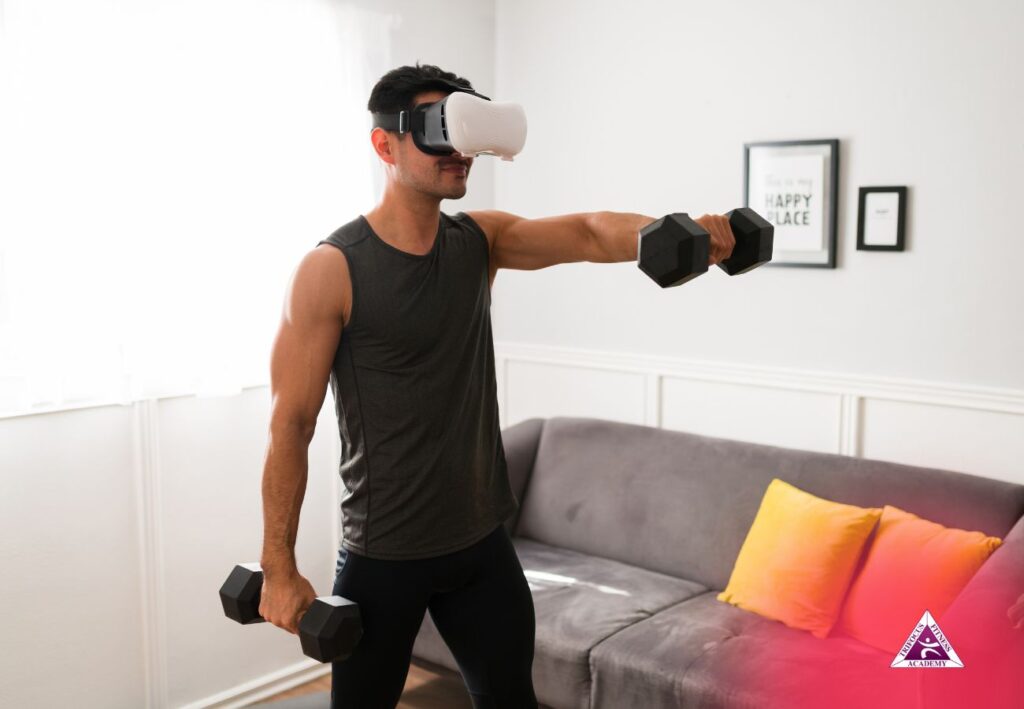
The health and fitness world has always been open to innovation, whether it be fitness bracelets, mobile apps, smart fitness equipment, or online coaching. Another exciting development these days that is changing the way people exercise is the virtual reality (VR) workout. Virtual reality is changing the way people exercise, get fit, stay motivated, and reach their fitness goals by combining immersive technology with guided exercise programmes. The advent and growing accessibility of this technology, personal training is developing in parallel to it.
Personal trainers are continuing to explore how to integrate virtual reality into fitness routines, ensuring their clients get an interactive workout that’s not only effective but fun as well. VR is not meant to replace the coaching position but an additional tool for trainers to help enhance engagement and consistency with clients. With technology shaping the future of fitness, personal training is becoming an even more personalised, flexible and interactive career now more than ever. If trainers and clients grasp how to incorporate virtual reality into their training, they can both make the most of this opportunity to achieve long-term fitness success.
Virtual Reality Makes Exercise More Engaging
There are many reasons individuals stop exercising; however, one of the most common is boredom. Although traditional exercise programs work, it may be hard to maintain an exercise habit over time. Virtual reality changes that by making workouts more like an interactive experience than a workout. In contemporary personal training, the ability to maintain clients’ attention is as crucial as creating effective programmes. VR offers trainers the opportunity to create engaging environments, enabling clients to perform fitness exercises, participate in virtual sports, or explore digital landscapes while exercising. Rather than staring at a clock while exercising, clients engage in activities that make time fly by during cardio.
This heightened interaction can lead to greater uniformity. If people truly enjoy their exercise, they will be much more likely to keep going and make progress towards their fitness objectives. Many VR platforms also feature achievements, progress tracking, and healthy competition to keep players engaged. For fitness trainers, virtual reality offers yet another option to diversify a fitness program without altering the overall goals. There are still benefits in terms of strength, endurance, flexibility and cardiovascular fitness, but they come in a fresh, motivating environment.
Personal Training Becomes More Interactive and Personalised
Personalisation has become easier than ever with technology, and virtual reality is taking it to a new level. Many VR fitness apps store exercise data, allowing trainers to track each client’s progress and modify exercises as needed. This is especially important when working as a personal trainer, as each client is different in their fitness level, goals, and interests. Some clients might like to work with high-intensity exercises, others might like to work with low-impact exercises. The possibilities in virtual reality are limitless and can be customised to accommodate various abilities and interests.
Personal trainers can also utilise workout data to identify strengths, monitor improvements, and adjust exercise levels as the client progresses. This allows for personalised coaching and personal training, while maintaining the difficulty and intensity levels of the exercises. Virtual training sessions are also more flexible. For those who are always on the go or have packed schedules, VR fitness can ensure they keep up with their fitness routine even when it’s not convenient to make it to the gym. One thing to remember, though, is that technology isn’t a substitute for a personal trainer’s knowledge. Trainers provide support with guidance, motivation, technique correction, and accountability. Virtual reality is just a way to make the experience even better, providing a more interactive way to get the same fitness results.
The Benefits Extend Beyond Physical Fitness
Virtual reality exercise routines aren’t just about physical health; they could also support mental well-being. Stress, mood, and energy levels are well known to be lower during exercise and higher when not exercising. These benefits are enhanced when the experience is made more enjoyable through the introduction of immersive technology. VR workouts have been shown to help many personal training clients escape from their daily grind.
They are in interactive settings that promote mobility and focus instead of work deadlines or daily tasks. This respite allows exercise to feel more like a refreshing break than an arduous task. VR could also be useful for individuals who are nervous about attending the gym in person. Other people may not be confident or may be afraid of being judged during their exercise. Confidence can be achieved through practice in a safe, virtual environment, which can be a great benefit to them before they move on to more traditional fitness venues.
One benefit is its accessibility. Some VR fitness programs offer seated workouts, low-impact exercises, and low-level activities to make fitness more inclusive for people with varying levels of experience or ability. As people get more comfortable, more clients will begin to try new exercise methods and push themselves in ways not previously considered. This correlation, which is positive with movement, can positively influence consistency and long-term health.
Finding the Right Balance Between Technology and Human Coaching
While VR technology has great potential, it is best used when accompanied by professional guidance and not relied upon solely. Technology can offer valuable engagement and performance data, but it cannot replace the knowledge, encouragement, and personal contact a seasoned trainer can provide. One of the best aspects of personal training is the bond between the personal trainer and the client.
Trainers know what each participant’s individual aims are, motivate during challenging times, modify programmes appropriately for changing circumstances and ensure exercises are delivered correctly and effectively. VR should not be used as the sole answer; it is a great, helpful tool. Training sessions may include VR workouts or be dedicated to strength training, mobility, technique development, or outdoor training. Mixing in strategies provides more variety and covers all the fitness components.
Personal trainers also have a significant responsibility for ensuring that employees don’t become overly reliant on technology. Consistency, nutrition and healthy habits will still be key aspects of fitness, no matter which tools are chosen. The future of fitness training is evolving rapidly, and the most successful trainers will be those willing to adopt new technology while never neglecting to offer personalised training and support.
Conclusion
VR is revolutionising the fitness landscape by offering an engaging, interactive, and accessible exercise experience. Whether it’s for a more immersive cardio experience or customised training, VR offers individuals new ways to stay motivated and enjoy their fitness routine. Personal training is not going to supplant traditional methods; rather, it is adding technology that will enhance the client experience. Personal trainers remain the source of knowledge, support, and motivation, and are now incorporating virtual reality to add fun and sustain participation.
Contact the Trifocus Fitness Academy
The Trifocus Fitness Academy offers specialised online and internationally accredited Personal Training Courses designed to equip professionals with all the skills and knowledge needed to succeed as a professional Personal Trainer.

Frequently Asked Questions
Yes. Personal trainers and VR go hand-in-hand. VR workouts can help keep things fresh, make the session more interesting, and motivate clients, with a personal trainer to give them expert guidance, technique, and a programme designed to their fitness goals.
Absolutely. Many fitness training courses that utilise VR are designed for beginners. Exercises can be modified and scaled for various fitness levels, increasing clients’ confidence, fitness, and interest in exercise, and providing a supportive, interactive environment for new clients.
Generally, a VR headset, compatible controllers, and sufficient space for a safe workout are the key components of virtual reality personal training. Some fitness apps may also suggest accessories like heart rate monitors to help you better track your performance during exercise.
Yes. The greatest benefit of using VR fitness training is that the workout environment is more interactive and fun. Trying out virtual worlds, finishing tasks and reaching milestones can help maintain the momentum and make it easier to stick to the fitness program.
VR can be a very powerful tool for personal training, particularly if you have a plan in place. Although traditional strength training is vital, VR exercises can enhance cardiovascular fitness, coordination, endurance, and overall activity engagingly and entertainingly.
Many fitness trainers believe VR will continue to be a more prominent part of fitness in the near future. It’s not a replacement for seasoned trainers, but it’s a fun alternative to make the gym more interesting, engaging, and accessible for clients with varying fitness levels and goals.