
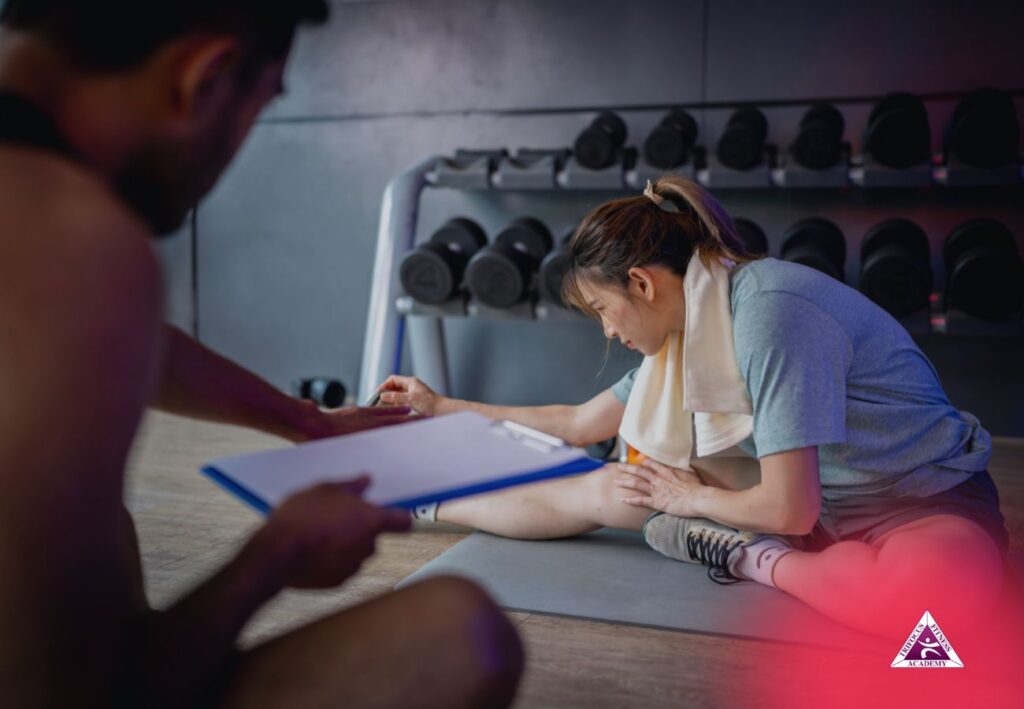
In a world of data-driven fitness, monitoring athletic performance happens beyond counting reps or checking time spent on the treadmill. But for the fitness student preparing to enter a career in personal training, learning the art and science of sports performance analysis can be a game-changer. It provides them with the tools and techniques to assess, monitor and enhance an athlete’s physical capabilities using objective data, advanced technology and evidence-based strategies.
Separation in sports means assessing several elements of physical activity, including speed, power, endurance, agility, and recovery, using specialised tools and systems. Coaches can then use this information to customise training programs, prevent injury and optimise performance. Incorporating performance analysis into personal training repositions the trainer from fitness coach to performance optimiser.
It focuses on fitness students going through personal trainer school, because having this tool of sports performance analysis at their disposal will expand their technical capacity and make them more attractive in an increasingly competitive sector. They were clients who were better educated and more results-oriented.
Measurable progress and personalised feedback are not available with old-fashioned training methods. Future trainers must now master performance analysis, data presentations, and everything to bring the expectations of the industry to fruition as per the employer’s expectations.
The Role of Performance Data in Personal Training
Personal training programs are based on performance data. It helps give insight into the body’s response to physical activity, helping trainers to see their strengths, weaknesses and areas for improvement. For fitness students, collecting and interpreting performance data is the basis for science-based decision-making.
Data collection in sports performance analysis encompasses many metrics: heart rate, VO2 max, power output, speed, range of motion, and muscle activation. These metrics allow trainers to see how the client adapts to training loads and whether their performance improves. For instance, running or jumping performance in simple and repetitive tests, and the trainers can check if speed training works.
Students in fitness-oriented personal training programs are now expected to recognise how to apply this data to exercise selection, recovery strategies, and performance benchmarks. Progress can only be conjectured—not measured—without objective, automatic tracking.
Performance data also helps when it comes to injury prevention. Again, if a client’s movement demonstrates instability or asymmetry, it could highlight an issue that needs to be resolved before exploring wider ranges of motion in training. This analysis is particularly important for athletes or high-performers in prime physical condition.
This also enhances the precision and efficacy of personal training by including performance data in evaluations and program design. A trained fitness student who is skilled in this area also has a better ability to create safe but results-oriented programs. It won’t happen overnight, but understanding the role of performance data will take personal training from intuition-based coaching to evidence-based practice, elevating the standard of care and amplifying the client’s success.
Tools and Technology Used in Performance Analysis
Increasingly, modern personal training is dependent on technology to enhance sporting performance. From wearable fitness trackers to robust video analysis software, the tools of the trade available today enable trainers — and the fitness students who are learning the craft — to collect detailed information about every aspect of human movement.
Some standard tools are used in performance analysis.
- Wearable Devices – Fitness trackers and smartwatches (Garmin, Polar, WHOOP) that can monitor heart rate, sleep and activity levels
- Motion Capture Systems: It is a very high-tech system that analyses biomechanics, such as a running gait or a lifting form.
- Force Plates: These devices measure the ground reaction forces exerted by the body during jumps, squats, and other movements.
- Video analysis software: Slow-motion breakdowns of athletic movement can be recorded using programs like Dartfish or Coach’s Eye.
- GPS tracking devices: These are commonly used in team sports to provide information on covered distances, acceleration, and positional data.
For personal training students, it gives them a leg up from a technical standpoint on how to use these tools. It also closes the gap between theory and practice. Personal training programs are increasingly relevant here, as instructors emphasise these technologies and direct students to learn how to operate them and interpret the data collected.
Technology doesn’t supplant the trainer — it empowers them to make informed decisions. Whether that’s employing video feedback to improve the squat form of a client, or measuring heart rate variability (for example) to revise recovery protocols, these types of Tech-Information-Technology tools give trainers the power to provide a potentially more potent, personalised program.
As these technologies revolutionise the fitness industry, students who adopt them early in their careers will improve their personal training services to clients and position themselves as data-driven, results-oriented professionals in the personal trainers market.
Applying Performance Analysis in Real-World Training
Understanding how to collect performance data and use tools is merely the start. Much of the information you learn is useful, but the value of personal training is in applying this information in practice. This subject will benefit the fitness students, as learning how to transform analysis into action is fundamental for them to be successful coaches.
Why is performance analysis helping trainers design better Personal training programs? For example, suppose a client lacks hip mobility, as shown on an assessment. In that case, the trainer can focus on appropriate mobility drills before adding any weight squats for that individual. Likewise, if an athlete has a below-average power output, attention might turn to plyometrics and explosive lifts.
Trainers can also use periodic testing to benchmark improvements. By rechecking jump height, sprint speed or endurance every few weeks, trainers can assess whether the program is producing results or modifications are necessary—this cycle of test-train-retest forms a closed-loop, data-driven feedback cycle that continuously adjusts training.
When you communicate performance analysis, you become a powerful communication tool. It gives clients visual and quantifiable evidence of their progress. It enhances motivation, fosters trust and can serve to justify training choices. When capable individuals use the data to build their knowledge around a clear set of principles, this creates a culture of collaboration where clients become empowered in their evolution thanks to the data at their fingertips.
This is why internships or practicums in fitness are incredibly aligned — because there are practical applications for this work that students can try out in real life using the principles they learned in a class setting. Analysis of real-world problems — helping clients work on their form or shave time off their sprints — helps transition students into anything other than textbook competency.
When used wisely, performance analysis empowers personal trainers to enhance client outcomes, deliver quicker results, and demonstrate that they are not just fitness professionals, but highly skilled and strategic professionals.
Building Performance Analysis Skills as a Fitness Student
Students must learn the technical and practical skills for personal training to add sports performance analysis into their work. Luckily, many contemporary fitness education systems have integrated these tools into their coursework, certifications, and practice in the real world.
You must know exercise science, biomechanics, physiology, and movement patterns. Once students have this knowledge, they can better understand the data presented by performance tools. “It covers sports analytics, technology integration, and functional assessments.”
Certifications like NASM’s Performance Enhancement Specialist (PES) or NSCA’s Certified Strength and Conditioning Specialist (CSCS) take it further, providing specialised education in optimising athletic performance through data-driven programming. Not only do these credentials enhance skills, but they also enhance employability within the fierce personal training market.
Practical experience is equally important. Fitness students should practice with tools like heart rate monitors, video software or motion sensors whenever possible. Internships at athletic performance centers, personal training studios, or sports clinics offer the opportunity to apply this skill set in a real-world context.
Networking with established coaches, visiting fitness expos and keeping up with innovations in the industry help students stay relevant, too. Be Creative. The fitness and sports tech landscapes are continually changing, and being nimbler now than ever is critical to long-term success.
When theory, technology, and practice are woven, fitness students learn to deliver personal training services using performance science. As clients become more specialised and the need for data-based coaching increases, these skills will mark them as innovative, highly skilled fitness professionals.
Conclusion
Sports performance analysis is the next step in providing personal training services. It revolutionises how fitness professionals create, administer, and evaluate training programmes and how comfortable and confident clients feel about their workouts. Learning how to leverage these advanced tools and techniques is not just a savvy career move for fitness students; it’s a requirement to stay relevant in an industry focused on results. Knowing the tools in performance analysis—from wearables and motion tracking—can present opportunities to start engaging with clients, preventing injuries and developing strategies for their long-term athletic life. Taking this knowledge into context applies real-world problems for students to solve, while providing evidence-based and emotionally beneficial development in training.
Contact the Trifocus Fitness Academy
The Trifocus Fitness Academy offers specialised online and internationally accredited Personal Training Course that have been designed to outfit professionals with all of the skills and knowledge needed to find success as a professional Personal trainer.

Frequently Asked Questions
Performance analysis in sport personal training entails the collection and interpretation of data about the physical capacities of the individual (i.e. their strength, speed, agility and endurance). It exists to help personal trainers put together customised programs to improve specified athletic or fitness goals. This analysis, conducted through video assessments, wearables and strength tests, quantifies our progress and identifies imbalances. Underlining these concepts helps fitness students become more effective, results-oriented coaches. It transforms subjective feedback into actionable insight, improving performance outputs and client satisfaction while creating trust via measurable gains.
Performance data gives personal trainers an objective view of how well clients respond to training. This has helped identify strengths, fallacies, and aspects to work on. If you are in the fitness profession, understanding the basics of data interpretation will help you think critically about programs you create. Using performance data, trainers can track improvement, adapt programs, help to prevent injury and arm their clients with tangible proof of results. This makes training more precise and effective than being a shot in the dark. Fitness professionals can then use this information to create individualised training programs allowing for progressive overload and obtain predictable results for any training goal.
Standard tools include fitness trackers, heart rate monitors, GPS devices, video analysis software, motion sensors, and force plates. These technologies collect data on heart rate, movement, balance, power output, etc. Health and fitness students studying personal training can utilise these to evaluate athletic performance and optimise physical training accordingly. Video software assists in correcting form, and motion capture systems analyse lift or gait mechanics. When combined with these tools, the trainer is empowered to make informed choices and show progression, making the trainer’s clients experience much more professional and engaging.
Personal training is competitive, and fitness students who learn performance analysis can advance. This knowledge allows them to create evidence-based exercise programs, detect physical limitations and evaluate progress correctly. It also helps communicate well with the customers, as data gives a visual understanding of the outcomes. Students learn to use modern tools, such as wearables and analysis software, enabling them to pay attention to current trends in the industry and what clients expect. Also, performance analysis helps cultivate critical thinking, so future trainers will be able to solve problems and tailor workouts effectively. Such skills guarantee a smooth transition from classroom to coaching in the real world.
By offering tailored insights to inform the specific training plans that work best for each athlete, performance analysis supports further improvement and better client results. It assists trainers in establishing achievable targets, monitoring progress, and modifying routines according to individual reactions. So, this means quicker outcomes, fewer injuries, and more satisfaction. The numbers help keep clients motivated, as they see measurable improvement in data. There are no personal training secrets, just a collaborative and transparent approach to evidence-based decision making. This means that fitness students who master this approach are enabling their future clients to achieve optimal performance, better fitness outcomes, and long-term results through customised training based on science.
Although performance analysis can never be entirely substituted for personal training, personal training without analysis is vastly less beneficial than analysis coupled with personal training. This removes guesswork and introduces precision into training. Without it, trainers might miss inefficiencies or imbalances that could affect results. Performance analysis helps ensure that every element of a client’s program is suited to their goals, physical needs, and capabilities. Fitness students cannot rely only on intuition, which hinders the possibility of achieving quality coaching. The skills to analyse and integrate this data prepare for an empowered offering of advanced, measurable support and guarantee long-term retention from the client and higher results in their career and coaching whilst working.