
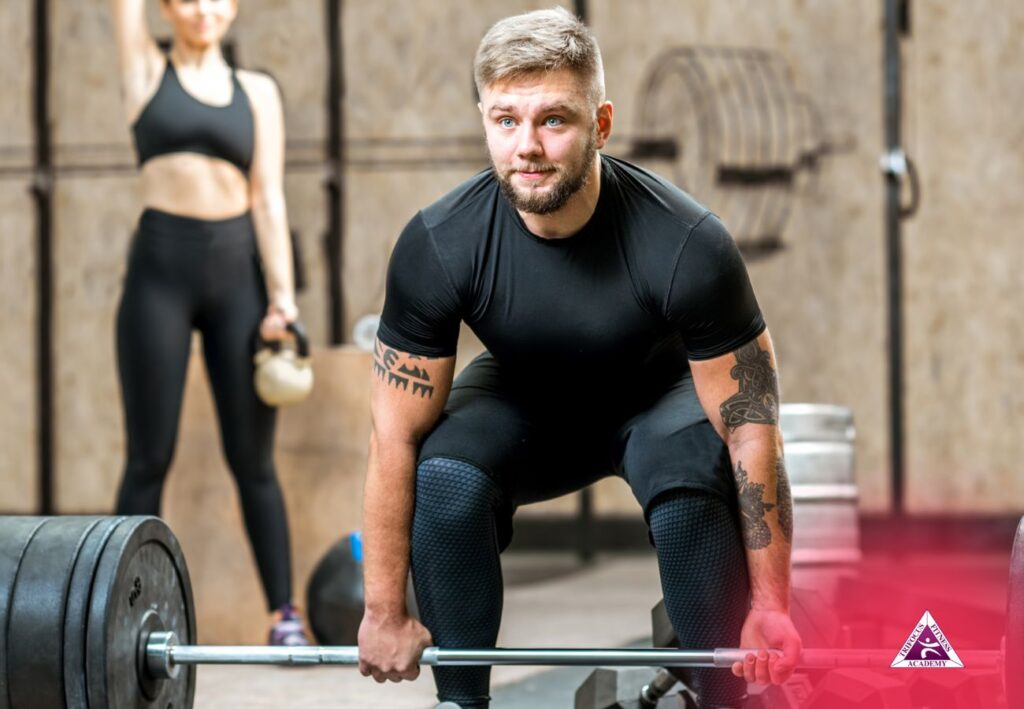
An effective personal training program incorporates strength training. Whether you’re training with athletes, newcomers, or weight-loss and body-composition clients, the physical performance benefits of Resistance training are undeniable. But a question that many personal trainers grapple with is this: Should you work on functional training or traditional Resistance training?
Both approaches are valuable, but they serve different purposes and appeal to various clienteles. Functional strength training focuses on the movements we make in everyday life and improves coordination, stability, and joint mobility. It’s ideal for clients looking to strengthen daily movement or athletic performance. Compared with traditional Resistance training, which focuses on specific muscles using machines or free weights, emphasis is on muscle hypertrophy and brute force. It’s frequently employed for physique goals or rehabilitation, or to bank targeted strength gains.
Understanding Functional Strength Training in Personal Training
Functional strength training emphasises movement patterns that translate to everyday life, sport and injury prevention. In personal training, this is one of the most important concepts that we teach clients: to make strength in the gym, what they can use outside. Most exercises incorporate several joints and muscles working together, which helps improve balance, coordination and mobility, as well as muscular endurance.
Not isolating muscles on a machine, but rather completing movements you’d do IRL, pushing, pulling, squatting and rotating. Movements may be conducted on unstable surfaces with equipment such as bands, kettlebells, TRX straps and med balls. For instance, a single-leg deadlift with a kettlebell works on hip stability and core strength while also building power in your posterior chain, something that can be helpful for both running and picking up groceries.
Personal training is excellent for seniors, athletes, and those with a sedentary lifestyle. It can fix muscular imbalances, improve your posture, and help prevent injury. Functional movements are specific, and rehab for patients who have been injured or are returning to a fitness program aims to re-establish neuromuscular control and joint stability.
But functional training is not for the faint of heart. Some clients may not have the mobility or stability to perform higher-level functional activities. And even when you have a decent base, movements should be regressed or strength built on first. PTs should assess each client’s movement competence before prescribing tricky functional drills.
Exploring Traditional Strength Training in Personal Training Programs
Traditional strength training seeks to increase muscle mass and brute strength through specific, sometimes isolated movements. In personal training, it is crucial for clients looking to develop muscle definition, improve strength, or achieve specific physique goals. Resistance exercises such as bench press, leg press, bicep curls, and shoulder press are representative of this style of training.
In traditional Resistance training, machines, barbells, dumbbells, and cable systems are typically used to isolate muscles. This gives you more control over the move and may be safer for novices or people recovering from injuries. By training muscles in isolation, clients can focus on weaknesses, establish symmetry and better track progress.
Arguably, the best-known benefit of traditional strength training is hypertrophy, or muscle growth. It is based on certain principles, for example, progressive overload, in which clients progressively increase resistance or volume. This technique is an excellent way to build lean muscle mass, boost metabolism, and improve bone health.
Personal trainers can also utilise traditional training to train the basics of strength with less depth than some functional exercises. It’s far easier to measure progress, repeat loads, and increase client confidence with a structured, repetitive exercise style.
Traditional Resistance training, however, does not always translate well into real-world movement. It usually isolates muscles, so alone it may not enhance functional coordination or balance. That is why it works best when paired with practical training.
For personal trainers with clients who want to gain muscle, improve strength, or change body composition, traditional Resistance training remains an essential component of any comprehensive system.
Comparing Benefits and Limitations of Each Approach
Applying functional and traditional strength training can help personal trainers design better, more well-rounded programs. They have their place and function, and good trainers can use them depending on where the individual client is and how to apply these various methods.
Functional strength training excels when the goal is enhanced movement quality, joint integrity, athleticism and overall injury resistance. It trains the whole body, your stabilising muscles are put to work, and it imitates real-life or sport movements. This is great for clients whose goals are more lifestyle-based. It’s ideal for clients whose goals are more lifestyle-based; it’s perfect for athletes and older adults, especially if they want to improve the quality of their movement. But it’s advanced enough to intimidate novices, and the reward of increased numbers may not be possible with such general “strength” requirements.
Conversely, Traditional Resistance training is linear, easy to follow, and easy to track. It’s great for gaining maximum strength, adding muscle size and definition and increasing power. It’s easy to measure progress from it, so clients can receive actionable results, which is very motivating. But it can miss things like movement patterns, motor control and balance on its own.
From a personal training standpoint, the issue is not functional versus traditional; it’s both. A mixed-bag approach enables well-rounded training, with clients developing a strong foundation while their mobility and movement control improve. For instance, a client might perform barbell squats to build lower-body strength, followed by Bulgarian split squats to improve single-leg stability.
At the end of the day, trainers must evaluate a client’s state of their own physical body and capabilities, as well as what they want to achieve, to determine the correct ratio. Working in one of two extremes is not suitable for anyone, and having the flexibility, creativity, and upfront understanding of both approaches will deliver better results and happier clients in the long run.
How to Combine Functional and Traditional Training for Client Success
The best of personal training combines aspects of functional and traditional Resistance training to cater for many different client objectives. This fusion of techniques builds muscle, improves real-world movements, and reduces your risk of injury. It also makes workouts more varied and wholesome, so there will be no loss of structure through all the variety.
Begin by assessing your client’s baseline, strength, mobility, and movement pattern quality. Traditional resistance training allows beginners or rehab clients to start with fundamental muscle strength and control. Continue teaching your child. As they become more confident and proficient with the fundamentals, introduce some functional movements to improve their coordination, balance, and core strength.
You can even mix both techniques within the same training session. “They gain inflexible use after a traditional compound lift like a barbell deadlift, where you can potentially follow that up with a functional rail such as kettlebell swing or single-leg Romanian deadlift,” he says. This is a strength built into balance and proprioception. When exercises are sequenced in and out of the traditional to functional sets, it adds variety to a session while challenging multiple muscle groups and movement patterns.
In this type of programming, you could have a set day for traditional lifting and another day for functional circuits or mobility work. This allows sufficient recovery while still diversely training the nervous system. Exercise selection should always be consistent with a client’s primary goal, aesthetics, performance, or better daily movement.
Additionally, educating clients about the benefits of each style can work to reinforce trust. If clients understand why each exercise is there and how it’s benefiting their life, they are more likely to run through a wall for you. Smart, integrated work makes clients stronger, more confident people.
Conclusion
Both functional and traditional strength training are essential for personal trainers to understand and balance to train their clients effectively. Each method has unique advantages. Functional personal training enhances balance, coordination and movement effectiveness, whereas conventional Resistance training is more about muscle building, power production and structural improvement. Instead of seeing them as conflicting methods, the best trainers use both.
Clients get the most out of it when their training is specific to where they want to go and what state of health they are in at that point. A busy professional looking to reduce back pain might benefit most from functional movements that improve posture and core control. And a client interested in body composition will probably require traditional strength work to elicit hypertrophy. Combining the two helps address all levels of physical fitness.
Contact the Trifocus Fitness Academy
The Trifocus Fitness Academy offers specialised online and internationally accredited Personal Training Courses designed to equip professionals with all the skills and knowledge needed to succeed as a professional Personal Trainer.

Frequently Asked Questions
Personal training focuses on exercises you do in real life. In addition to getting their hearts pumping, it promotes mobility, balance and coordination while working multiple muscle groups. Some of the most popular complementary workout tools are kettlebells, resistance bands and bodyweight drills.
Conventional resistance training in personal training refers to exercises that isolate specific muscle groups using free weights or weight machines. It’s focused on muscular hypertrophy, raw strength, and body composition. Workouts you will frequently encounter during personal training include the bench press, leg curl, and bicep curls. This is an easy-to-follow, predictable progression with measurable results that can benefit clients seeking muscle growth, aesthetics, or a more structured approach to strength development.
In personal training, functional Resistance training focuses on working the entire body in ways that mimic everyday activities and improve balance and coordination. Conventional resistance training programs isolate muscle groups for specific strength and hypertrophy. I think functional training is more mobile and dynamic; traditional methods tend to have planned progress and quantifiable gains in measurable strength or size.
Some clients who are best served by a functional training approach in personal training are athletes, seniors, and those recovering from injury. This approach helps improve movement quality, posture, and joint stability. It’s perfect for anyone looking to optimise daily function or performance, prevent injury, or enjoy the novelties of sports. Functional training also helps improve mobility and coordination, which is particularly useful in personal training for clients with lifestyle or performance-based goals.
Yes, old-school Resistance training also has massive value in personal training. It is critical for muscle development, strength and fat loss. The process also helps clients maintain their bone density and can boost metabolism. Individual training programs employ classical movements to quantify and improve a foundation of strength, especially for novices, bodybuilders, and those pursuing sensationally chiselled physiques. The trainees have widely adopted its systematic training approach.
Absolutely. The best personal training programs combine functional and traditional strength training to accommodate a wide range of goals. By employing these disciplines collectively, clients can incorporate elements of physical fitness and overall strength that they may have lost due to restrictions. Coaches can organise workouts to start with kinetic lifts and wind down with functional practices.