
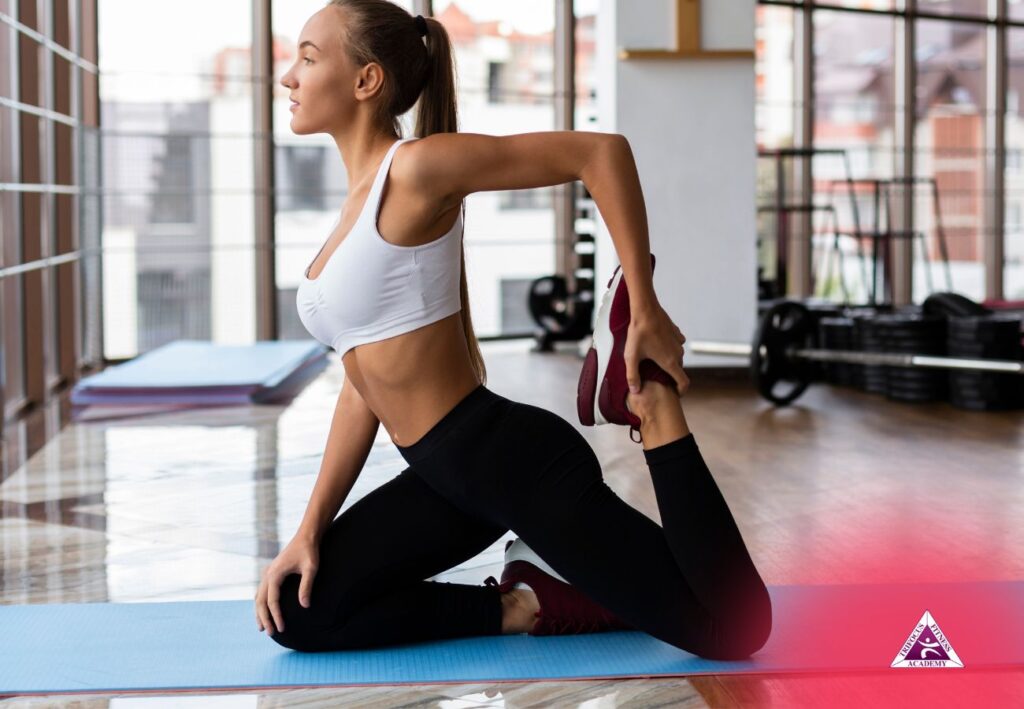
In an era in which people often falter over time to physical complacency and digital stimuli, few these days know the simple movements they already possess because of the common fault of detaching from our bodies’ native movements. Proprioception and body awareness are both crucial for maintaining balance and coordination, as well as general health. Pilates exercises allow for a very efficient way to rehabilitate and improve these essential functions. Heavy repetition and overly rapid movements are the antithesis of a Pilates class, which encourages mindful movement, correct alignment, and breathwork designed to create a union between mind and body.
Although Pilates workouts are great for toning muscles and supporting flexibility, they also increase body awareness by training individuals to move with deliberate action. This awareness translates to better posture, reduces the risk of injury, and improves functionality in everyday movements.
Improving Posture and Alignment Through Pilates Exercises
Postural awareness is the ability to sense where body parts are as we move or hold still. Sitting for long periods and developing uneven strategies to counterbalance it creates muscle imbalances, joint strain and lowers proprioception. When people learn to move their bodies properly using the Pilates Method, it corrects these issues.
Pilates helps with spinal articulation, core engagement, and shoulder alignment, meaning you hold perfect posture correctly every time on the Reformer. Exercises like pelvic tilts, spine stretches, and shoulder bridges mainly help by mobilising the self and reinforcing sound alignment cues. When people maintain these training methods, the muscles become more attuned to good posture and maintain better form with weight training as well as during sedentary positions throughout their day.
This alignment also has the added benefit of improving proprioceptive feedback by putting joints and muscles in their ideal anatomical positions. When the body is in optimal alignment, it means that the proprioceptive sensors found throughout our muscles, tendons and joints are more aligned to communicate effectively with our brain. This results in an improvement in balance and coordination. The focus on proper alignment and body awareness in Pilates repatterns correct postural mechanisms, minimising the use of compensatory patterns, thus promoting optimal musculoskeletal health throughout life.
Strengthening Neuromuscular Connections with Pilates Exercises
The conditioning exercises are of paramount importance in creating neurological connections in your body; these are the communication routes the central nervous system utilises to produce specific movement. Effective neuromuscular communication is necessary for normal movement, balance, coordination and proprioception. The slow, deliberate movements that are created in Pilates help the body to activate specific muscles with intention.
Every exercise in Pilates requires complete attention to encourage the body to move with maximum control, while minimal effort, activating stabilising muscles that our usual exercises often neglect. Movement patterns that require multi-muscle coordination, such as the Pilates hundred or basic exercises like leg circles and controlled roll-ups, all help to develop neurological pathways of muscle recruitment.
Pilates exercises also focus on unilateral movements where the body must stabilise and coordinate on one side alone. The place can help activate underactive muscle groups, but it also helps encourage symmetrical working of the musculature to reduce compensatory imbalances in the body and improve overall body sense.
As a result of this, the brain gradually becomes proficient in sending more accurate commands to the muscles, which improves movement quality and economy. As Pilates movements become a part of the daily routine, one develops better neuromuscular coordination and proprioception, making it feel like an automatic response to control their body.
Refining Balance and Coordination with Pilates Exercises
Pilates is excellent for balance and core stability (a fundamental aspect of proprioception) because it builds on centred, functional movement patterns, retraining the mind how to move safely and effectively against resistance. Also, unlike traditional strength training that may isolate muscle groups, Pilates focuses on whole-body movements that require overall adjustments to maintain muscular stability.
Balanced body workout is a form of stability training as well, where an individual performs exercises such as single-leg stretches, standing leg lifts and moves with the stability ball, which challenges the balance. These exercises turn on your core stabilisers and make the body call other muscles into action to help keep you balanced. Performing these Pilates exercises that specifically target balance helps people improve both their proprioceptive acuity and coordination.
In contrast, Pilates equipment such as the reformer or stability ball provides dynamic resistance and unstable surfaces, creating an opportunity to balance amidst the challenge of proprioception. Working with these tools requires the practitioner to constantly adapt their movement to rapidly changing forces, forcing them to focus on positioning and dynamic body responses.
The Pilates workout is also progressive, so that you can begin with some basic balance drills and work up to intricate coordination exercises. This progression of balance and body control ensures our athletes have a strong foundational base for sports performance, everyday life, and injury prevention.
Long-Term Benefits of Pilates Exercises for Functional Movement and Injury Prevention
Pilates exercises provide a significant return on investment, enabling the (significantly) long-term benefits of functional movement and injury prevention. Utilising Pilates to aid in developing body awareness and proprioception will give the individual the tools required to utilise optimal, effective movement in any context, whether in sports or daily activities.
For those who might not be familiar, functional movement pertains to the mobility and mechanics that make it seamless for the body to perform activities of daily living in a more natural sense, like squatting, bending, twisting, etc. Pilates exercises are designed to take these basic moves and turn them into a strength training exercise targeting joint alignment. It minimises compensatory patterns that are a significant cause of overuse injuries and chronic aches and pains.
Better proprioception through Pilates helps the body respond more effectively to sudden shifts in terrain or balance, which can lead to fewer falls and injuries. Proprioceptive function is essential for older adults to prevent falls and remain independent.
They said Pilates is a type of physical activity that strengthens the muscles surrounding the joints, which in turn provides greater support and decreases excessive load, making them healthier. Great for anyone returning from an injury or with chronic musculoskeletal conditions.
Conclusion
Pilates routines offer a complete and mindful method to improve your body awareness and proprioception. She adds, in an increasingly sedentary and disengaged world, physically, Pilates is a very tangible practice to regain our mind-body connection; improve movement quality and move well. Pilates makes use of proper alignment, balanced posture, and specific muscle engagement to provide a deep, whole-body conditioning workout that retrains your body to move with poise and control properly.
The focus on neuromuscular coordination facilitates communication between the brain and muscles, which optimises balance, coordination and movement. Pilates helps in preparing a challenging stability that translates into functional movement patterns so an individual can meet the challenges of daily life safely and confidently.
Contact Trifocus Fitness Academy
Explore the rewarding path of becoming a certified Pilates Instructor. Unleash your potential and inspire others on your journey with Trifocus Fitness Academy’s comprehensive Pilates Instructor program.

Frequently Asked Questions
Pilates work is as much about body awareness as strength, being controlled, precise, and mindful in its movement (instruction). Every movement focuses on the correct alignment, muscle engagement and cooperation with your breath. This means that over time, people will become more aware of how their body is positioned and functioning. With repetition in time, the nervous system becomes able to transmit more accurate signals to muscles and movements are refined.
The ability of the body to sense its position and movement in space. The focused, functional control required of Pilates movements can help to improve proprioception. Movements such as leg lifts, stability work, and core-hinging exercises encourage proprioceptive feedback using stabiliser muscles and strengthening neuromuscular pathways. This internal awareness of where the hands are and what they do is something that makes it possible for practitioners to perform daily activities with little effort, other than knowing how each movement should be applied.
Pilates is an excellent way to increase spinal articulation, core stability and shoulder alignment. They encourage spinal flexibility and reinforce good posture habits through movements such as spine stretches and bridges. Pilates retrains the body to keep joints in proper alignment during exercise, as well as during daily activities, by teaching the engagement of deep postural muscles. Having a better posture allows better communication of joints and muscles with the brain as proprioceptive feedback improves.
Yes, Pilates work well to develop balance and coordination. The many Pilates moves that place you in a state of controlled imbalance force your body to work holistically, meaning everything must engage at once, including smaller supporting muscles and core stabilisers. Single-leg stretches and stability ball exercises help train the nervous system to respond efficiently when there is a change in position. In addition, some types of Pilates equipment, such as reformers and wobble boards, provide dynamic resistance that will improve the proprioceptive feedback even more.
The Pilates exercises build joint stability, correct muscle imbalances, and enhance proprioception. Pilates stabilises the muscles around important joints and promotes positive movement patterns by further reinforcing proper mechanical behaviour when performing the movements. These decreases and compensatory behaviours are often what lead to overuse injury. Better proprioception can make people more responsive to muscle disturbances that occur with balancing, thereby reducing the chances of falling and acute injury.
Pilates is a good choice for anyone who wants to improve body awareness, balance and coordination. These range from athletes looking to improve their performance, older adults hoping to avoid a fall and office workers with postural dysfunctions. For anyone recovering from injuries or with joint sensitivities, Pilates is also great for healing and rehabilitation with its low-impact and joint-friendly philosophy.