
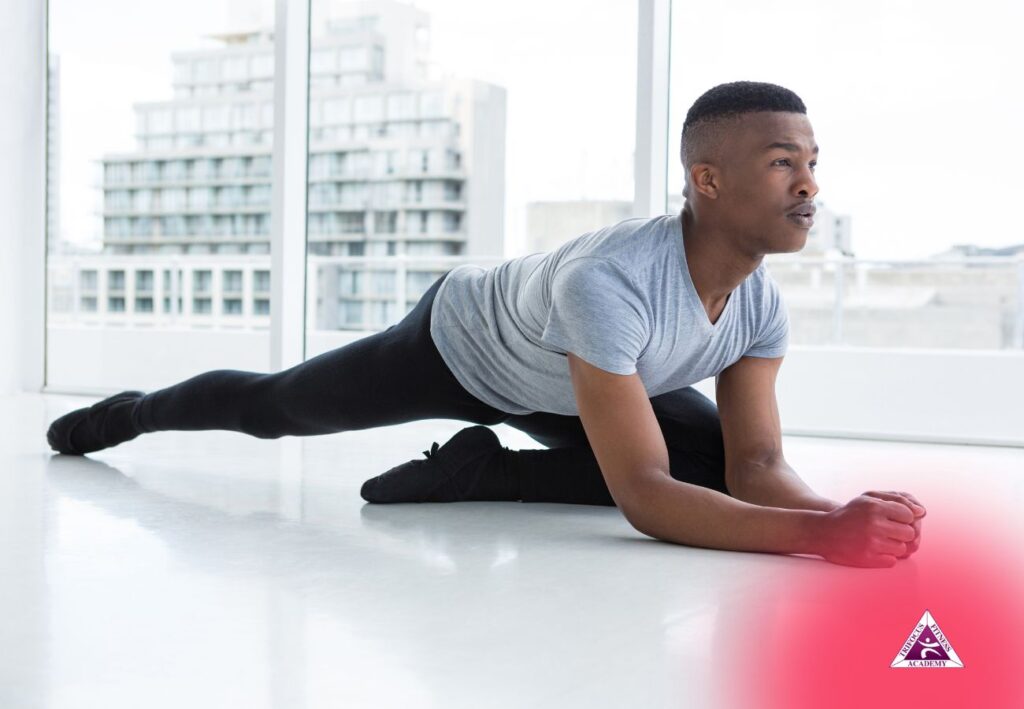
Dancers require their bodies to be strong yet flexible; they need the ultimate in muscular control. Each move is a synthesis of art and athleticism, employing splitting precision and stability. Though this also means that dancers are frequent victims of injury, typically occurring around the joints, muscles, and spine due to years of constant physical demand. Pilates-based exercises are now considered a fundamental component of the training regimen for dancers, providing a comprehensive framework to help prevent injuries and enhance performance.
By developing a strong core, stability, and purposeful movement, Pilates provides essential exercises for dancers to achieve long-term injury-free performance. Unlike many exercise programs that focus primarily on the development of one or two elements (Conditions, see below), Pilates exercises create even muscle tone and suppleness.
Core Strength and Stability Through Pilates Exercises
Pilates for dancers help to develop a deep core strength and improve stability. The core is the most critical region for all types of movement (it also centralises balance, control and neutral alignment). Overcompensation in other parts of the body can cause strain and increase the risk of injury.
Common to all Pilates movements is a focus on pelvic and spinal alignment, breathing, developing a strong core or centre and improving coordination and balance. These muscles work collectively to keep your spine in a neutral position and help perform various physical movements effectively. In short, this means more postural strength, better control in high-level routines, and less pressure on fragile joints for the dancers.
Some of the mat-based Pilates exercises, such as Hundreds, Single Leg Stretch and Plank Series, are great for working your abdominal muscles. Exercises on equipment like the Reformer or Cadillac add resistance to deepen control through a full range of motion. All of this is necessary for effectively lifting, turning and extending safely, but most importantly, to have a core foundation.
Enhancing Flexibility and Alignment with Pilates Exercises
While flexibility is a vital part of dance, it needs to be accompanied by strength and control. Both of those, if done in excess and without proper use of muscle strength, may result in hyper-mobility and joint instability. Pilates helps to remedy this through stretching with active muscle engagement, allowing for a healthier and functional range of motion.
The truth of the matter is that Pilates focuses on aligning your pelvis, spine, and limbs. Precise movements utilising joints through their full range without compensation. What this means for a dancer is strong muscles that will elongate and support with “stability” around the joints as they are pulled to their full range of motion.
Exercises such as the Roll-Up, Spine Stretch Forward and Swan Dive can increase spinal mobility while strengthening muscles to support posture. Leg Circles and Side-Kick Series: I try to keep the Leg Circles simple, unless we want something more challenging. Or really, Leg Circles improve hip mobility (and Leg Swings are a good substitute) as well as providing stability & control. Using Pilates as a tool to stretch dancers gently, we can help them increase flexibility in a way that is safe and reduces the risk of strains and imbalances.
Pilates is also used to correct postural deviations frequently seen in dancers, like anterior pelvic tilt or hyperextended knees. Knowledge of anatomical alignment and safe positioning also enables dancers to be more aware of their dancing, allowing them to correct errors that might cause injury or decrease the quality of performance.
Injury Prevention Strategies in Pilates Exercises for Dancers
Every good Pilates program for dancers has its foundations in Injury prevention. Pilates moves are excellent at evenly building muscle, so force gets distributed over multiple muscles and is not concentrated in one spot. On top of that, Pilates works on stability factors, which protect the joint, all things that can prevent those small tears from turning into huge pulls or even worse, hits.
Dance injuries can vary but are often associated with muscle imbalances, overuse and inappropriate techniques. Pilates exercise helps to combat these problems by working the underused muscles and by encouraging more symmetrical movement levels. Some examples of these are gluteus Medius and hip external rotator exercises, which are key to fend off classic injury patterns that include IT band syndrome and hip impingements.
Pilates movements also practice your proprioception, a person’s capacity to perceive the location of their body in space. Better proprioception leads to better balanced, more coordinated and faster reflexes that all add up to safer movement execution. Any exercise done on an unstable surface or even with a prop such as the Pilates ball requires some stability control and the ability to stabilise your entire body correctly.
Indeed, rehabilitation-oriented Pilates exercises are frequently incorporated into dance injury recovery programs, too. These offer a low-impact setting to allow some form of strength and mobility practice for a dancer while in recovery. Works apply modifications to keep the injured site safe, while continuing the conditioning of your whole body. Dancers incorporating Pilates exercises into their weekly training programs are utilising some of the best tools to prevent injuries and enhance their resilience, ultimately leading to longer careers.
Elevating Dance Performance with Pilates Exercises
Pilates in the performing arts goes well beyond injury prevention; those exercises are an instrumental part in becoming a better dancer. Pilates provides us with the focus, clarity and confidence to take our dance ability from a professional level to an elite level on stage.
By working on Pilates movements, which improve movement coordination, dancers are taught to utilise the appropriate muscles for a particular action in dance. This results in less jerky movements and more seamless movement of energy. Their choreography appears challenging yet seems accomplishable with grace, their form held firmly in high levels of complexity.
The control of the core muscles provided by Pilates exercises helps improve balance and stability while turning, leaping and extending. Allows dancers to balance in extreme postures and transitions without load shifts. Moreover, the focus on breath control in Pilates movements aids long-endurance and stress management, as well as performance anxiety.
Pilates enhances body awareness while also setting more refined dance steps. Small changes like this in alignment and motor recruitment can make considerable improvements in performance quality. Pilates movements in the group offer a sense of uniformity and synchronisation among an ensemble that is critical for visual cohesion in the performances.
Dance performance is significantly enhanced by incorporating Pilates exercises into daily routines without delay. When strength, flexibility, control and mindfulness are integrated into dance training beyond the barre, it operationalises not only technical skills but also broader realms of choreographed expression and artistry.
Conclusion
Pilates have evolved to become a ‘necessary’ approach in dance injury prevention and improving the quality of performance. Pilates movements are inherently based on core strength and alignment, making them an excellent match for dancers due to their focus on full-body movement. Through deep core work, dancers can develop stabilising control to prevent injury while doing intricate movements.
Passive flexibility and muscular activity combine to keep dancers in good joint alignment as they move through space, ensuring that the necessary fluidity required by their art does not compromise their joints over time. These injury prevention mechanisms that are integrated with Pilates movements are both proactive and rehabilitative. Pilates does this by targeting muscle imbalances, creating better proprioception and promoting optimal movement patterns, which in turn decrease the risk of many common dance injuries.
Contact Trifocus Fitness Academy
Explore the rewarding path of becoming a certified Pilates Instructor. Unleash your potential and inspire others on your journey with Trifocus Fitness Academy’s comprehensive Pilates Instructor program.

Frequently Asked Questions
Well aimed at preventing injuries by training core muscles, refining alignment and balanced muscle growth, it is also a great option. Dancers frequently experience injuries because of muscle imbalances, overuse, and poor alignment. Pilates movements combat these problems through low-impact, joint-stabilising movements that build functional strength. Pilates that builds body awareness and corrects faulty movement patterns can help a dancer to release stress from vulnerable areas like the hips, knees and spine.
Yes, all the while Pilates movements improve flexibility safely and gently. This contrasts with passive stretching, where muscles are allowed to lengthen and relax; Pilates values active flexibility, or the flexibility that activates each muscle. Overstretching and hypermobility are common issues in dancers, which are avoided with this approach. The Leg Circles and Spine Stretch Forward exercises bespeak greater mobility whilst preserving the integrity of the joint.
Improves dance performance by increasing core strength, control and movement efficiency via Pilates exercises. Using targeted exercises, dancers gain increased balance and stability in movements. Using Pilates to help our dancing, by training the correct muscle groups, dancers will move more smoothly with fewer compensations. Better posture and alignment through Pilates exercises enable dancers to perform more complex dance choreography with beautiful ease. On top of that, the breath control centre within Pilates sustains stamina as well as boosts professional dancers’ efficiency through extensive rehearsals and stage programs.
Absolutely. Because of their slow, low-impact, and controlled movement, Pilates movements are extensively used in dance injury rehabilitation. The exercises can be scaled for all stages of recovery to protect the injury while working on overall strength and mobility. Gentle Pilates movements gradually reintroduce functional movement patterns to the body, preventing stiffness and muscular wastage. Guided progression allows dancers to regain confidence, fix imbalances, and return to full activity in a way that prevents further injury.
Dancers should perform these classes 2-3 times a week for maximum benefits. This frequency helps maintain core strength, flexibility, and body alignment without causing fatigue or overtraining. In performance season or during periods of intensive rehearsal, just one session a week can go a long way in helping to prevent injury and improve efficiency. Regularly practising Pilates movements results in long-term increases in strength, posture and control.
A few Pilates exercises, for example, The Hundred, Leg Circles, Spine Stretch Forward and the Plank Series, are beneficial to dancers. Any exercises, core strength is there for sure, so is the mobility and spinal articulation with full body coordination throughout. The Reformer or Cadillac allows for equipment-based exercises like Footwork and Long Stretch Series, which deliver resistance to better train control and strength through greater ranges of motion. Pilates workouts focusing on breath control and alignment are also crucial for improving balance and endurance. How to Enhance the Core and Improve Balance Pilates Workouts.