
Sports coaching, one size doesn’t fit all. Players of different ages have different physical, emotional, and cognitive needs, meaning good coaching needs to be dynamic and responsive.
A process that works for a seven-year-old may not resonate with a teenager or could be too much for an adult returning to sport. From young to old, it is essential to adapt training, communication and motivation methods for progress and success.
Understanding these distinctions is key to optimising potential and sustaining long-term physical activity and sport participation. Children of a young age should be trained to have fun and develop motor skills and self-confidence through sports coaching. With adolescents being involved, a more regimented, psychologically supportive approach that considers peer pressure is essential.
Adults want a balance between aspirations and lifestyle reality, and seniors need coaching focused on function, mobility, health and fitness. Every age group is different and understanding this allows coaches to design more inclusive and effective programs.
Coaching Young Children: Building the Foundation
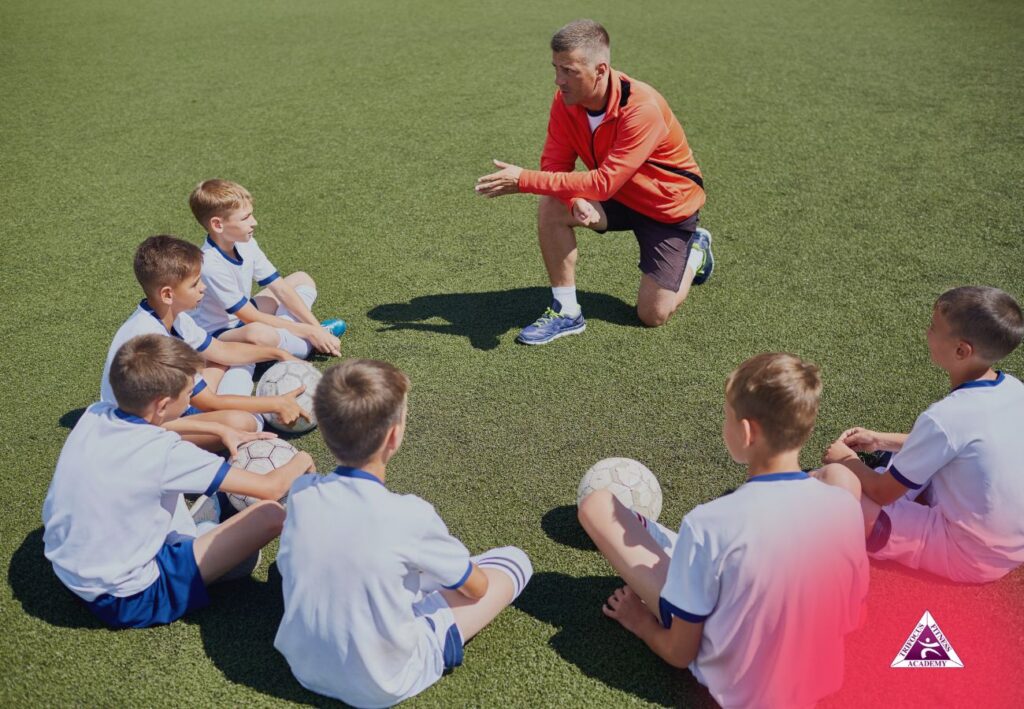
When coaching young children in sports (approximately ages 5–12), the emphasis should be on developing fundamental movement skills, fun, and rudimentary aspects of social development. At this age, children feed on creativity, repetition and encouragement. Coaching needs to be game-centric and confidence-building.
They may be intimidated by long lectures or complicated tactics, so the instructions must be short, visual and hands-on. Coaches should demonstrate values they admire and reward effort over results. Errors would then become perceived as learning opportunities rather than failures.
Sports coaching for young children should also emphasise safety and inclusivity. We must remember that young children are still developing their coordination and balance, so drills should reflect where a child is physically.
Rotating from one activity to another engages attention and encourages kids to try various skills. Creating a supportive environment in which every child feels valued is also crucial. At this stage, social advancements are as vital as physical ones. Knowing how to work together, listen, and share are lifelong skills kids learn in practice on the field and in competition.
However, coaches who appreciate these developmental needs can provide a solid platform for lifetime sport involvement and a positive relationship with physical activity. Given the right coaching experience, young children will develop their motor skills, self-confidence, and passion that underpin future success within sport.
Coaching Adolescents: Supporting Growth and Identity
Teenagers (aged 13–18) are undergoing enormous physical and emotional changes, so sports coaching needs to be thoughtfully designed for both performance and personal development. Adolescents are beginning to establish a more apparent identity and tend to be power-seeking and status-seeking.
The coaches become more successful when they maintain a collaborative, respectful attitude. Good sports coaching relationships with teens are about more than commands — they also include explanation, dialogue and goal setting.
Biologically, teenagers undergo rapid growth, which can make them temporarily less coordinated and receptive to specific tasks. Coaches should consider this and factor in training loads, recovery time, and overuse injuries. Performance is becoming an increasingly important theme, but skill acquisition and technique enhancement continue to be more central issues.
Psychological barriers like self-awareness, anxiety or peer pressure can also affect participation and motivation. Coaches who can offer emotional support, create a strong team culture and extend positive reinforcement can instil resiliency and confidence in teens.
Adolescent sports coaching should also promote responsibility. Empowering teens to own parts of their training, such as developing personal goals or recording progress independently, encourages independence. Peer-to-peer relationships become more important at this age, so team-building activities and aphasia-friendly settings are necessary.
Coaches who respect the increasing amount of autonomy that teenagers crave while offering structure and support lay the groundwork for athletic and personal development. This balance breeds better athletes and more grounded, self-aware people who want to remain active into adulthood.
Coaching Adults: Balancing Goals, Lifestyle, and Motivation
Adults pursue sports coaching for various aims , and their histories are diverse. Some will be former athletes returning to the game, others trying it for the first time, whether for health, fun or competition.
They all need a coach who understands what it’s like to live as an adult — work, family, time limitations — and can design programs around it. Good adult sports coaching is mixed with the right amount of structure complemented with a dash of fun, resulting in that!
Communication is key. Adults learn best with straightforward and to-the-point explanations, without ‘prancing’ around the subject, and they appreciate being treated with equality in the coaching relationship.
Coaches should know what their adult athletes are trying to achieve, whether it’s knocking out a triathlon, losing weight or mitigating stress through activity. Your training plan should match these goals with injury prevention, realistic progression, and time-sensitive training.
In addition, adult sports coaching must target motivation, which is susceptible to increase and decrease due to external life stressors. Sessions that are diverse, goal-oriented and fun keep the power on.
And we all talk about injury prevention and injury recovery for adults. June 2018-60 Coaches should emphasise warm-ups, cooldowns, mobility exercises, and strength training to optimise long-term sports participation.
Adults also like data, so adding metrics can make users more accountable and motivated. However, emotional help is no less vital. Adults may have mental barriers too; coaches should be aware of such issues as performance anxiety and body image concerns, she says.
By taking a well-rounded, whole-body approach to sports coaching, adult clients can continue riding data-free, reach goals and, most importantly, maintain a healthy lifestyle long-term.
Coaching Older Adults: Promoting Health and Functional Fitness
Older adults (usually 60 years and older) are concerned with improving their quality of life, independence, and injury prevention. Connecting to the Community. Successful engagement in sport and physical activity for many older adults is predicated on their desire to be mobile, manage chronic conditions or sustain social connections.
Training in this age group must be very sensitive to personal health status and restrictions, be cognizant of mental considerations such as fear of injury or previous negative experiences in sport.
An effective coaching program starts with a comprehensive evaluation of each client’s physical condition, medical history, and fitness objectives. Workouts should focus on functional movements that simulate everyday activities such as walking, reaching or rising from a chair.
For mature sports coaching should emphasise balance, flexibility, strength, endurance, and modifying factors for joint health, cardiovascular fitness, and muscle mass, including alternatives and adaptations.
No less important is the social and emotional element. Older people prefer settings that are inclusive, stimulating, and sociable. Coaches should reward any success, no matter how small, and be part of a community.
Empowerment, not intensity, is what coaching is about, to paraphrase Michael Bungay Stanier. Promoting regular exercises with fun and safe reinforcements enables clients to gain confidence and independence. Older adults improve their physical health, emotional well-being, and social well-being in the long term by taking up sports with the right coaching approach.
Conclusion
The best sports coaching will be appropriate to the child’s physical, developmental and emotional needs. Strategies and communication methods must be tailored to each age group — from young kids discovering sport for the first time to older adults seeking to stay fit and connected.
The authors wrote that such recognition could lead to richer, more effective and longer-lasting sports experiences for young athletes. Whether the focus is skill development, personal growth, learning to compete or just having fun, sports coaching that can be adapted will help you and your athletes to enjoy and thrive at every stage. The capacity to evolve coaching methods across age groups isn’t just a skill — it’s a responsibility for both the coach and the people they serve.
Contact the Trifocus Fitness Academy
The Trifocus Fitness Academy offers specialised online and internationally accredited sports conditioning courses that have been designed to outfit professionals with all of the skills and knowledge needed to find success as a professional conditioning coach.

Frequently Asked Questions
Youth sports coaches need to understand that there is a big difference between a seven-year-old child athlete and a fourteen-year-old. Toddlers require silly, confidence-boosting contexts for fundamental motor skills, while adolescents want structure and reassurance as they deal with self-identity and growth spurts. There is limited time and a need for coaching with adults, so be mindful of goals and lifestyles, functional movement and safety training for seniors. A single, fixed plan of attack can lead to frustration or injury or, worse, disengagement. Good coaching considers developmental readiness, motivation, and personal goals to design an exciting and sustainable custom experience.
The objectives of sports coaching for young children (usually 5–12 years old) include the development of fundamental movement skills, support for and engagement in sport, and enjoyment. At this point, competition should not be emphasised; agility, balance, coordination, and sport-specific skills should be emphasised due to various activities and games. Kids learn best through play, so coaching should be fun, creative, and non-threatening. Emotional and social development is just as crucial — coaches should help them learn cooperation, taking turns and listening, while promoting a positive self-image. Mistakes should be considered lessons, not defeats.
Teens (13–18) are in a comparative stage of dynamic and rapidly changing physical, emotional and psychological evolution, so coaching them is very different from coaching children. Training in sports in this age group should consider the development of body awareness, performance expectations, and social pressures. Teenagers fare better when they are treated with respect by their coaches, when the purpose of drills is explained and when they are included in goal setting. Motivation may be affected by peer relationships, identity exploration, and the need for independence. Physiologically, coaches need to recognise growth spurts and adapt training to prevent athletes from getting injured.
When coaching adults, the focus should be on everyone’s goals so that programs make sense regarding their lifestyle, current fitness level, and time available to train. Adults often balance work, family, and personal obligations; flexibility and competency are key. Practical and Effective Sports Coaching for Adults should be based on achievable goal setting, injury prevention and planning for long-term success. Communication should be honest yet respectful- most adults like to feel like partners in the coaching process. Some adults have participated in sports before, and others are new to it, so coaches need to adjust for experience and comfort level. “So many of the intangible aspects of training are so critical for long-term compliance,” he says, “whether it’s knowing when an athlete is overtraining, providing emotional support or coming up with new _ to make a workout less dull.”
Sports for seniors as training aim to provide a better quality of life, independence, and good health. Strength, Balance, Flexibility & Cardiovascular Health . With ageing comes the need to maintain independence, agility, and overall health. Personal trainers must evaluate clients’ fitness qualifications, their background with exercise, and their personal fitness goals to make proper programming decisions. The exercises should emulate daily movements for functional fitness, and low-impact, joint-friendly exercises are most appropriate. Physically, sports coaching has many emotional and social benefits for seniors – confidence boosts, lower anxiety, a sense of community and the learning curve can challenge you, even in retirement. Support, good communication, and tracking progress keep you motivated.
To communicate effectively across the ages, a sports coach must have empathy, flexibility, and excellent communication. And knowing the stages of physical and emotional development is critical — what motivates a child won’t motivate an adult. A coach should be able to change the language, expectations and training methods depending on age and need. Patience with active listening can help develop trust and rapport. Knowledge of injury prevention, motivation techniques and developmental so-called ‘childhood’ psychology is also necessary. A good coach creates an inclusive culture, focuses on growth over perfection, and dishes out feedback conducive to the receiver’s growth. Ongoing education, in the form of sports science and behaviour coaching, ensures methods are current.