
Core strength isn’t just a fitness buzzword—it’s a fundamental key to physical well-being, one that supports every movement you make. If you’re an athlete, weekend gym-goer, or just someone who wants to live an injury-free life, you need a strong core. In private training, central muscles are often essential as they contribute to a strong base, preventing injuries from occurring and optimising performance.
When Private Fitness focuses on core development, a client goes further than just good looks. A strong core keeps you balanced, helps shift your body weight from side to side and front to back, and stabilises your body, in general. That’s important because it reduces the risk of back pain and can support every other kind of movement, from walking up stairs to lifting weights. It’s the middleman, connecting your body’s top half with your body’s bottom half, and is therefore key to keeping everything strong and working together.
Why Core Strength is Foundational in Personal Training
In personal training, it’s a shared starting point, since it affects almost every other physical activity. The term “core” refers to the muscles of the abdomen, lower back, hips and pelvis — all of which work in tandem to stabilise and support your body as it moves. Basic exercises can become useless, or worse, dangerous, without a solid core.
A Private Fitness programme focusing on the core will make you a stronger, steadier, and more resilient person. Whether you are doing a squat, a deadlift, or an overhead press, your core is keeping your spine aligned and your movements in check. This is particularly key for beginners, since poor form almost always stems from a lack of core engagement.
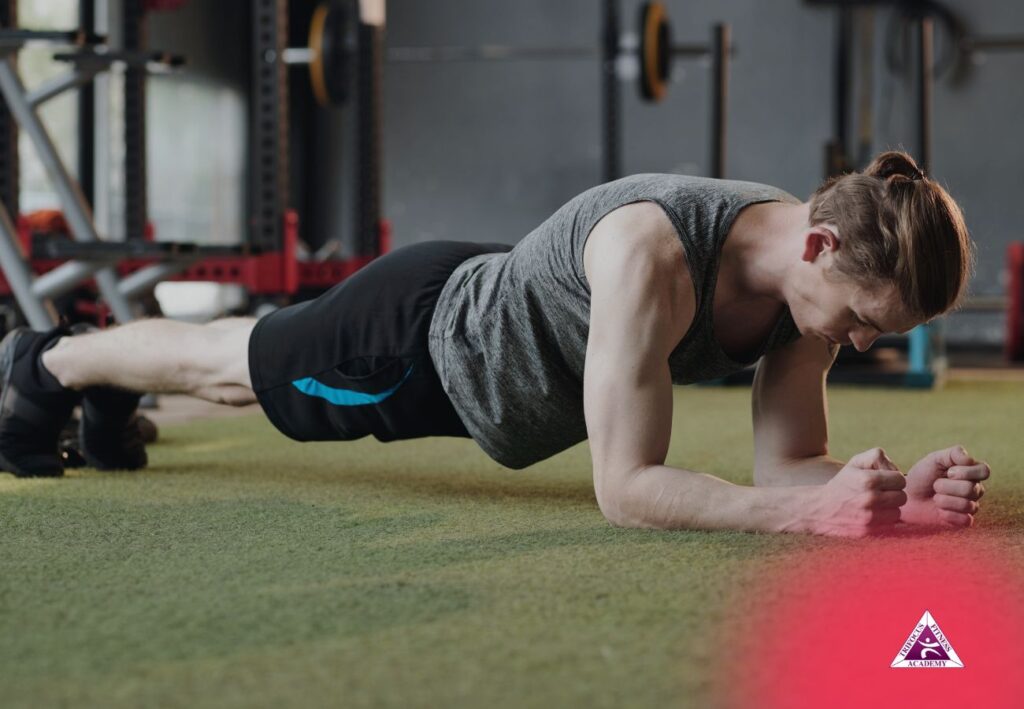
It is something that personal trainers tend to check for early on in a client’s programming. Plank exercises, bird dog exercises, and dead bug exercises are typically used to assess fundamental core strength and identify imbalances. * This guarantees that the training program enhances safe and efficient progression to more advanced lifts and dynamic (explosive) movements.
A solid core also helps maintain proper posture and body alignment, reducing the potential for chronic pain or overuse injuries. A client who is a desk jockey or driver can benefit significantly from some focused core work in their training. They can experience less pain and their body feels better overall by adopting better postures and using spinal supports.
Enhancing Performance Through Core-Focused Personal Training
Core Strength Personal training focused on core strength can greatly benefit sports and everyday performance. There are muscles at the centre of the body, which are crucial to the transfer of power, balance, and efficiency of movement. Whether you’re sprinting, lifting, or playing sports, a strong core is what makes the difference between effectiveness and fatigue, injury, or both.
One of the primary ways core strengths enhance performance is by increasing the synchronisation between the upper and lower body. The trunk stabilises and transmits forces during movement, such as jumping, throwing, and twisting. When that strength and stability are lacking, power leaks and performance decline.
In personal training, the core isn’t just sitting on a mat and doing crunches. “Compound movements, like kettlebell swings, medicine ball slams, and functional lifts, can all be easily programmed to incorporate core activation the entire time you’re working out,” she says. Dynamic moves not only enhance the core, but they also condition it to be more synchronised with the rest of the muscles.
Core training also helps improve balance and coordination. It forces the body to maintain good alignment and respond to position changes, such as single-leg deadlifts or stability ball exercises. These advantages transfer directly to sports performance, as well as to everyday life activities.
If performance is what you’re after, personal training, which includes targeted core work, is a must. It prepares the body for competition, helps prevent injury, and creates better, more functional, and empowered athletes.
Core Strength and Injury Prevention in Personal Training
Core strength isn’t just a fitness buzzword—it’s a fundamental key to physical well-being, one that supports every movement you make. If you’re an athlete, weekend gym-goer, or just someone who wants to live an injury-free life, you need a strong core. In private training, central muscles are often essential as they contribute to a strong base, preventing injuries from occurring and optimising performance.
When Private Fitness focuses on core development, a client goes further than just good looks. A strong core keeps you balanced, helps shift your body weight from side to side and front to back, and stabilises your body, in general.
That’s important because it reduces the risk of back pain and can support every other kind of movement, from walking up stairs to lifting weights. It’s the middleman, connecting your body’s top half with your body’s bottom half, and is therefore key to keeping everything strong and working together.
The Importance of Core Strength in Personal Training
One of the most significant advantages of core strength in personal training is its ability to prevent injuries. A weak or imbalanced core is a common culprit in many lower back, hip, and knee injuries. When the core does not support the pelvis and spine correctly, other muscles become overly stressed and overused.
Private Fitness workouts that focus on core stability enable clients to move more efficiently and with greater control. This, in turn, prevents all those awkward movements, poor lifting, and posture-induced stress that can cause injury. For instance, understanding how to brace your core during heavy lifting will help preserve your spine and make exercises safer.
Trainers usually incorporate corrective exercises that build core strength while addressing underlying movement dysfunctions. Movements such as glute bridges, side planks and rotational holds will also help to stabilise our core and pelvis better. When you incorporate these into a personal training program, the body becomes less fragile and less susceptible to breakdown.
Additionally, because a strong core enhances proprioception — your body’s intuitive sense of its position in space — a coordinated core means you’re less likely to fall. That’s no small thing; better balance means quicker reflexes and a decreased risk of falls or stumbles, whether in a workout or just getting through daily activities.
For clients in rehabilitation or those with chronic pain, a customised training program, emphasising the experience of core empowerment and strength, is often integral to their healing. It helps them not only return to full function quickly, but they usually come back with an improvement in their movement patterns compared to pre-injury.
Integrating Core Training into a Personal Training Program
Functional core training in personal training is not just about doing crunches or sit-ups. It requires a balanced approach that addresses different forms of core strength, including stability, endurance, and dynamic control. Core exercises need to be individualised with personal trainers and specific to clients’ goals and physical capabilities.
Core bracing and control are trained through stability exercises, such as planks and anti-rotation holds. This is the foundation for any personal training program focused on the core. After mastering stability, they can progress to movements like Russian twists, hanging leg raises, and rotational medicine ball throws.
Core work is also often incorporated into workouts that target the entire body by personal trainers. Functional moves — such as lunges with overhead reaches, cable chops, and farmer’s carries — force you to engage your core and build strength in multiple planes of motion. This makes deep core training more effective and functional for real-life activities.
Progression is key. A good PT will know how to challenge you a little bit more by tweaking the time under tension, resistance, and complexity. This promotes further progress and limits the risk of injury. They also tweak programs based on feedback from clients, mobility assessments, and performance benchmarks.
You must follow through and be consistent. Strengthening the core takes time, and consistent incorporation of specific exercises during Private Fitness appointments ensures progress is maintained. Whether your aim is overall fitness, sports performance, or pain prevention, incorporating brilliant core work provides long-term benefits that permeate the rest of your body.
Conclusion
Core strength isn’t a new fitness fad—it’s one of the building blocks of functional personal training. Whether it is better posture or balance, improved performance, or injury prevention, there are many reasons why a strong core is essential. An intelligently designed personal training program centred around core development establishes the foundation for full-body strength, movement efficiency, and lasting physical durability.
What makes core training so important is that it impacts everything else you do. Regardless of whether you are lifting, running, standing or sitting, your core is always on. With this part being weak, it can cause other parts to compensate; that’s the thing that gets injured next. Of course, a powerful core means better, more effective movement in general.
Contact the Trifocus Fitness Academy
The Trifocus Fitness Academy offers specialised online and internationally accredited Personal Training Courses designed to equip professionals with all the skills and knowledge needed to succeed as a professional Personal Trainer.

Frequently Asked Questions
Core strength is the basis for much of the Private Fitness profession because it helps stabilise the body during movement and maintains good posture, which can result in a lower chance of injury. Whether it’s picking something up, running, or even just standing, a strong core is a part of nearly every movement we make. Core-centred Private Fitness programs foster enhanced balance, coordination, and strength, enabling clients to progress more safely and efficiently with all fitness goals.
In the world of personal training, the core consists of the abs, obliques, low back, pelvic floor, and all the muscles that support and stabilise the hips. These muscles act synergistically to stabilise the spine and pelvis, allowing for movement of the entire body while keeping the spine in alignment. Tightening the core as a whole provides the key to improved performance and reduces the risk of injury, particularly in exercises such as lifts, twists, or bends.
Core strength boosts performance by enhancing balance, stability, and power transfer between the upper and lower body. “In personal training, exercises that engage the core, such as planks, cable chops and kettlebell swings,” engage the core in ways that will prepare clients for sports, daily activities and more complex lifts. A more efficient workout means less time exercising, saving you both time and money.
Yes, Private Fitness can greatly diminish lower back pain by targeting the core. Weakened or poorly balanced core muscles are often the cause of back pain resulting from poor posture and increased pressure on the spine. A personalised training plan that includes exercises such as glute bridges, bird dogs, and side planks can help stabilise the spine, alleviate pressure on the nerve, and improve overall movement patterns for long-term relief.
Some practical, personalised training core exercises include planks, dead bugs, bird dogs, Russian twists, and medicine ball slams. Equally frequently, trainers select movements based on a client’s fitness level or goal. They aim to build stability, rotational control, and dynamic strength, creating a core that not only helps you move better but also improves your sporting performance.
Complementing every personal training programme is core work, which should be conducted at least 2-3 times a week. It is something that you can work on with isolated core activity, as well as with full-body movement. Most personal trainers will incorporate core activation into warm-ups, strength workouts, and cool-downs to promote proper development and maintain safe and effective progress toward fitness goals.