
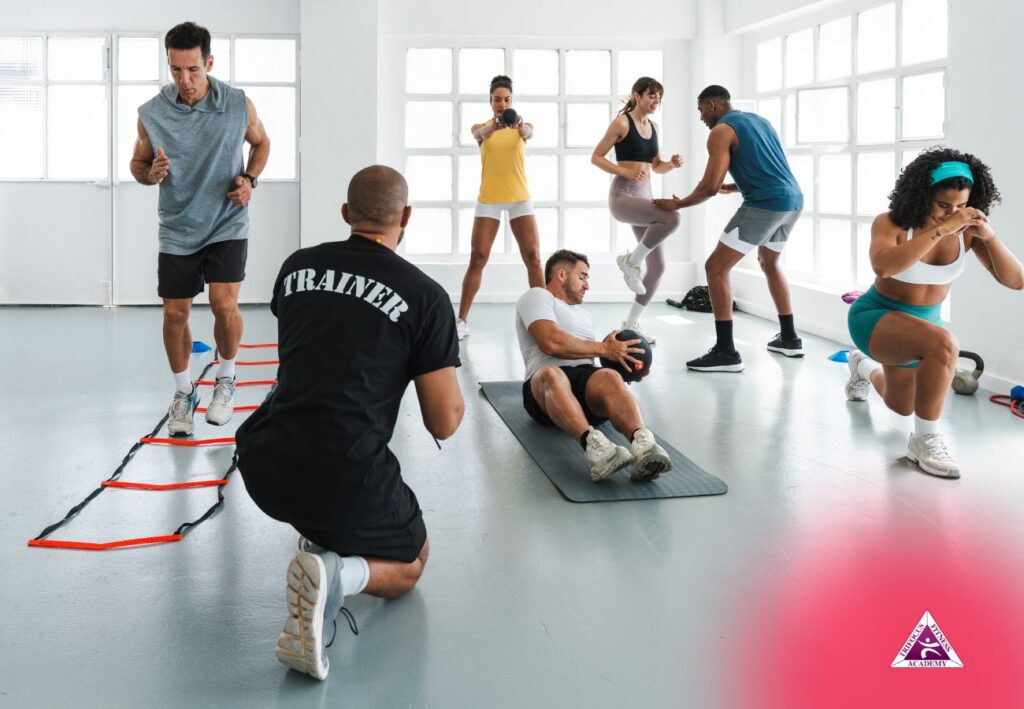
Athletes don’t just accidentally go on to peak performance. From every excellent finish, run, sprint, or game-win, a finely tuned body is at work behind the scenes. The best athletes know that skill isn’t enough on its own; they need strength, endurance, flexibility and mental toughness to compete at the highest level. This is where sports training comes in.
Sports coaching is not only a matter of teaching tactics or motivating players; it is about developing structured programs that meet the unique demands of a sport, a position, or a player. The Workout is a battery of conditioning and training exercises that isn’t one-size-fits-all. The pure needs of a marathon runner are far from those of a footballer or a gymnast. Good coaching considers these variances and develops programs for the individual that will provide the most in performance gains with the least risk of injury.
Conditioning works to develop the body to sustain the physical and psychological strains of physical combat sports. Training aims to advance this concept into the technical and tactical aspects of the game that drive success. They are both the foundation of an athlete’s ability to advance.
Designing Tailored Conditioning Programs in Sports Coaching
An aspect of successful coaching in the sporting world is the development of sport and athlete-specific conditioning programs. Coaches start by looking at the demands of the sport and shaping training around those.
For instance, soccer players need a combination of aerobic fitness, explosive bursts, and agility. Swimmers, on the other hand, require cardiovascular endurance, strong upper bodies, and technique. There are differences, however, and sports coaching recognises this in that conditioning programmes should also reflect the different energy systems, the muscle groups and movement patterns that are characteristic of the sport.
Another factor to consider is the individual athlete. Two athletes playing the same sport can be strong in different areas and have differing weaknesses and injury histories. Sports coaching is the process of performing fitness evaluations, movement screens, and performance tests to individualise the programs. For a b-baller with great vertical but slow lateral foot speed, certainly that training would serve him well.
A conditioning option that includes periodisation. That involves breaking training up into pre-season, in-season, and off-season, with specific goals for each phase. During the pre-season, emphasis may be placed on developing an aerobic foundation, while in-season training stresses ascending the strength scale and establishing a minimal fatigue level.
Athlete peaking is a coupled process in sports coaching where an athlete’s form and conditioning are tailored to a competition schedule. Conditioning also addresses mental toughness. High-intensity interval training, long endurance runs and sport-specific drills force athletes to stay focused while tired. Coaches can train you in techniques to stay mentally sharp, which is essential in competition.
Strength and Endurance Training in Sports Coaching
Strength and endurance are the two sides of sporting performance, and it’s the role of sports coaching to ensure they’re shaped in parallel. Strength is all about power and speed, and it promotes injury resistance, yet endurance undergirds the ability to continue performing across games or events.
When it comes to strength training, coach sports is more than just a generic workout. They are specific to the movements you use in each sport. For instance, a sprinter works on explosive leg power with exercises such as squats and plyometrics, while a rower works on back and core strength. Trainers incorporate resistance training, such as body-weight exercises and functional training, to simulate sport-specific requirements.
Endurance training is equally vital. Endurance-dominant sports activities, such as biking, long-distance running, and aerobic coaching, are prevalent. Sport coaching involves interval training, tempo runs, and long runs to develop endurance. For team sports that require short, intense bursts of activity, such as basketball or hockey, anaerobic conditioning is also essential. The nature of stop-and-start that characterises these sports suggests coaches often impose drill designs accordingly.
Strength and endurance should be balanced. Exaggeration in one direction tends to neglect the other unduly. Sports training seamlessly combines both to ensure athletes don’t lose pace while gaining endurance, or sacrifice agility while adding muscle. It’s this balancing act that puts elite programs head and shoulders above the generic training plans.
When it comes to sports coaching, however, progressive overload is hammered home, always pushing to be a little bit harder, to train a little bit more, in the hopes of always getting better. Staying on top of workload and recovery, coaches make sure athletes progress without reaching performance plateaus.
The Role of Flexibility and Agility in Training Programs
Strength and stamina take precedence in the limelight, but flexibility and agility are just as important aspects of conditioning. Sports coaching can help incorporate these aspects into training regimes to improve performance and minimise injury.
Being flexible helps an athlete be more agile and move more effectively, maintain good posture, and reduce the risk of injury. In activities such as gymnastics, martial arts and dance, flexibility is crucial to performance. Flexibility is essential even in strength-oriented sports such as football, so muscles and joints can handle the rapid movements of a tune-up match.
Stretching (yoga and mobility) is beneficial, if only because, as a sports coach, I incorporate a lot of stretching into my routine. Dynamic warm-ups include movements that prepare athletes for activity, and static stretching after a session helps muscles recover.
Agility, or the capacity to stop, start and change direction rapidly and efficiently, is critical in sports such as tennis, soccer and basketball. Whether it be laddering drills, cone drills or reaction training, agility exercises improve your reflexes and coordination. Sports coaching focuses on sport-specific agility work, including game-related situations, and developing application.
Most critically, flexibility and agility go together with other types of training. A big, injury-prone, stiff athlete is less prone to injury and lazier on the field. On the other hand, an overly flexible athlete with poor strength may have a harder time developing power. Sports coaching incorporates all of this to make its charges as rounded and versatile as possible.
Recovery and Long-Term Development in Sports Coaching
Forward motion is not only about pushing harder; it is also about knowing when to rest. Recovery is vital when it comes to conditioning, and it’s something that sports coaching focuses on within long-term development.
Heavy training works your muscles, joints, and nervous system. Without adequate time to recover, athletes can overtrain, burn out or get injured in sports coaching, which includes physical training, structured breaks, days off, active recovery, and the use of foam roller, massage, or stretching techniques for healing reasons. Sleep and eating are also coached in.
And periodisation now comes into play again. High-intensity training blocks, characterised by bursts followed by recovery, enable the body to adapt and become stronger. This strategy helps to ensure athletes peak ‘just in time’ without hitting a performance plateau.
Long-term development is also one of the key areas. Sports coaching isn’t just about setting athletes up for immediate success; it’s about cultivating sustained progress. Coaches map out multiyear training regimens in concert with athletes’ career arcs, modifying conditioning as talents mature and develop.
Recovery also includes mental well-being. Coaches speak to their athletes about mental recovery, taking a mental break, practising mindfulness, and managing stress. Mental rejuvenation is as necessary as physical recovery.
Conclusion
The basis of all athletic performance is specific conditioning and training programs. They’re not just a generic workout but tailored to the needs of the sport and the athlete. This is where sports coaching excels by creating structured, individualised programmes that equip athletes for the physical and mental demands of competition. Bespoke conditioning that mirrors the specifics of each sport, along with well-rounded strength and endurance programs, enables coaches to structure all of this.
Athletes develop power, endurance, and the ability to bounce back. By incorporating flexibility and mobility, they can create more versatile performers who can move optimally and fluently. Recovery methods and long-range development plans close the loop, ensuring you can maintain progress without getting hurt. Sports coaching is more than just intelligence or skill; it’s about the athlete.
Contact the Trifocus Fitness Academy
The Trifocus Fitness Academy offers specialised online and internationally accredited sports conditioning courses designed to equip professionals with all the skills and knowledge needed to succeed as a professional conditioning coach.

Frequently Asked Questions
It is recognised that the design of conditioning programs responds to the requirements of each sport, and each athlete is driven by sports coaching. Coaches evaluate the physical, mental, and workload demands, including strength, endurance, and agility, and create structured plans to meet them. They also monitor your performance and tweak your programs to help you avoid getting hurt and maintain steady improvement. All of this brings the athlete a further step toward performance and long-term sustainability in the sport.
Sport-specific training is relevant since each sport has specific needs for strength, endurance, flexibility and skills. A swimmer would require more cardiovascular endurance and upper body strength, and a basketball player would require more agility and explosive strength. Universal training can never cover such a wide range of requirements. Athletic Coaching develops programs that are specific to the movements, energy systems and skills of a sporting activity. This will help ensure that athletes are adequately prepared for competition and less likely to suffer injury.
Conditioning programs are designed by coaches which coincide with the demands of the sport and the profile of the athletes. That includes the physical tests data, injury history, and performance goals. Athletic Coaching relies on this knowledge to create a structured program to build strength, endurance, agility, or flexibility if necessary. Periodisation is frequently employed by dividing training into cycles to alternate work and recovery.
When it comes to training, recovery is essential because it gives your body and your mind time to repair, adapt, and become stronger following intense physical activity. Without recovery, athletes are at risk of burnout, injury or plateauing. In Athletic Coaching, we emphasise strategies like rest days, active recovery, adequate sleep, and a balanced diet to ensure continued progress. The use of tools such as foam rolling, stretching, and even consultancy through wearables is frequent.
Yes. Now, in sports, strength and endurance training are being modulated in a way that athletes can develop both without developing one at the cost of the other. Strength training develops power and resiliency, while endurance training improves stamina and energy systems. Coaches create programs that combine ‘speed, strength’ using techniques such as weights, intervals and functional movement. This balance is a key asset for athletes ranging from team to individual sports, as it enables them to deliver powerful, steady performances during competition.
Mobility and functional training are essential parts of training that can help improve the way we move and reduce our risk of injury. Mobility in the leg is enhanced by increased flexibility, and this enables athletes to display proper technique at a far greater range of movements. In a stressed state, agility allows athletes to pivot and react at a greater speed. Sports coaches incorporate dynamic warm-up exercises, stretching videos, ladder drills, and reaction drills into their training programs.