
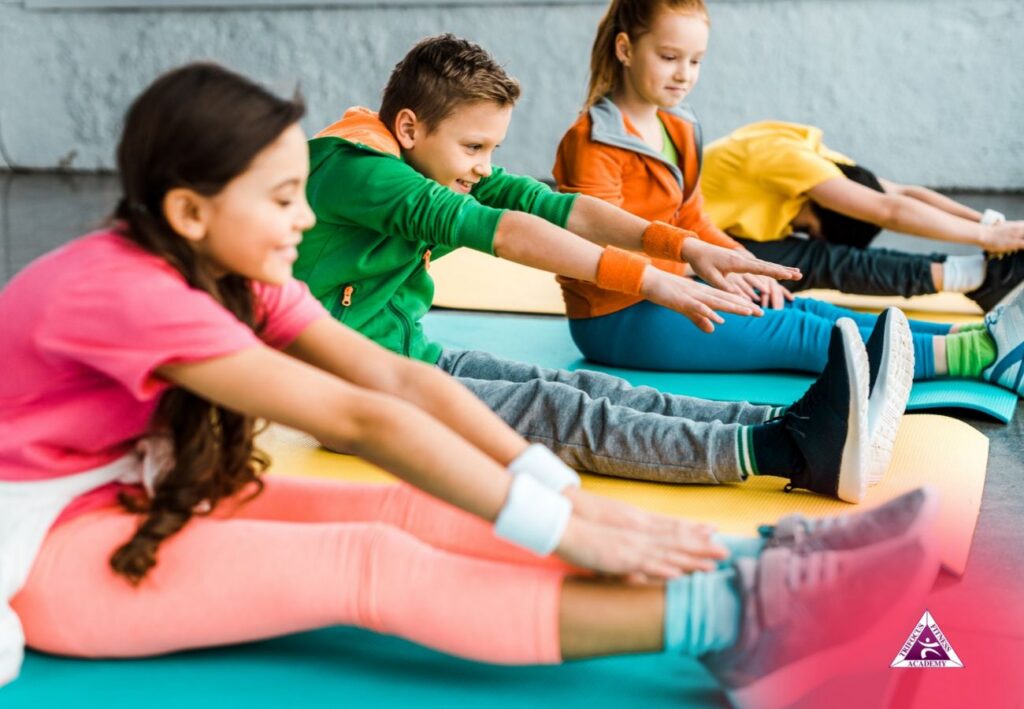
Exercise is an integral part of children’s lives because it helps develop movement skills, muscular and bone health, cardiovascular fitness, confidence, and wellbeing. Special populations activities give children who need adapted or individualised exercise opportunities to enjoy physical activity without everyone moving, learning, and performing the same way. Children with disabilities, long-term health conditions, developmental differences, reduced mobility, or other factors that may require exercise modifications may benefit from a Special populations approach.
These adaptations should include, not exclude. Children should be provided worthwhile opportunities to be involved, experience success, and enjoy movement in line with their ability. The current World Health Organisation (WHO) guidelines call for children and adolescents (5–17 years) to reach at least an average of 60 minutes of moderate to vigorous physical activity every day of the week (where appropriate and based on their capabilities). WHO also stresses the need for activity at all levels, and for building up activity progressively.
Make Special Populations Activities Enjoyable and Age Appropriate
When children find movement fun, they are more likely to stay interested. Special populations activities should therefore integrate fitness goals into games, imagination, exploration, and opportunities for children to make choices. For younger children, activities could include movement games using colours, music, simple obstacle courses, throwing and catching, animal-inspired games and movements, or short relay activities. For older children, modified team games, circuits, dance, swimming, cycling, and skill-based challenges are available, depending on the children’s ability and interests.
Age-appropriateness is crucial, as children’s fitness should focus on development, not an adult training programme. Children and adolescents should engage in a variety of activities that are fun, age-appropriate, and enjoyable, and younger children should be encouraged to play actively throughout the day, according to the CDC. A Special populations programme can maintain and modify this aspect of fun as needed. Throwing activity can be made easier by using a heavier or bigger ball. A running game could be replaced by a walking or wheeling game or another suitable method of movement. Simplify rules so children can focus on participation rather than complicated rules.
Adapt Activities to Encourage Inclusive Participation
Inclusion means more than allowing a child to be present during an activity. Special populations programming should give children realistic opportunities to participate, contribute, and succeed with others whenever possible. This is often more about adapting activities than changing them entirely. Suggestions include brightly coloured or sound-making equipment; an altered playing area; options for sitting play; and extra breaks as needed.
For example, a child may be allowed to roll a ball in a ball game. A circuit of movements can offer sets of varying difficulty levels. The activity can use visual and verbal cues, or visual and sound cues, depending on the type of activity. Special populations’ activities should be based on a child’s ability, not around limitations. This helps children feel competent and avoids unnecessary comparisons. Group activities can also be structured so that children do different things in the group. Not all children need to do the same movement in a relay. One player can walk, another can wheel, and another can throw or do a simple balance act before passing to the next player.
Develop Movement Skills and Confidence Gradually
A key benefit of childhood fitness for special populations is building physical skills and confidence. If children fail at sport or exercise and feel they cannot be as successful as others, they may become reluctant to participate. Progressive steps can make things more positive. Basic movement skills (walking, running or wheeling, balancing, reaching, throwing, catching, jumping and changing direction) may be introduced at an appropriate level. The type of activity will vary according to the child’s mobility, developmental stage, health and personal abilities.
A child learning to catch, for instance, may start with a large, soft ball thrown from a close distance. As coordination improves, increase the distance or use a smaller ball. A balance activity may start in supported standing and progress to more independent standing, as appropriate. Judge progress against what the child could do previously, not just normalised expectations. Use positive feedback to reinforce effort, persistence, and improvement. Rather than praising the fastest child or the one with the highest score, instructors can praise better control, willingness to try, improved coordination, or more consistent effort.
Prioritise Safety and Individual Needs
While safety is a critical component of any children’s fitness programme, activities in the Special populations section may require consideration, as children can vary greatly in mobility, coordination, communication, fatigue, health, and support needs. Instructors should know relevant information about the child and any recommendations from parents, carers, health care professionals, physiotherapists, or other relevant specialists.
The environment should also be assessed. Equipment must be appropriate for the child; activity areas must have no unnecessary hazards; and surfaces must allow safe movement. UNICEF guidance explicitly calls for risk assessment and adaptation of environments and activities to make them more accessible and safe for children with disabilities. Adjust intensity as needed. For some children, professional guidance on suitable type and level of activity may be beneficial. Special populations instructors should stay within their scope of practice.
They should not make medical diagnoses, change the care plan, or assume an exercise is suitable for children just because it is suitable for another child with a similar condition. Children should also be taught to express discomfort or fatigue. Never ignore pain, unusual difficulty breathing, dizziness, or other troubling signs as something the child must “suck up”.
Conclusion
Fostering children’s enjoyment of physical activity helps build movement habits that promote health and wellbeing later in life. This opportunity is more accessible because Special populations activities recognise that children may need to access it through a different pathway. Children’s fitness is a healthy lifestyle that starts with fun, accessible and age-appropriate movement. Games, active play, adapted sports, movement challenges, and recreational activities can offer meaningful exercise without feeling like a workout session.
Contact the Trifocus Fitness Academy
The Trifocus Fitness Academy offers a specialised online and internationally accredited Exercise and Special Populations Course designed to equip professionals with all the skills and knowledge needed to succeed as a professional Personal Trainer.

Frequently Asked Questions
Special populations activities can make exercise accessible by modifying exercise, equipment, rules, and intensity. This lets children participate in ways that work for them and builds confidence, coordination, and enjoyment of physical activity.
Active play helps children learn movement skills and build coordination, strength, confidence, and social interaction. Fun activities can also help foster a healthier outlook on exercise throughout children’s lives.
Adapt activities by changing equipment, range of movement, rate of play, rules, duration, and/or playing area. Adaptation must ensure children can take part in an appropriate and meaningful way while maintaining challenge.
Examples include movement games, adapted sports, obstacle courses, throwing/catching games, dancing, swimming, cycling, balance games, and other age-appropriate activities that match the child’s ability and interests.
Teachers should consider mobility, health, fatigue, communication, suitable equipment, and environmental hazards. Modify activities as needed, and seek professional support for specific health issues.
Teachers can set attainable tasks, give encouragement, give clear instructions, and allow for incremental progression. Comparing children’s achievements with others can make them feel less confident and less willing to participate. Comparing children’s achievements with others can make children feel less confident and less willing to participate.