
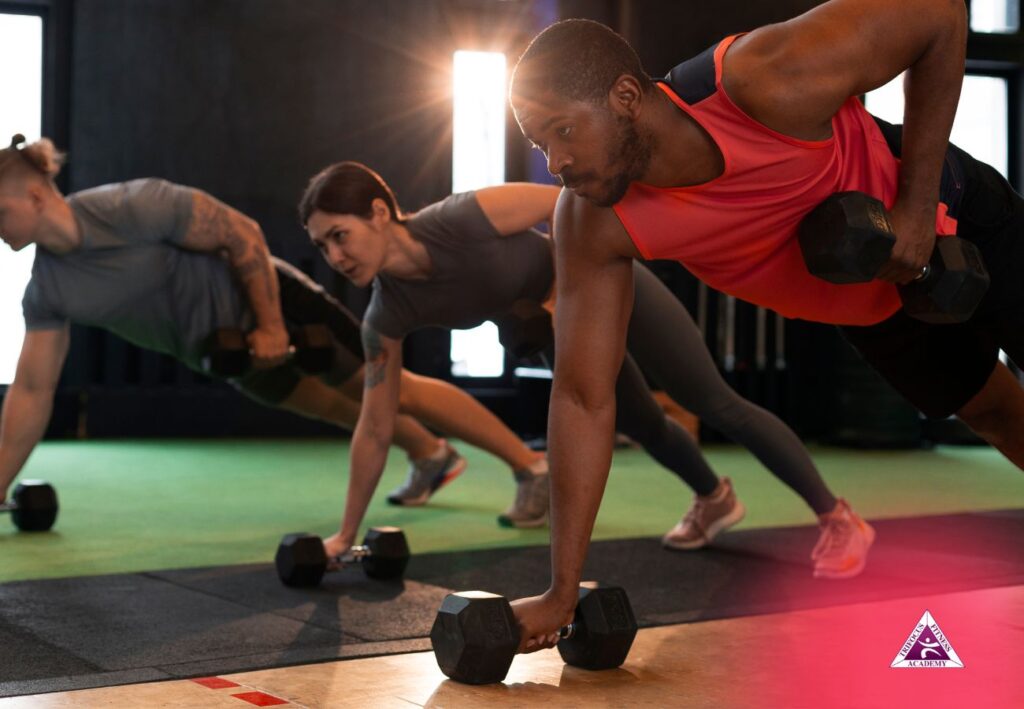
Strength training seems, for the most part, a solitary enterprise, done for personal goals and programs. But group strength training is changing that. More people are flocking to group exercise classes to gain muscle, tone up, and consistently show up for their workout. Whether in a gym, studio or outdoor boot camp, group strength training combines structure, community and expert coaching all in one formidable package.
Group fitness is no longer just about the cardio. The modern strength-based classes of today come in a variety of formats which emphasise resistance, body weight, free weights and functional fitness exercises and movements. These classes are specifically designed for individuals aiming to build lean muscle, reduce body fat, and enhance physical performance. The collective energy tends to rile up more effort than a solo workout.
The Role of Group Exercise in Muscle Building
Group weight training is an integral part of assisting individuals to build muscle efficiently. Time-to-time group strength training is one of the methods to do this efficiently and sustainably. These routines are usually categorised and developed to activate every significant muscle group through resistance tools, such as your body weight, resistance, and even the principle of progressive increase. Trainers guide participants through a well-planned regimen that develops upper and lower body strength evenly and helps build muscle.
Consistency is one of the significant upsides of strength training in a group atmosphere. Since classes are fixed on the schedule, trainees tend to keep them and develop a regular exercise habit. It is this repetition that is so important in growing your muscles, and something that needs to occur continuously as your adaptation to the challenge increases. Group settings help keep people on track without requiring them to create plans or recall their previous sets and reps.
Another benefit is variety. Group exercise classes switch out exercises, bring in new equipment, and give your body a shake. This variance prevents plateaus in training and forces the muscles to adapt and get stronger. It also alleviates boredom, which is a primary reason people quit exercising on their own.
Group exercise leaders are there to offer cues and feedback to ensure that each exercise is done with the proper alignment. This minimises the potential for injury and maximises each exercise movement. Muscle growth does not only rely on lifting weights, but also on lifting accurately.
For those of us who would rather develop strength without a second thought, group exercise is about the innovative, supportive and science-backed road to results. The group energy and structure can be all you need to build the muscle safely and effectively.
Group Exercise for Toning and Body Composition
Although muscle gain is probably the number one priority for most people, toning and reshaping the body also play a massive part for those wishing to look and feel strong and confident in their bodies. Group strength supports both with a muscle-activating fat-burning combo. And with continued use, it only makes you look sexier, tighter, and more defined.”
Strength-based group exercise. Some classes are focused on strength training and involve a continuous burst of cardiovascular activity during a set of resistance exercises. This mixture helps you burn calories and stimulates muscle fibres. The benefit is twofold. You increase your metabolic rate by building lean muscle mass, and you lose unwanted fat by maintaining a calorie-burning state throughout the class.
Toning is not the same as bulking up. When it comes to group strength classes, you should see a lot of moderate to heavy resistance and higher reps. This is a great strategy to make muscles more defined and visible without them becoming so big. Perfect for those who are looking for sculpted, athletic tone.
Class leaders guide attendees through exercises that encompass tempo control, mind-to-muscle connection, and balanced choreography, engaging hands, legs, and feet in areas such as arms, abs, booty, and thighs. It’s guided, so you can trust that you’re treating each area evenly and effectively.
In addition to looking good, better body composition means better posture, mobility and health into your old age. Exercising with others allows you to move with purpose and maintain a consistent pace, so toning is more attainable and sustainable. If all you’re after is some tone or fitness in general, it is easier to commit to it consistently in a group setting.
Social Motivation and Consistency in Group Strength Training
Now you can take advantage of the power of group exercise from the comfort of your living room! In strength training in particular, the focus and energy of others can help you to push harder, lift more and stay dedicated longer. Strength training in a group setting taps into both intrinsic and extrinsic motivation that’s difficult to duplicate when exercising solo.
Seeing others flourish, falter, and revel in their progress also creates a feeling of community that motivates participants to return again and again. The group dynamic leaves a subtle pressure to keep on track and finish strong. That kind of accountability can make a big difference, particularly on days when motivation is lacking.
Group exercise also comes with the benefit of building a routine. Classes are staged, which is appealing to people who rely on a schedule to work out and stay at it. This consistency is crucial for muscle building and toning. Physical gains come with the need for regular effort, and group settings make it easier to establish that routine without hesitation.
Teachers also need to do their part to keep learners sufficiently engaged. Their energy, baby steps, and motivation help encourage the session’s progress and keep everyone focused. This is a plus for some users as it helps in keeping them motivated and focused as they work out.
The camaraderie of group exercise strength training also creates a positive fitness culture. Marking little successes, offering others support and belonging to a dependable group help to build emotional as well as physical resilience. Group exercise is about far more than merely lifting weights together. It is about sharing, building others up and making collective progress feel communal and rewarding.
Guidance and Safety with Professional Instruction
Injury is one of the most serious considerations of strength training. Using poor form while lifting weights, choosing resistance that is too heavy, or advancing too quickly can also disrupt your progress. Safe group training from certified instructors is how you will safely work out to build muscle and tone up. The controlled setting and expert coaching also enable users to learn to train smart and minimise blunders.
Instructors lead exercisers through the entire warm-up and cool-down during group strength training classes. They demonstrate proper form, offer modifications for various fitness levels, and closely monitor home exercisers during their moves. It is this physical support that accommodates fitness enthusiasts of all levels, enabling a secure and fearless strength-training session.
New guys are intimidated by hopping into strength training on their own (never knowing if they’re doing it right). Group exercise serves to narrow the gap by introducing fundamental skills in a clear, accessible manner. Over time, users gain the confidence to increase their load, perform exercises they would have otherwise been too scared to attempt and become more independent by completing things on their own.
Professional guidance is helpful even for the most experienced lifters. Detail-oriented instructors can identify problems with form, offer alternative techniques, and add different types of challenges that help the muscles adapt. Such feedback is what it’s all about when it comes to growth and safety.
The class system also promotes the prevention of overtraining (you have rest periods built into the workout and balanced exercises to balance opposing muscle groups). By not having to lay out your program, you save yourself from the mental drudgery and concentrate on doing it.
Conclusion
Group strength classes are a powerful, non-intimidating, accessible way for everyone to work towards building muscle, toning up and becoming stronger. It combines routine, social motivation, expert advice and physical challenge in a way that helps achieve consistency. It has the potential to eliminate the isolation of everyone for themselves and instead become an atmosphere of encouragement and teamwork.
Group exercise also helps to develop muscle tone through balanced, full-body workouts targeting all the major muscle groups. It is also toning, as it promotes simultaneous fat loss and strength increases, resulting in a leaner, more sculpted body. People are coming back and working hard because of that group accountability and shared energy. And with an experienced instructor at your side, each session is guaranteed to be both safe and effective.
Contact the Trifocus Fitness Academy
The Trifocus Fitness Academy offers specialised online and internationally accredited Group Exercise courses that have been designed to outfit professionals with all of the skills and knowledge needed to find success as a professional Group Exercise Specialist.

Frequently Asked Questions
Strength training in groups offers structured workouts focusing on all major muscle groups through weightlifting and bodyweight exercises. Instructors teach proper form and progression to make the most out of every workout. When you schedule classes and are working with other people, consistency, which is so important when wanting to make shifts in how you feel, is easier to maintain. Working out in a group provides that repetition, but it also reduces the effort of planning.
Yes, group exercise conditions the body by mixing resistance training with calorie-burning movement. So, classes tend to follow circuits or intervals to keep the heart rate elevated and muscle groups firing; it is not unusual for a circuit to lean heavily on plyometric-based resistance training, followed by active recovery or soft-tissue work like a foam roll. Eventually, this leads to fat loss and improved muscle definition. Weekly attendance also means a group strength class can help tone the body’s key areas, arms, legs and core.
Absolutely. If you’re an exercise beginner, this workout offers a great way to start strength training in a structured, supportive environment. Teachers provide modifications and tips for safety and good form. Beginners enjoy being part of a group where the basics are taught and explained in a non-intimidating environment. Encouragement and clear instructions maintain their levels of safety and confidence.
Group exercise workouts increase motivation, accountability and, of course, fun. Watching other people work hard can inspire you to do the same, and collective progress fosters a sense of community. Exercising with a group can offer external motivation that encourages continuity, even when motivation might be low. The social aspect of some workouts can be an extra motivating factor in making your workouts more interesting and fun! It transforms fitness from a solo activity to a group effort, which helps many people stick with it long term.
Group exercises are led by certified leaders who explain form and technique. They provide immediate feedback/adjustments that may spare one the errors that lead to injury. Group exercise is also structured in terms of programming, with consideration of muscle groups and warm-up and cool-down periods. This is a guaranteed safe training area, especially for novice trainers. Guided by experts, the risk of overtraining or doing harmful exercise will be reduced significantly.
Yes, experienced lifters have a lot to gain from group exercise. It offers variety, structure and new stimuli that help prevent the training plateaus. Trainers present new techniques and formats to make sure the workouts stay challenging and progressive. Group classes also offer some motivation and accountability, which can ramp up intensity. Even more experienced lifters get the value of the extra attention to challenge balance, core strength and conditioning that group strength workouts offer.