
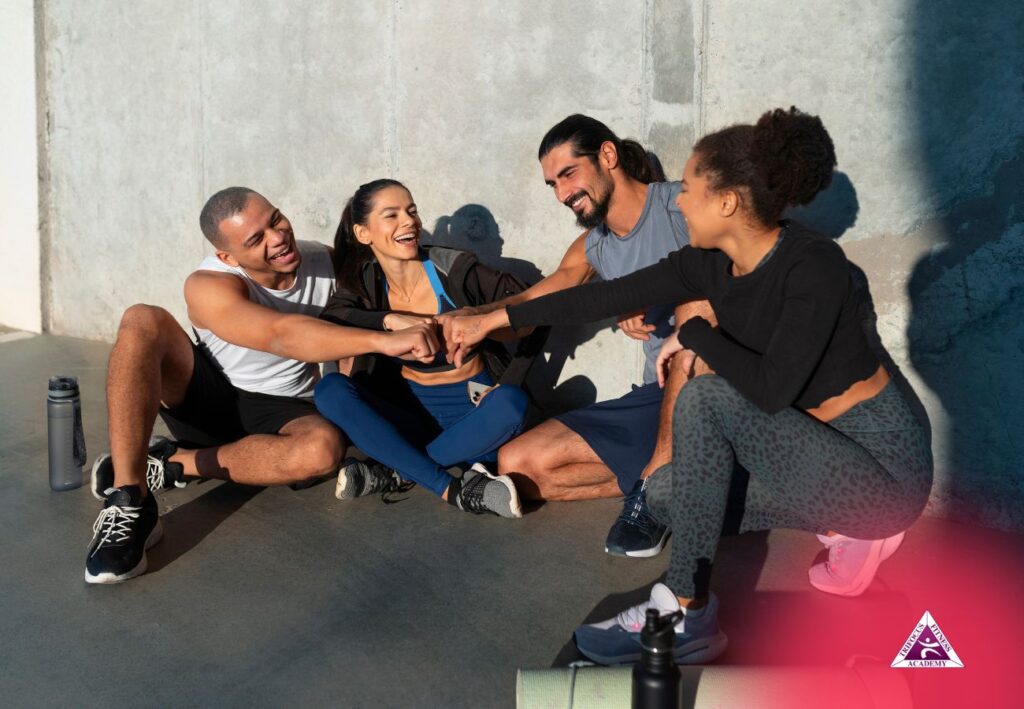
Classes are the future of fitness. They are an excellent tool for stronger communities and healthier people. Whether in a gym, park or virtual reality platform for exercise, you know that group fitness motivates us to connect with others and ourselves, maintain accountability and feel like we belong. In an age of growing isolation, there is our salvation in the group exercise. As the world becomes increasingly tech-savvy and lives get busier, real opportunities for social interaction have become scarcer, making people lonelier than ever before. We know that group exercises can be a formal and yet socialised way to bring people together towards the same purpose (i.e improving physical and mental health).
The benefits of these sessions go far beyond the calories burned and muscles toned. Group exercises are a starting point for friendships, offer emotional support, and facilitate shared experiences that help bring different types of people together. Whether you’re sweating it out in a high-intensity interval training (HIIT) class or centring yourself during group yoga, having others around makes the workout that much more effective.
Building Social Connections Through Group Exercises
One of the most apparent results of working out in groups is simply that you get to connect with other people. Whether a spin class, dance fitness or boot camp, breaking a sweat with others generally fosters camaraderie. Frequent goals, challenges and progress are shared among participants, which develops natural friendships and connections. These social connections can help stave off loneliness and stress, which are themselves linked to a range of health problems.
To newcomers to a city or those looking for an expanded social circle, group workouts can feel like a manageable entry point. Attending classes regularly allows a person to become part of an established community, oftentimes making friends outside of just the workout. This support system not only makes exercise fun but also ensures you stay committed to health and fitness.
Group workouts are for all shapes, sizes and abilities. “We can learn from one another, share experiences and build trust. This sense of togetherness is priceless in an era when so many people feel disconnected despite being constantly plugged into the Internet. Group exercise provides an actual human connection in the form of shared physical exertion and mutual encouragement.
Enhancing Motivation and Accountability
It can be challenging to stay motivated with a fitness routine when you are doing it alone. When it comes to motivating you and holding yourself accountable for working out, there is no better environment than an organised workout session with other people, because they are also expecting you to be present, which provides additional incentive. The group’s collective energy also raises each person, spurring them on when they have doubts or grow fatigued.
Group exercise instructors can work on team-building activities and reinforcement to help keep people interested and excited. Such dynamics are especially beneficial to novice players who may feel intimidated or insecure. Witnessing others of varying levels of fitness working together creates an environment without judgment, inspiring all to better themselves as and when they’re up for it.
There’s a rhythm and regularity to group workouts that helps keep habits in place. “When you have an appointment, with a particular time and place to be active with other people, it is doable for many more of us.” Group members often create ad-hoc accountability partners, coordinating attendance and checking up on each other. Collective willpower. This pressure is probably more effective than individual willpower.
In the end, the group itself becomes a motivator. Also, You don’t want to let down your workout friends or potentially miss out on the jolt of energy that comes with being part of an effort larger than yourself. That’s why group exercises have more long-term engagement than solo exercising. There is strength in numbers, and group exercises offer just that.
Promoting Inclusivity and Community Engagement
Group exercise is naturally inclusive. And with formats and levels to suit almost everyone, there’s even a class for most people. Group classes, from senior fitness to family and adaptive sessions, can make exercise accessible for more people. This open-armed embrace diversifies the community and connects people of all ages, backgrounds and fitness capabilities.
Community centres, the community gym or park are often venues for free or low-cost group exercise, making this form of fitness available to more people. They also improve public health and promote neighbourhood interaction. Group yoga in the park or a charity workout class, for example, unite people through exercise under a common purpose and turn exercising into a bonding experience that has a net positive impact on both you as an individual contributor and your community at large.
Group sessions can also be a platform for social action, health education and volunteering. Several programs work with a non-profit organisation, local government or health care entity to provide wellness in underserved areas. These types of outreaches don’t just contribute to better health outcomes; they also help cultivate civic pride and neighbourly support.
Without the barriers to inclusion and celebrating diversity, collective workouts do build strong, independent communities. Health and wellness are universal human rights, irrespective of income, ability, or background. Group exercises provide a means of providing that access with respect, support and human contact.
Improving Mental Health Through Group Exercises
Benefits for mental health from group activities have been well established. Group Exercise itself produces endorphins that help to diminish stress and bring about a calm, happy state. These effects are enhanced when such courses are combined with social support in a group setting. Students typically say they feel more energetic, less jittery and better able to deal with whatever life throws their way.
In addition to the distractions offered by routines and structure, structured group exercises introduce tools for recovery into their regular lives. Having that set time and place to connect with other people, connect your body, you can feel a sense of purpose and stability in it.” Group settings also help to break the stigma around mental health by creating open dialogue and mutual support.
Others feel that the emotional lift of group workouts spills over into other parts of their lives. Greater self-esteem, confidence and a more positive attitude are other common results. It is this mental boost, combined with the physical benefits, that makes participating in group exercise a holistic vehicle of wellness and self-care for personal health as well as community health.
At a point when mental health struggles are increasingly common, group workouts provide an accessible and proactive way for people to practice resilience-building techniques and healing. They give people coping mechanisms for stress and a community of support. Mental health thrives on connection, and group activities provide a place for that to occur naturally.
Conclusion
As evidenced by group workouts, not all benefits are physical. They enhance social relationships, boost mental health and contribute to cohesive, active communities. In an era when so few of us move or feel connected to others during movements that are necessarily solitary, shared movement is precious. All three elements bring us together and give us what it takes to be more accountable, supported by one another, and ultimately transformed.
Whether you’re an experienced athlete or just starting on your fitness journey, breaking a sweat in group exercise can be goddamn great. From lowering stress to forging lifelong friendships, the effects are beneficial in every aspect of life. As neighbourhoods change, the company still sees group exercise as a no-nonsense way to unite people and boost community fitness. That’s what we’ve got to do now more than ever: move with direction and connect in a group workout.
Contact the Trifocus Fitness Academy
The Trifocus Fitness Academy offers specialised online and internationally accredited Group Exercise courses that have been designed to outfit professionals with all of the skills and knowledge needed to find success as a professional Group Exercise Specialist.

Frequently Asked Questions
Group workouts provide more than just physical benefits. One of the most significant benefits is its “sense of community,” she has said. Working out with pals can provide motivation, accountability and emotional support. It promotes regular attendance, fosters social connections and creates a sense that you are part of something bigger. Group settings for exercise also offer structure and professional guidance, which adds to confidence-building and the motivation that comes from having someone keep people on track.
Group exercise can have enormous benefits for your mental well-being, including reducing stress, improving mood and giving you a sense of belonging. When you work out and get moving, your body releases something called endorphins that naturally make you feel good. These effects tend to be greater when provided in a group environment. The routine and format of group exercise can offer some stability to people with anxiety or depression issues. It also provides a safe environment for candid dialogue, support and connection, all of which equate to cultivating a healthier, more optimistic mindset over time.
Yes, classes are perfect for novices. Most classes are for all levels of experience, so those who have never done yoga before can attend. Because instructors typically provide modifications, participants can choose to do as much or as little of a series according to their abilities. The group dynamic of working out can help validate and motivate novices. In addition, it provides new exercise participants a method to learn correct form while under the supervision of professionals. A group setting can get members to show up more regularly and build confidence, which are common in the path toward forming healthy habits.
Group exercise is great for accountability. Having others count on you to be there can carry a great deal of weight. It’s also far more challenging to skip a class when your workout group knows that you’re not there. The social aspect instils a feeling of accountability, and people are more likely to follow through with exercising. Instructors and classmates frequently check in, lend encouragement and provide reality checks. This shared purpose makes the vowel sound of as long-term success with health and wellness goals.
Absolutely. Group exercise is one of the few tried-and-true methods for meeting people and easing feelings of loneliness. Particularly in today’s era, when so many people feel isolated from one another, attending a group exercise class can provide valuable face-to-face interaction. When you’ve got that companionship in working out, it promotes conversation and friendships! The constant interactions, be it a yoga class that people attend regularly or weekly dance classes with others who have similar experiences, help participants to feel seen and valued.
Yes, group exercise is wildly diverse and malleable. They have something for all ages, fitness levels and tastes from high-intensity classes like Zumba and HIIT to low-impact offerings such as Pilates or chair yoga. Some group exercises prioritise strength, while others emphasise flexibility, balance or cardiovascular endurance. Some community centres and gyms also provide specialised classes, including prenatal fitness, senior wellness, or adaptive workouts. This extensive range ensures that everyone can find a form of group exercise that suits them, enabling both physical and social welfare to flourish.