
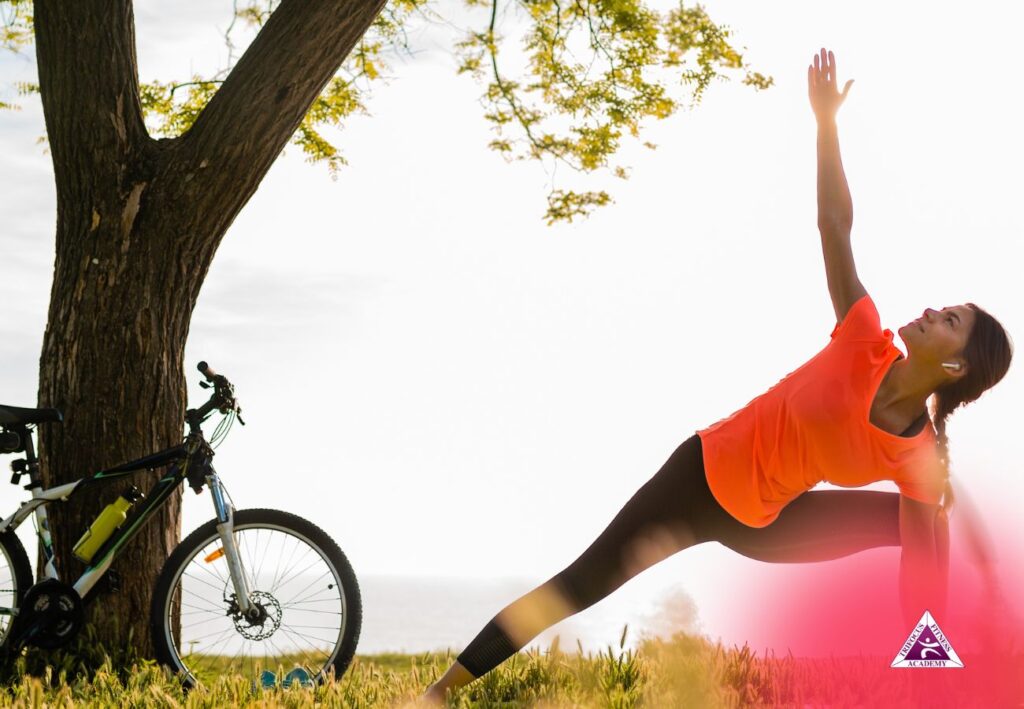
Cycling, an intense sport, requires significant endurance, core strength, and proper posture. Whether you are an indoor spinning enthusiast or train for cycling competition, adequate posture and fatigue reduction play a vital role in improving your performance and preventing injuries. Pilates exercise for those who aren’t looking to move around with binge-worthy laps on the couch, there’s always Pilates. This low-impact movement training method delivers a core-strengthening punch, as well as flexibility and muscular balance.
For cyclists who spend hours in a single position, these improvements can significantly increase efficiency, comfort and recovery. Pilates emphasises precision, concentration, working with the breath and proper alignment. Those principles are directly related to cycling biomechanics. Rider’s hips get tight, they wrap around their upper body in a circular motion, and there is an imbalance between the strength of the legs. Integrating Pilates into your cross-training regimen can help to prevent these imbalance patterns and take steps toward a strong, capable body.
The Importance of Core Strength and Alignment in Cycling
In biking, a strong core isn’t just for the Instagram pics. It’s the “anchor” that bridges the gap between your lower half and upper body, enabling cyclists to best direct power from their legs to the cranks. A weak core can lead to compensation by other muscles, which can frequently result in lower back, hip, and shoulder strains. Pilates redesigns this asymmetry by working on deep abdominal control, pelvic stabilisation, and spine alignment.
In Pilates, core activation is learnt through movement; we do exercises that focus on control in our movement and on coordination with the breath. This deep, inherent strength allows a cyclist to sit up straight for long hours of riding without getting tired. It also minimises extraneous movement that might otherwise deplete energy and performance. It means the rider can get more aerodynamic without using as much energy and putting vulnerable areas like the knees at risk.
Alignment is another critical component. Riding with poor posture can cause overuse injuries and reduce efficiency. Pilates exercise enhances body awareness, enabling cyclists to identify and correct poor alignment habits. “Better posture not only looks more pro, but it helps you breathe better, be less tense and hold your power longer.
By focusing more on core strength and positioning in their training, cyclists have an advantage over the competition in both performance and injury prevention. Pilates gives them the tools to stabilise their bodies, balance how they use their muscles, and ride for more extended periods with less pain. In this sense, Pilates is not merely a form of cross-training but an essential counterpart to any cycling training program.
Correcting Muscle Imbalances and Increasing Flexibility
Cycling is a linear, repetitive motion that often leads to muscle imbalances. The front body (quads, hip flexors) can become dominant and tight, and the back body (glutes, hamstrings) might not be firing as much. Professional layers have tight shoulders and a sore neck from hunching forward for hours. Such imbalances can be very uncomfortable, limit performance, and, over time, increase the risk of injury.
Pilates is an excellent all-around method of training that develops underused muscles and stretches overactive ones. For instance, exercises that target your glutes and hamstrings contribute to the back of your leg’s compliance and function. Movements that open the hips and elongate the spine reverse the crunching stance of long rides. This even distribution of development improves pedal efficiency and helps keep muscle fatigue in check.
Joint wellness and flexibility are critical for performance and exercise. Dynamic stretching during movement, the Pilates exercise system supports long-lasting flexibility without compromising stability. For cyclists with a regular Pilates practice, they often ride experiencing less stiffness and remain better able to hold their riding form.
By balancing the body and increasing flexibility, Pilates helps cyclists develop a freer-moving, less-strained body. The end is a pedal stroke that feels silky, less discomfort in the hips and knees and a core with the strength to sustain both endurance efforts and recovery days. Pilates essentially re-trains the body to move better and with greater ease on and off the bike.
Improving Stamina Through Breath and Endurance Training
Endurance is key to cycling success. And the key to maintaining energy input over distance is the body’s ability to use oxygen and to sustain muscle endurance. Pilates encourages both by focusing on diaphragmatic breathing and the controlled, sustained movement patterns that build endurance from within.
In Pilates, breathing is not secondary; it is a performance enhancer. Students learn how to fully use the diaphragm, expanding the ribcage laterally and improving oxygen intake. The ability to breathe in this way is very good for cyclists because we put ourselves in all these compressed positions, and we can’t get much air. Greater respiratory efficiency can result in enhanced endurance, more rapid recovery and superior mental focus.
In Pilates, muscles are conditioned through low-impact movements performed repeatedly, which increase muscular endurance. It’s not the same cardiovascular stimulus as cycling, but it increases work tolerance under tension to high levels in a short period. This sort of stamina translates well to long, arduous rides where muscle fatigue can be a limiting factor.
Additionally, the mental focus that Pilates exercises can develop keeps cyclists aware and in tune with their bodies during extremely taxing rides. The practice of breath, combined with awareness and physical will, can help cyclists break through to a higher level or greater consistency in performance.
Cyclists benefit from adding Pilates elements to their training because it builds a more durable respiratory system and muscular endurance. These advantages translate into higher stamina and better recovery on long rides.
Preventing Injuries and Supporting Recovery
Preventing injuries is essential for cyclists who commit to a regular or competitive training routine. Typical age-related complaints are a sore lower back, achy knees, tight hips and a stiff shoulder. These injuries can occur for a variety of reasons, including repetitive movements, poor posture, muscle imbalances, and more. Pilates is a great way to treat the root causes with focused strength work in mind-body movement.
Pilates instruction is designed to entrench control and precision, both of which enable cyclists to tune into their movement patterns. Pilates helps minimise overuse injuries by emphasising proper alignment and muscle engagement. It also helps strengthen the stabiliser muscles around injured joints, providing extra support and reducing impact.
Another significant advantage of Pilates is that it’s great for active recovery. During rest days or easy training phases, Pilates can also be a good way to keep the body moving without overdoing it. Soft stretches, core engagement, and breathwork assist with better circulation and faster muscle recovery. This allows athletes to bounce back to training faster, with less soreness, and be ready for the next session sooner!
Adding Pilates exercise to a training regimen can even help detect and correct “red flags” of dysfunction that, if ignored, can become problematic. The effect is a healthier training cycle with fewer hangups. For cyclists who wish to stay on the blacktop and perform at their best, Pilates is a well-rounded way to get started and recover.
Conclusion
Pilates and cycling might seem opposed, but in fact, they complement each other beautifully, enhancing both the body and performance. Cyclists benefit from Pilates through increased abdominal strength, improved posture, balance and stamina. These benefits include a more efficient pedal stroke, less discomfort, and improved endurance on long rides.
Using controlled movements and conscious breathing, Pilates develops the body uniformly and helps it move with grace. Body savvy is key for cyclists, who tend to hammer themselves. Instead of working harder, Pilates shows you how to work smarter by using the right muscles in the correct sequence, whilst sustaining your form when fatigued.
Contact Trifocus Fitness Academy
Explore the rewarding path of becoming a certified Pilates Instructor. Unleash your potential and inspire others on your journey with Trifocus Fitness Academy’s comprehensive Pilates Instructor program.

Frequently Asked Questions
The benefits of Pilates exercise for cycling include much more than just the six-pack ‘abs’; it is also about the muscles which stabilise the pelvis and lower back. Benefits: increasing flexibility and improving posture. These enhancements contribute towards a more effective transfer of energy whilst pedalling, enhanced breath control, and ultimately reduced chances of injury. Cyclists commonly experience tightness and muscle imbalance due to repetitive use and prolonged positions during the ride.
Yes, Pilates exercise can help prevent everyday cycling aches and pains in the back, knees, and hips. It helps build stabilising muscles around your joints and promotes proper posture, lessening the likelihood of overuse injuries – all while you sit! Pilates is beneficial for correcting muscle balance and preventing compensatory movement patterns that can lead to pain.
Absolutely, Pilates is appropriate for cyclists at all levels, even beginners! The exercises are gentle and can be adapted to individual fitness levels and flexibility. For cyclists new to riding, Pilates also provides basic movement principles such as core stability and engagement, alignment, and breath control, all of which you need for a strong, safe riding pattern. Doing Pilates from a young age also helps to avoid poor posture and overuse patterns before they develop into injuries.
Try to fit in Pilates exercise twice a week for optimal results. This frequency provides the body an opportunity to work on resistance and flexibility while recovering from the other rides. Even short, regular workouts of 20-30 minutes can bring about dramatic overall improvements. Pilates Gentle Pilates routines are perfect for active recovery or a recharge on rest days. Consistent practice over time can train your body to build endurance and wear-and-tear resistance, especially if you go on long rides every weekend or take it up a notch with higher-intensity biking.
The Hundred, Leg Circles, Shoulder Bridge and Single-Leg Stretch are among the best Pilates exercises for cyclists. These actions centre on core control, hip extension, gluteal firing, and spinal alignment, key elements for efficient cycling. Warm-up exercises such as Spine Stretch Forward and Swan Dive can help offset some of the tension caused by riding posture in your back, neck, and shoulders.” By adding Thera-Bands or light equipment, you can also challenge muscles and safeguard the joints.
To begin, Pilates exercises increase cycling endurance by strengthening your ability to control your breath, building core stamina, and improving muscle coordination. Through a series of diaphragmatic breathing exercises, cyclists learn to use their lungs more efficiently, thereby enhancing oxygen delivery during longer rides. Pilates also strengthens the muscles that support proper posture and alignment, so riders can more easily maintain efficient positions throughout their rides.