
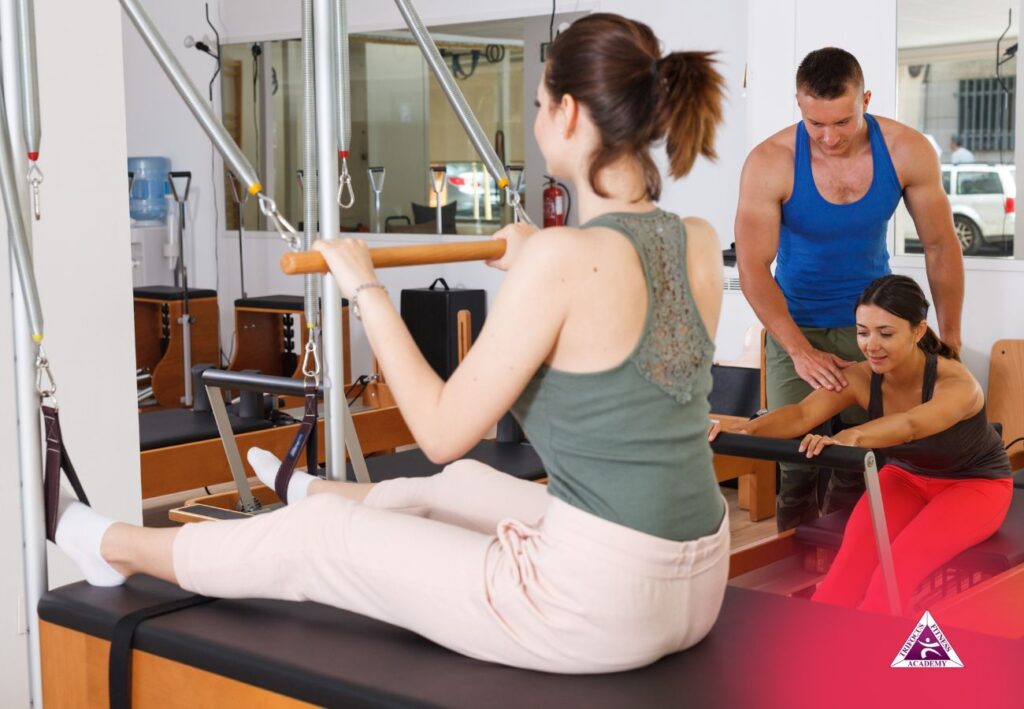
Pilates is well known for promoting strength, flexibility, posture, and balance, but the most useful aspect of Pilates is its emphasis on safer movement. We engage in a multitude of movements every day, e.g., bending, lifting, reaching, walking, sitting and twisting. If these movements are not executed with proper technique or body mechanics, they can cause undue stress on the spine, joints and muscles. These habits can cause discomfort or injury over time and lead to decreased mobility.
Pilates meets these challenges by educating people in the skills of moving with awareness, control and efficiency. Pilates does not just improve exercise performance; it is about proper body positioning, core engagement, breathing, and coordinated movement, which carry over into daily life. Better movement patterns are developed through repetition, mindful practice, and greater body awareness. Pilates exercises teach the body to distribute forces more evenly, maintain stability while moving, and minimise unnecessary strain in areas prone to injury, such as the lower back, shoulders, and knees.
Building Strong Foundations Through Core Stability
Pilates is an essential method for teaching safer movement patterns and developing core stability. The core consists of the deep abdominal muscles, lower back, surrounding spinal muscles, pelvic floor, and the diaphragm. These muscles form a stable base for almost all of the movements in everyday life. Our body tends to compensate with increased stress on other muscles and joints when we are not properly stable in our core. Lifting, climbing stairs, or standing for extended periods of time can be less efficient and may cause discomfort or injury.
A series of controlled movements in Pilates exercises targets these deep stabilising muscles, with a focus on correct alignment and breathing. Instead of relying on momentum, each exercise targets muscle activation precisely, resulting in stability during independent arm and leg movement. Better core stability equals better posture and balance, leading to more controlled, efficient daily movements. Many people feel they can lift, bend and carry things with greater confidence as the spine is supported during each movement.
Core strength also plays a role in safer sporting activities by enhancing body control during dynamic exercises. A strong core is essential for effective movement and minimising physical strain when involved in sports, recreation activities or household work. Pilates builds the stability needed for more consistent movement patterns in exercise and day-to-day life by focusing on the core.
Improving Body Awareness and Movement Control
Another foundational principle of Pilates that directly influences safer movement is body awareness. Proprioception, or body awareness, is the way that people recognise where the body is and what it is doing without just looking. People go about their daily lives without thinking about posture and alignment. Bad posture can creep up slowly and over time become second nature. Pilates helps people recognise these practices by encouraging them to be aware of each action.
In Pilates sessions, practitioners become attuned to the alignment of the spine, the position of the shoulders, the stability of the pelvis, breathing and muscle engagement. This increased awareness enables a person to recognise inefficiencies or additional strain in movement. Controlled movement is also crucial. Pilates exercises focus on slowing down and making deliberate actions rather than speed and repetition. This helps the practitioner to develop technique, coordination and brain-to-muscle communication.
The more children become aware of their bodies, the better they will move during play. The more children become aware of their bodies, the better they will move, and the safer they will move during play. People are more aware of their sitting, standing, lifting, reaching and walking posture. Posture and technique changes in small increments can decrease discomfort and increase movement efficiency. Better balance and coordination are also supported by improved movement control. This enhancement helps minimise the risk of falls, awkward movement, and unnecessary stress on the joints, making Pilates beneficial for all age groups and fitness levels.
Correcting Poor Movement Habits and Preventing Injury
When injuries develop, it’s usually as a result of a pattern of poor movement over time, rather than a single event. With improper lifting techniques, prolonged sitting, and muscular imbalances and repetitive strain patterns, discomfort and decreased mobility can gradually develop. Pilates solves these problems by correcting movement patterns before they become a problem. One of the best features of Pilates is its focus on developing balanced muscle mass.
Some people don’t realise they’re overusing certain muscles while developing the ones they actually need less. Pilates exercises tone less developed muscles and increase flexibility in more restricted areas of the body, thus rebalancing the body’s muscles. Another big emphasis is on alignment. Proper positioning of the spine, pelvis and joints during movement ensures even distribution of forces throughout the body. This is a balanced way to reduce excessive loading on delicate areas such as the lower back, shoulders, and knees.
Another technique taught in Pilates is efficient breathing, which helps control movement and engage the core. Proper breathing will reduce unnecessary muscle tension and improve coordination during every exercise. These movement principles are encouraged in the studio through regular Pilates practice and then practised outside of the studio. Opportunities for safer body mechanics will be found in everyday activities, like picking up a shopping bag, gardening, cleaning, or playing with children. While no exercise programme can eliminate the risk of injury, Pilates offers practical strategies to help individuals move more safely and avoid unnecessary physical strain throughout their daily activities.
Applying Pilates Principles to Everyday Activities
There are so many benefits to Pilates, one of which is that its principles apply not only to formal exercise sessions. Skills learned in Pilates are real-world applications which enhance the quality of movement in daily life. Posture in the standing position may improve initially. People are taught to distribute their weight evenly, to activate their core muscles gently and to keep their shoulders relaxed. These changes reduce muscle fatigue and make it more comfortable to stand for longer periods.
The Pilates training will also help with sitting posture. Most people spend hours sitting at their desks or using electronic devices, which can lead to poor posture and spinal alignment. Pilates promotes neutral position and movement, which decreases stiffness and discomfort. Another valuable application is the use of safe lifting techniques. Pilates teaches people to bend through their hips and knees, ensuring the spine remains stable and the core is engaged. These activities minimise strain when doing household duties, work, or play. Walking efficiency may improve with improvement in posture, balance and coordination. Improved gaits enable people to walk with increased confidence and less effort.
The athlete can also use Pilates techniques to enhance performance and prevent injuries. Efficient body mechanics help promote faster, more controlled movements while keeping the body stable during dynamic activities. With time, these little enhancements become regular. People do not have to think about posture and alignment with each move; it just happens naturally. This carryover effect of transferring Pilates skills to everyday life makes it one of the most useful types of exercise for promoting long-term physical health and functional movement.
Conclusion
Pilates is a teacher of more than just exercise techniques. It offers people the knowledge and skills to move safely, efficiently and confidently around in their daily lives. Core stability, body awareness, controlled movement and correct alignment all combine to help develop healthier movement patterns, and eliminate unnecessary strain on the body. Core stability is the base for safe movement, and learning how to be more aware of your body can help you identify and change poor movement patterns. Controlled exercises help build muscle strength, improve coordination, and encourage full-body movement.
Contact Trifocus Fitness Academy
Explore the rewarding path of becoming a certified Pilates Instructor. Unleash your potential and inspire others on your journey with Trifocus Fitness Academy’s comprehensive Pilates Instructor program.

Frequently Asked Questions
Pilates exercises promote good body position, controlled movement, and core engagement. These skills promote proper posture, coordination, and efficient movement, allowing a person to carry out daily activities more safely and avoid unnecessary strain on the muscles, joints, and spine.
Yes. Pilates exercises help develop skeletal stability, muscle flexibility, and proper use of the body. They can correct poor movement patterns and support balanced muscle development, which helps reduce the risk of injuries caused by poor posture, repetitive movements, or improper lifting.
Numerous Pilates movements can be modified to aid in rehabilitation, with the help of a qualified instructor or health care professional. Because it emphasises controlled movement, stability and alignment, Pilates is a popular exercise for enhancing mobility and strengthening after different injuries.
Pilates exercises strengthen core and postural muscles and improve body awareness. The enhancements promote proper spinal alignment during sitting, standing, walking, and lifting, reducing muscle tension and ensuring healthier movement patterns throughout the day.
Absolutely. Pilates exercises are a balance challenge that promotes controlled movement and muscle activation. Through regular practice, stability, body awareness, and coordination are enhanced, making everyday movements more efficient and reducing the risk of falls or movement-related accidents.
2-3 sessions of Pilates exercises per week can help to enhance posture, core stability, flexibility and quality of movement. Regular practice ensures that good movement becomes easier in daily activities and physical activity.