
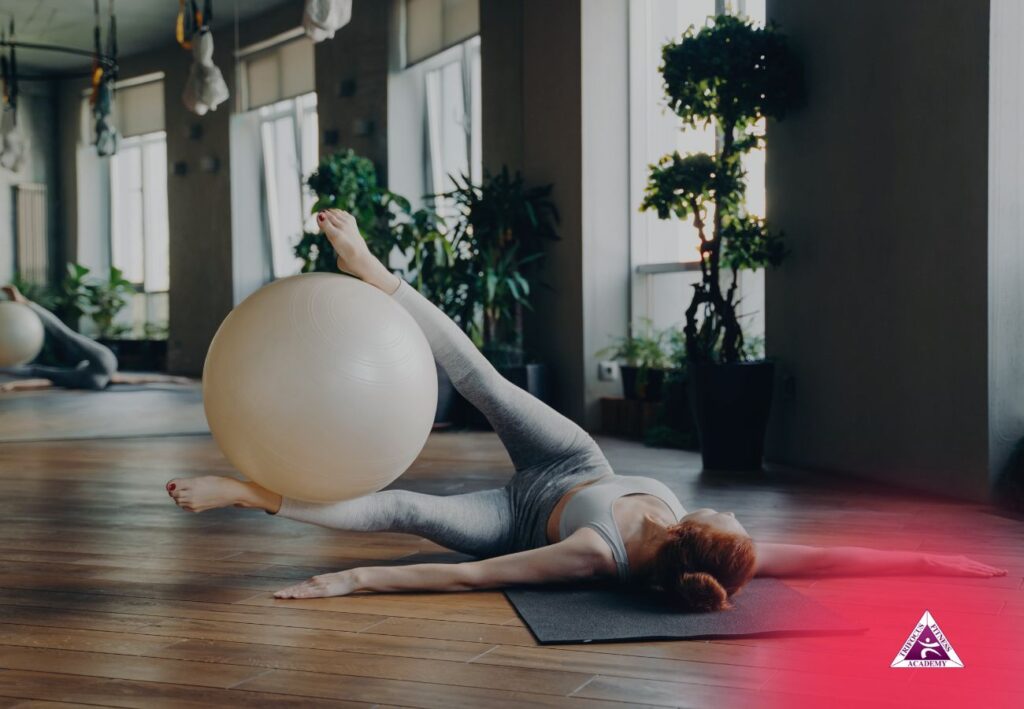
Balance isn’t just about avoiding stumbles or falls—it’s the foundation of nearly every movement we make, from something as simple as turning a doorknob to performing complex athletic moves. While many people believe that balance is a matter of natural coordination or declines with age, research shows that Pilates can actively retrain the brain and body to improve stability and control from the inside out.
Pilates exercise, initially developed by Joseph Pilates in the early 20th century, is often associated with graceful movements and strong, toned cores. But at its core, Pilates is much more than that. It’s a carefully designed system that strengthens stabilising muscles, sharpens body awareness (proprioception), and fine-tunes the connection between the brain and muscles. Through thoughtful sequences, focused breathing, and mindful alignment, Pilates strengthens the communication between your sensory receptors, nervous system, and muscles.
Neuromuscular Control: Rewiring the Brain-Body Connection
At the centre of balance is neuromuscular control—the coordination between your brain, nerves, and muscles. Most of the time, we maintain balance without even thinking. Sensors in your body (proprioceptors) constantly monitor your position, movement, and pressure, sending signals to your brain, which then directs your muscles to adjust and stabilise you.
However, for people who live more sedentary lifestyles or who have past injuries, this system can become slower or less coordinated. Pilates exercise helps retrain this system by encouraging you to move with awareness and precision. Every Pilates movement begins with a focus on posture, alignment, and breath, which helps sharpen the body’s sensory feedback.
Subtle adjustments in exercises like spine curls, arc rolls, or standing leg lifts repeatedly activate muscles such as the deep core, back stabilisers, glutes, and even the small muscles in your feet. Over time, consistent practice strengthens these neuromuscular pathways.
MRI and EMG studies have shown that regular Pilates exercise increases activation in these deep stabilising muscles. As a result, your postural muscles learn to engage sooner and more effectively when you move, helping you stay balanced without even thinking about it. With each repetition, your nervous system becomes quicker and more efficient, giving you a stronger, more stable foundation for all your other activities.
Core Engagement and Proprioceptive Feedback
A stable core is crucial for controlling your centre of gravity and maintaining balance. Pilates provides a structured approach to engage the deep core muscles—the transverse abdominis, multifidus, pelvic floor, and diaphragm—building strength from the inside out. Unlike traditional ab workouts, Pilates emphasises control and breathwork, creating intra-abdominal pressure that stabilises your trunk as you move.
Research shows that people who practice Pilates exercise regularly experience increased activation of their transverse abdominis even before they start moving, which helps keep the spine stable. This pre-activation prepares the body for balance challenges, whether you’re standing on one leg or walking across uneven ground.
Pilates exercise goes beyond just strengthening muscles. The deep core is full of sensors that give your brain constant feedback about your body’s position and movement. When these muscles are engaged adequately through Pilates, these sensory receptors fine-tune your internal sense of balance.
With consistent practice, your balance becomes smoother and more automatic, even in tricky situations like standing on unstable surfaces. Plus, when your core is doing its job, your larger outer muscles don’t have to overcompensate. This leads to more efficient movement, better endurance, and less fatigue during physical activity.
Muscle Symmetry, Alignment, and Postural Integration
Balance isn’t just about having strong muscles—it’s also about keeping both sides of your body working in harmony. Slight imbalances, like one side being slightly weaker or postural habits pulling you out of alignment, can shift your centre of gravity and make you less stable. You might not even notice it at first: one side might take over, your hips may tilt, or your shoulders may round forward, subtly throwing your body off-centre.
Pilates exercise is designed to help detect and correct these imbalances. By using one-sided (unilateral) movements and controlled repetitions, Pilates highlights differences in strength, mobility, and body awareness between your right and left sides. Exercises like Single Leg Kick or Side Leg Lift quickly show which hip stabiliser is weaker, allowing you to focus on proper alignment. Over time, as the weaker side strengthens, your body naturally becomes more balanced and better coordinated.
Regular Pilates exercise also teaches full-body alignment. Moves like Swimming, Teaser, and Plank train your body to stack itself correctly, from your feet up to your head. With your spine aligned over your pelvis, your ribcage balanced over your hips, and your head appropriately positioned, your centre of gravity stays neutral.
This reduces the need for your body to compensate, helping you move more confidently and smoothly all the time. Studies using EMG technology even show that people who practice Pilates regularly develop better muscle symmetry, leading to improvements in standing, walking, and sports performance.
Sensory Integration and Central Nervous System Adaptation
Good balance depends on your body processing signals from multiple sensory systems — your vision, your inner ear (vestibular system), and your proprioceptors (sensors in your muscles, joints, and skin). Pilates exercise naturally challenges these systems by placing you in controlled positions that require conscious balance and core engagement. Movements like Standing Roll Down, Single Leg Balance, and Roll-Up force your sensory systems to work together as your muscles react and adjust.
In many Pilates classes, you might be asked to soften your gaze or even close your eyes while performing certain moves. This increases your reliance on proprioception — your internal sense of where your body is in space — and helps fine-tune your balance.
As you practice, your nervous system gets better at processing these different signals more efficiently. Studies have shown that after several weeks of Pilates, people experience less swaying when standing on one leg and perform better on dynamic balance tests.
That’s because their nervous system has become more skilled at filtering out distractions and choosing the best muscle responses to stay stable. You can take this even further by introducing more variety — like standing on foam, changing surfaces, or closing your eyes during specific exercises — to sharpen your nervous system and prepare for real-world situations, whether it’s navigating slippery sidewalks, rocky paths, or sudden turns.
Conclusion
Balance isn’t just a simple skill—it’s a combination of strength, alignment, sensory processing, and precise timing between your brain and muscles. Pilates exercises offer a highly effective way to train all these areas simultaneously. By retraining your brain-to-muscle communication pathways, Pilates improves your posture and responsiveness.
At the same time, its focus on deep core engagement and sensory feedback strengthens your internal stability, giving you better balance from the inside out. What sets Pilates exercise apart is its focus on symmetry, alignment, and challenging your sensory systems. It helps you become aware of imbalances and gently corrects them over time—a process backed by studies that show real improvements in muscle coordination and balance after consistent practice.
Contact Trifocus Fitness Academy
Explore the rewarding path of becoming a certified Pilates Instructor. Unleash your potential and inspire others on your journey with Trifocus Fitness Academy’s comprehensive Pilates Instructor program.

Frequently Asked Questions
Pilates improves balance by strengthening your core muscles, improving posture, and training your body’s awareness of movement, known as proprioception. Each slow, controlled Pilates movement activates deep-stabilising muscles, such as the transverse abdominis, pelvic floor, and multifidus. Over time, this helps your brain and muscles communicate more effectively, resulting in improved stability and coordination. Unlike many traditional workouts, Pilates focuses on mindful, precise movements that retrain your nervous system.
Absolutely! Pilates is highly beginner-friendly and easily adaptable to all fitness levels. The slow pace and intense focus on alignment make it safe for newcomers to strengthen their core and improve balance without feeling overwhelmed. Instructors can modify exercises to suit your abilities and gradually increase difficulty as your strength and coordination improve. Many beginners quickly notice improvements in posture, greater stability, and increased confidence in their movements after just a few sessions, making Pilates an excellent choice for anyone looking to enhance their balance.
Practising Pilates 2 to 4 times a week can lead to significant improvements in balance. Staying consistent is key, as regular practice strengthens your muscles while also enhancing your neuromuscular coordination. Even short sessions help build body awareness and stability. Over time, you’ll find your posture improves, your core gets stronger, and your movements feel more controlled. As you get more comfortable, adding more advanced exercises will continue to challenge your balance and help you progress even further.
Yes, Pilates exercises are efficient in helping prevent falls, especially for older adults. By strengthening the core and stabilising muscles, Pilates improves balance and quickens your body’s reaction time, which reduces the chance of falling. Its focus on posture, alignment, and controlled movement trains the nervous system to respond more efficiently to balance challenges. Pilates also enhances flexibility, corrects muscle imbalances, and boosts confidence in movement—all of which are important for staying steady and safe in daily life.
Pilates offers several unique benefits that go beyond basic balance exercises. While traditional balance drills often focus on simply standing still or staying upright, Pilates combines full-body strength, deep core activation, and neuromuscular control to enhance balance and stability. This approach strengthens the muscles that support balance, improves posture, and fine-tunes body awareness. Pilates also addresses muscle imbalances that traditional balance exercises may overlook, providing a more comprehensive and lasting improvement in overall stability.
Definitely! Pilates can enhance sports performance by strengthening the core, improving balance, and increasing flexibility. A strong and stable core helps athletes transfer power efficiently, avoid injuries, and maintain proper alignment during complex movements. Whether you’re running, golfing, or playing tennis, Pilates enhances coordination and body control, providing you with better precision and power. Many professional athletes incorporate Pilates into their training routines to improve balance, agility, and overall performance in their respective sports.