
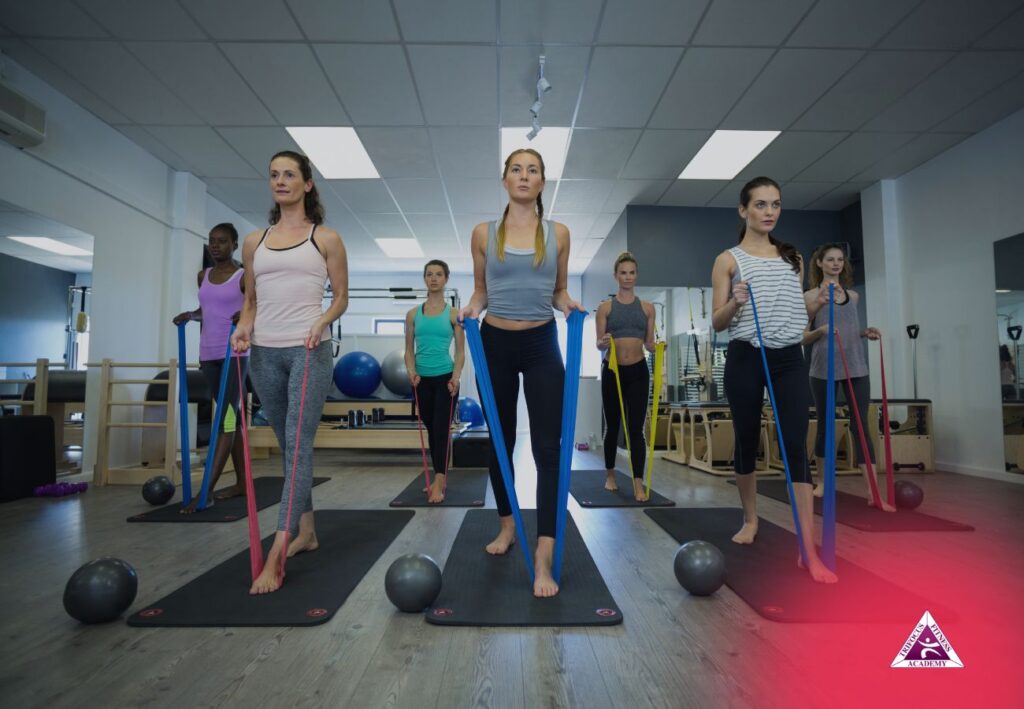
Functional movement — the ability to move your body efficiently, safely and without pain, in your day — is the foundation of fitness, longevity, and quality of life. From reaching up for something on a shelf to lifting groceries, to squatting down to play with your children, to pushing through a challenging workout, they all depend on stable and integrated movement patterns.
Invented by Joseph Pilates as a system for strengthening the core muscles, as well as providing alignment and increasing physical awareness, Pilates transcends simple muscle-building training to train the body in a way that it works as a coordinated, purposeful system. A smart Pilates workout doesn’t just work muscles — it teaches your muscles how to work in sequences that serve everything you need to do. When you commit to a Pilates exercise routine, you are improving your neuromuscular system, rebalancing your muscle activation, and strengthening your alignment control – benefits that translate directly to better standing posture, athletic performance, and injury prevention.
What Is Functional Movement and Why Does It Matter
Functional movement encompasses the fundamental movement patterns we perform daily, including squatting, bending, lifting, reaching, rotating, pushing, and pulling, all executed with balance, control, and breath. These are patterns that integrate multiple joints and muscle groups to facilitate movement.
Unlike single-muscle isolated movements, functional fitness exercises utilise multiple muscles to improve strength, coordination, and balance, training your muscles to work together and prepare them for daily tasks by stimulating common movement patterns in your exercises. The problem is that many people lose their functional capacity with age due to prolonged sitting, one-sided sports, poor posture, and repetitive tasks.
This produces imbalanced muscles, such as tight hip flexors, weak glutes, winged shoulders, and misaligned spines — all of which contribute to dysfunctional movement. The result is that simple tasks, such as bending down, picking something up, or even walking, become inefficient and frequently painful, uncomfortable, or unproductive.
This is when Pilates workouts come in handy. “Using controlled and specific movements, Pilates exercise ‘rebuilds’ balanced core strength, stabilises the hips and supports the shoulder girdle while simultaneously improving movement at the spine (which is a key ingredient of functional movement).
Supported by scientific research, Pilates exercises have been proven to enhance movement quality, proprioception, motor control, and muscular symmetry—all essential elements of movement health and rehabilitation.
How Pilates Exercise Enhances Neuromuscular Coordination
Neuromuscular coordination is the brain’s ability to turn on muscles in the correct order and at the right time to create smooth, effective movement. When it works properly, this system allows your body to move smoothly and safely. However, with poor coordination, movement becomes inefficient, and compensations are made that put you at risk of strain and injury.
A Pilates workout is excellent for improving neuromuscular coordination because it requires slow, controlled movements and precise execution. While most get-the-archived-records-and-slam-them-down workout methods are speed-based or load-based, these Pilates exercises shape the body from the inside out using “quality,” a type of reps approach that helps the brain and body work in sync.
A classic Pilates exercise perfectly demonstrates this, the “Roll-Up.” Here, the spine bends bone by bone while the centre is held and the breath is controlled. Everything must fire together just so, and that coordination demands that the nervous system constantly communicates with the muscles. With consistent repetition, this practice forms new motor patterns, and that rewires the brain to produce more fluid and coordinated movement in daily activities (bending, twisting, or reaching, etc)
Research on surface EMG reveals that regular Pilates exercises activate the innermost core stabilisers, such as the transverse abdominis and multifidus, which are essential for spinal stability and equilibrium. Brain imaging studies also indicate that mindfulness, as well as the proprioceptive focus created during Pilates training, improves motor cortex activity.
Core-to-Extremity Integration: The Key to Functional Movement
Effective movement is a result of a good relationship between the core and the appendages. The core is the link between the upper and lower body, transmitting force—whether you’re hoisting something heavy overhead, launching forward to pick something up, or simply taking a stroll, your entire body works together kinetically, and your core is the focal point.
When you lack this integrated power, the body tends to overuse certain muscle groups, resulting in poor movement mechanics and an increased risk of injury. Pilates workouts are designed to encourage core-to-extremity integration, overlaying controlled movements of the limbs on a stable and aligned core.
In a regular Pilates exercise, you will be asked to move your arms or legs while keeping control of your whole trunk. Exercises like the Swimming—lifting an opposite arm and leg in a fluttering pattern—require the body to stabilise through its core as the arms and legs move. Additionally, the exercises “Chest Expansion,” “Side Kick Series,” and “Quadruped leg circles” force the core to stabilise against unwanted rotation or side bending as the limbs move dynamically. The more these two types of conditioning are coupled together, the better off the nervous system will be, being better able to fire muscles in the correct order and stabilise joints during complex, multi-joint actions.
Through repetition, Pilates exercises create strength within natural movement patterns, rather than building strength in isolated groups of muscles. Its benefits also carry over to everyday movements such as lifting, reaching, turning, and carrying. Ultimately, this head-to-toe connection yields a more consistent, robust, and durable body that can withstand most physical challenges without hesitation.
Mobility and Strength Balance Through Pilates Exercise
Real functional movement occurs in the middle of strength and mobility, where a balance exists between the two. Many people are restricted in their motion because they are missing one of these factors. Restricted motion is often caused by tight, stiff joints, a lack of flexibility, and weak muscles that cannot support the body effectively.
This imbalance will eventually lead to compensation, poor posture, and ultimately, injury. Pilates receives high marks for covering both strengthening and mobility simultaneously, as it forms the foundation of functional movement for daily living and sports.
Pilates exercises are designed to move the joints, allowing the muscles to control the movement. Movements like Spine Twist, Open Leg Rocker, Cat-Cow, and Rolling Like a Ball all support and aid spinal movement, enhancing and developing tracking, coordination, and body alignment. Additionally, for the hips, the bridging, leg circles, and side-lying series movements release tight hip flexors while activating and strengthening the glute and hip stabilisers.
Shoulders, another common area that can easily become problematic, are worked in exercises such as Pilates, swimming, and scapular mobilisation, which help you keep your shoulder girdle moving in the right way while stabilising the upper back and core. The reason Pilates exercises work is that each exercise must be done very slowly and with controlled movement, and muscles must be stabilised while joints are being moved.
The combination of strength and flexibility creates the perfect balance of stability and mobility, from which we can perform functional activities, such as twisting, bending, lifting, and reaching, safely knowing that all our joints are protected and we are promoting our long-term physical health.
Conclusion
The benefits of combining Pilates exercise and functional motion are both short-term and long-term. Pilates isn’t just a series of isolated movements – it is a movement system that rewires coordination, strengthens movement patterns, and builds overall mobility. It is this level of rigour that not only optimises but also influences the improvement of neuromuscular control, core-extremity integration, and mobility-strength ratios, as well as the patterning of sequential movement, all key elements of functional movement.
As these facets improve, your fitness becomes smarter: your movement becomes more precise, force production becomes safer, injury risk decreases, and your endurance in daily pursuits increases. And those benefits build on one another — because improved movement means more effective workouts and less pain, which in turn makes us more active.
Contact Trifocus Fitness Academy
Explore the rewarding path of becoming a certified Pilates Instructor. Unleash your potential and inspire others on your journey with Trifocus Fitness Academy’s comprehensive Pilates Instructor program.

Frequently Asked Questions
Pilates exercises functionally train the body to move efficiently in proper alignment. It also conditions stabilising muscles, enhances joint mobility, and trains neuromuscular coordination. With isolated exercises, you’re only targeting one area at a time, but with Pilates exercises, you’re focusing on the entire body while muscle groups learn to work in synergy. This limits compensation, which is the root cause of injuries. Improved balance, posture, and control help with daily activities, whether you’re lifting, bending, or reaching.
Yes, Pilates is great for preventing injuries. Synchronised with a focus on strength and flexibility, Pilates training helps restore balance, which frequently leads to strain and overuse injuries. By teaching proper alignment and control of the spine, hips, shoulders, and knees, Pilates enables the ideal positioning of the joints during movement, minimising the amortisation, shear, and compressive forces on these joints. The controlled, mindful quality of Pilates exercise also enhances body awareness, so you can learn to recognise poor movement patterns before they become a habit and cause injury.
Absolutely! Pilates, as a form of Exercise, is versatile and convenient for anyone, regardless of their level – suitable for beginners, seniors, and even athletes. Pilates is an exercise routine that can be adjusted to suit any skill level, allowing for safe progressions that challenge and condition the body with correct form. Novices begin with basic body movements that develop core strength, balance, and flexibility. More challenging Pilates exercise variations are added as strength and control improve. At any age and level of athleticism, Pilates works for the long run by correcting posture, preventing injury, and promoting more efficient movement.
To get the most out of Pilates, aim to do Pilates exercises 2 to 4 times a week. You are weak in your core, and consistent practice helps your body adapt by making improvements in core strength, mobility, coordination, and other areas. Even short Pilates practice workouts are okay if they are taught correctly with focus. Over time, a regular practice improves posture, reduces pain, and ultimately leads to greater functional strength. The answer is consistency and thoughtful performance of every Pilates exercise to ensure that your muscles are being used correctly and that your movement is improving.
Yes, a Pilates workout can greatly enhance athletic ability. Pilates training improves the transmission of force from the lower to the upper body through a stable core. It refines balance, flexibility and neuromuscular control, all of which are necessary for effective and potent movement in any game. Pilates exercises can help athletes prevent injury and achieve faster recovery times. The enhanced functional movement developed through Pilates exercises can also support athletes in their performance, enabling them to execute tasks more effectively with less effort.
Pilates is all about controlled and full-body movements that emphasise the core, alignment, and balance. While traditional strength training isolates muscles with heavy resistance, Pilates exercises multiple muscles simultaneously. This helps the body move as a single, coordinated unit, enhancing functional movements used in everyday life. Pilates training also focuses on flexibility, joint stability, and conscious breathing. Balanced strength is the foundation for long-term mobility, good posture and injury prevention.