
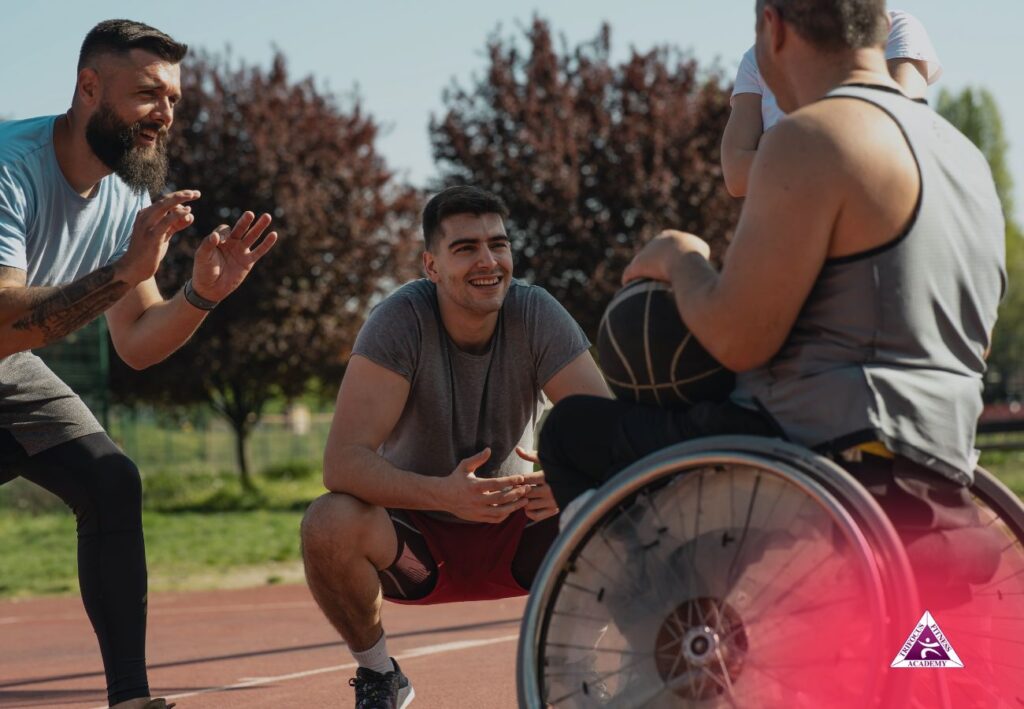
Inclusive principles now guide programmes of modern sports coaching. Coaches who work with athletes with disabilities have unique challenges and rewards. These athletes, whether they have physical, sensory, intellectual or hidden impairments, deserve training spaces that respect their ambitions, assets and humanity. Good sports coaching in such a context is based on adaptation, inclusion and respecting the autonomy of others.
Coaching adapted sports for athletes with disabilities is a mix of technical knowledge, empathy, compensatory work and teamwork. It’s not about lowering the bar; it’s about rethinking how to raise it for the full range of abilities. Coaches have to know their athletes and tailor drills, use assistive technology when necessary and create team cultures where everyone feels part of the whole. Some studies have also shown that inclusive coaching aids the motivation and confidence of athletes with disabilities and, in turn, their psychological well-being.
Building Rapport, Agency and Athlete-Centred Coaching
A foundation for effective, inclusive sports coaching practice is to develop a genuine relationship and foster trust between the coach and the athlete. Athletes with disabilities, just like all athletes, flourish when they feel seen, heard and respected. “Where coaches need to focus their training is on athlete-centred communication,” Way says, “especially the idea that as a coach you are listening and collaborating, not instructing. This requires modifying communication modalities, auditory, visual, and tactile, to individual requirements. It also means seeking and respecting the athlete’s input about what they want and need in terms of training goals, comfort and boundaries.
Establishing agency is equally critical. Athletes who gain ownership in determining training agendas or goals become more intrinsically motivated. The coaching of sports in this situation means leading and not ruling. Something as small as giving a student-athlete the autonomy to pick pre-meet warm-up drills or to contribute to meet planning can be empowering.
Inclusive coaching also adds the elements of consistency and psychological safety. Trust is created through consistency, through showing up, setting clear expectations and reinforcing effort rather than just results. Coaching should express positive reinforcement around change relative to the athlete’s past performance, rather than a rigid or objective benchmark.
In this way, the way of working of sports training becomes a channel of empowerment. Now the jock is not the jock anymore. The jock is the jock, considering the potential, capability, and different lens you have to look at the problem my team is trying to solve. This establishes a basis for inclusion beyond participation, into actual growth and success.
Adapting Sessions and Equipment for Inclusion
Inclusive sports coaching is built on a foundation of adaptability. Training sessions need to be organised flexibly so changes can be made during the session to enable athletes to participate to the best of their abilities. The STEPPS model (Space, Task, Equipment, People and Safety) offers coaches a pragmatic checklist if they are hoping to amend their approach in sessions.
Modifying space could involve reducing the playing surface, making surfaces accessible, or altering distances in drills. Task adjustment can include the simplification of goals, the facilitation of the breakdown of complex movement patterns into sequential steps or the elongation of the time of performance. Modifications to equipment may involve using bigger balls, tactile cues, balancing tools, or assistive technology that is personalised to the user.
Coaches could also customise participant–participant interactions to promote inclusivity. This could involve pairing students, mixed-ability grouping or assigning supportive roles within groups. These adjustments not only enhance inclusivity but also increase the overall experience for all players, fostering empathy and team spirit.
Crucially, the athlete should be the focus of the adaptation pathway. Their feedback ought to inform what works and what doesn’t. Adaptation to the individual is respectful, minimises frustration, and supports the most progress.
When adapting is habitual, sports coaching takes on a new dimension. It turns into a creative practice of inclusion, offering all athletes a means to grow, to express and to compete with integrity.
Creating Inclusive Group Environments and Team Culture
It’s one thing to be able to include people, but across team environments, it has to become a culture change, too. By developing a culture within the team based on mutual respect, understanding, and a sense of belonging, coaches have a tremendous say in what that culture becomes.
Systematically intersperse athletes of differing levels during group training sessions. Coaches can incorporate partnered activities that help them engage with one another rather than work in competition, such as relay challenges or team circuits. These activities address the individual contribution of each player and stimulate peer learning. A language of inclusion and team rituals that emphasise work ethic, sportsmanship and diversity help foster collective identity.
Good articles of this kind: Leadership should be given to all athletes, no matter their ability. Be it leading warm-ups, managing equipment or babysitting newer teammates, they build confidence and accountability. These roles should be rotated among the coaches to avoid bias and to ensure that all team members have a role in the evaluation process.
Education is another key component. There could be short discussions about disability awareness or inclusive values in the training. This leads to empathy and reduces stigma. In addition, coaches can set an example, demonstrating how to treat others with inclusion by using respectful language, being attentive and giving out equitable praise.
Inclusion is not about an exception, but about creating an environment where differences are expected and honoured. With this ongoing work and cultural awareness, sports coaching produces teams that are tough not just in a physical sense but socially. This sense of team spirit benefits both athletic and personal development of each athlete on the team.
Leverage Assistive Technology and Performance Tools
One area in which assistive technology is particularly making a splash is in sports coaching, pushing the boundaries of what’s possible for athletes living with disabilities. Whether it comes in the form of custom wheelchairs and prosthetics, communication apps or wearable sensors, technology has the potential to close gaps and also improve safety and performance.
They should be used intelligently, and the athlete’s goals and sport-specific needs should be considered. Coaches need to work in conjunction with Clinical staff, Physiotherapists and the athlete on what tools work best for them. For instance, vision disabilities can be compensated for by audio-based navigation systems, and cognitive disabilities can be addressed by digital feedback systems.
Workout data from the wearable tech, heart rate monitors, GPS trackers or motion sensors can be used to inform progress tracking and to refine training plans. These observations may be helpful in tailoring load, preventing injury and establishing achievable milestones. It’s also the responsibility of the coaches to teach their athletes how to use, analyse and interpret such tools for independence.
There is a question of access and equity. Coaches should also push for teams to secure funding, partnerships, or sponsorships to supply assistive gear to those athletes who require it. Ethical use of technology, protecting privacy and keeping athletes’ dignity paramount, is key.
Responsible adoption of innovation means co-creating with sports coaching, so players with disabilities aren’t just included but get a chance to push beyond their limits, with technology as support, not a crutch. Tech, properly employed, can be something that fuels transformation and elite performance.
Conclusion
Teaching sport to athletes with disabilities is difficult but rewarding! It challenges coaches to extend their creativity, empathy and knowledge, and in doing so makes them more effective. It is not a divergent road; it is the same road, and the only road to modern coaching greatness. Coaches who treat their athletes as individuals and listen first, modify drills and equipment using structures like steps, and develop inclusive team cultures can create environments where everyone can thrive.
Mobilising aids can also facilitate performance, whilst preserving dignity and independence. Sports coaching is transformative when the inclusion is intentional and led by athletes. Athletes with disabilities acquire physical skills, social confidence and a sense of psychological resilience. Teams and organisations benefit from diversity, respect and learning from each other. Communities learn more about ability and inclusion. That foundation is a place that develops not just athletes but engaged citizens.
Contact the Trifocus Fitness Academy
The Trifocus Fitness Academy offers specialised online and internationally accredited sports conditioning courses designed to equip professionals with all the skills and knowledge needed to succeed as a professional conditioning coach.

Frequently Asked Questions
Inclusive sports coaching is defined as the process of modifying the coaching techniques, environment, and communication style to best suit the range of needs of athletes with disabilities. All athletes experience treatment as sportsmen and sportswomen, regardless of their physical, intellectual, cognitive or sensory ability. Guidelines for Inclusive Coaching. Inclusive coaching means using your empathy, creativity, collaboration, and respect to reach all people. It is about empowerment, not limiting, and building trust, autonomy and individual strategies to see each athlete succeed.
Coaches can alter sessions using the STEPPS model – Space, Task, Equipment, People and Safety. This could be, for example, field size, adaptive equipment, simplified instructions, and athletes are matched for support. It’s all about flexibility, changing without making anything easier (or condescending). You need to be listening to those athletes. Practical adaptations maximise full participation in that they develop the full potential of the athlete. Inclusive sports coaching isn’t about lowering bars; it’s about meeting athletes where they are and then building from there. Adaptation is a strength of coaching, not a limitation.
Rapport establishes trust, safety and motivation, an especially critical factor when coaching athletes with disabilities. A strong coach-athlete relationship makes athletes feel seen, respected and empowered. Coaches develop relationships by maintaining open lines of communication, listening and getting their athletes’ input on decisions. Athlete-focused methods, which prioritise autonomy and agency, form a partnership rather than a hierarchy. The coach-athlete relationship forms the basis of practical differentiated training in disability sport. It’s the difference between an athlete who believes in her coach and, as a result, is more engaged, more willing to push herself and ultimately more likely to stick around for the long run, and one who does not.
Supportive technology improves sport coaching inclusion and performance. Devices such as adaptive wheelchairs, visual or auditory aids, prostheses, and wearable technology can support specific requirements and enhance outcomes. Technology can assist with performance monitoring, injury prevention and individualised training. But it can also lead to greater independence and confidence. Coaches should be knowledgeable and continue to seek out new tools and work with specialists when appropriate. Access and ethical application are critical. But with the proper tech support, athletes with disabilities can scale elite heights and push the boundaries of what is possible in the sports world.
Building an inclusive team culture is about empathy, equity, and shared experiences.” For example, coaches establish the tone by using inclusive language, recognising all accomplishments, and including all athletes in group activities. Mixed-ability trailers, leadership opportunities and disability awareness training are all designed to foster understanding and closeness. Inclusive sports coaching requires deliberate organisation so that each person on the team feels included and has a say. This is great not only for the team performance but also for building respect and working together, which creates a sense of belonging among all team members.
Sports coaching promotes motor skills development, mental wellness, and social integration for athletes with disabilities. It helps to build confidence, autonomy, and leadership over time. Athletes are more likely to continue participating in sports and carry over those skills to other areas in their lives. Inclusively coaching is also great for teams and for society: it builds diversity, empathy and collaboration. Coaches who are inclusive help change the way society views ability. The lasting effects are more pronounced than athletic prowess; they are personal empowerment and cultural transformation at large.