
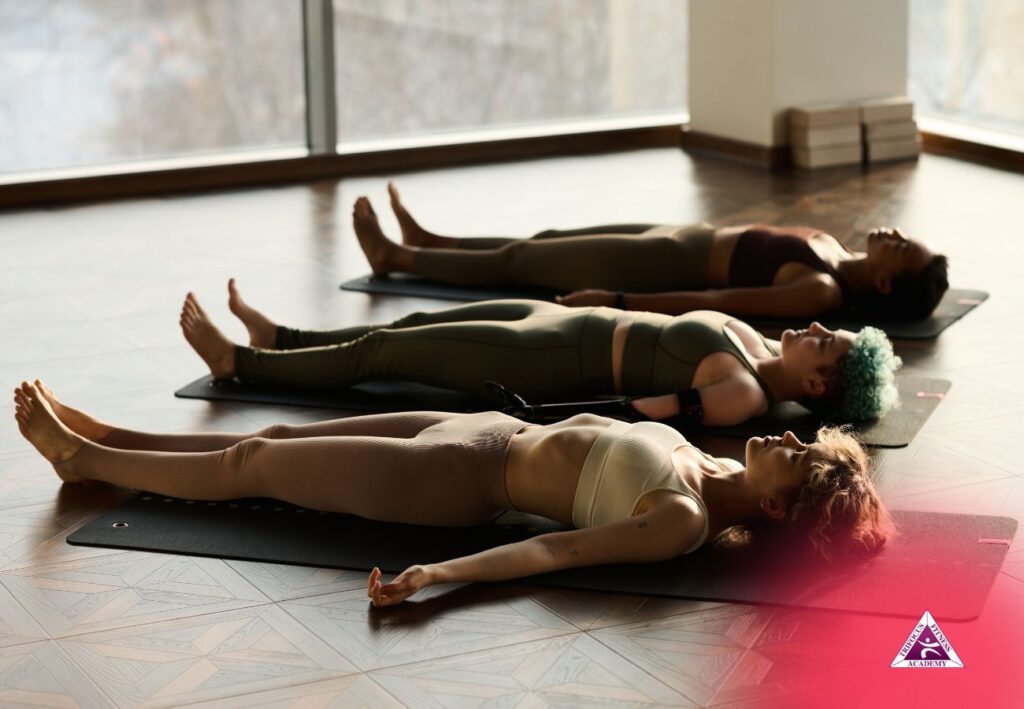
Shavasana, the corpse pose, may be the easiest yoga pose of them all. It is frequently the last pose in a yoga practice, providing a time of stillness, integration and profound rest. Despite its appearance of simply lying on the mat, Shavasana serves as a potent tool for relaxing the body, reducing stress, improving mental clarity, and enhancing overall well-being. It turns on the body’s relaxation response, lowers blood pressure, quiets the nervous system, and hushes deep into a meditative state of mind.
Deep rest often goes unnoticed in our fast-paced lives. We link productivity to continual movement, and rest is usually perceived as laziness. But science still proves it true: rest is vital to healing and resilience. Shavasana is a form of active relaxation in which the body lets go and the mind becomes quiet, without falling asleep. This is the context within which genuine recovery starts.
For individuals who practice yoga regularly, Shavasana is vital for integrating the physiological and psychological effects of yoga asanas. It helps the body absorb the benefits of practice and enables you to move from active effort to passive relaxation. Even on its own, without a complete yoga practice beforehand, Shavasana can be profoundly restorative.
The Physiology Behind Shavasana and Deep Rest
Shavasana is not just the best part of a yoga class, but also one that’s more important even than all the asanas. There’s a scientific basis for it; it can stimulate the “rest and digest” parasympathetic nervous system. This state enables the body to recover, rebuild, and regulate internal systems such as digestion, heart rate, and immune function.
As you lie quietly in Shavasana, your breathing slows, your muscles relax, and your mind moves into a more meditative state. The body’s primary stress hormone, cortisol, starts to decrease. Your blood flow gets better, and you distribute oxygen more efficiently to your organs. This physical transformation is a fundamental part of dealing with chronic stress, anxiety and exhaustion.
When this happens, brainwaves start to alter. Shavasana helps us move from an active beta brainwave state into alpha and even theta brainwave states, which are said to be the domains of relaxation, self-introspection, and profound mental clarity. This change can support creative thought, memory consolidation, and emotion regulation.
Muscles benefit, too. Shavasana rejuvenates the body after a yoga workout, when stretching and holding poses can take a toll on muscles. It counteracts the physical exertion, so there is no stiffness and tiredness.
From a hormonal perspective, deep rest lowers adrenaline levels and increases serotonin and endorphins, the feel-good chemicals that support emotional well-being. Eventually, regular practice of Shavasana can aid in the cure of insomnia and, in mild cases, high blood pressure and nervous tension.
The science behind this yoga exercise move will explain why Shavasana should not be skipped. It’s an integral part of the ritual, allowing the body and mind to reach a place of unity and rebirth.
Mental and Emotional Benefits of Shavasana
The benefits of Shavasana Stretching our legs have a lot of physical benefits, and there’s quite a bit out there about the emotional and mental aspects as well. In a world where overstimulation is the norm and quiet time is hard to come by, Shavasana offers the mind a refuge. A letting-go process that makes yoga a valuable exercise for stress and mental fatigue management.
Although the body remains still, the mind is gently guided into mindful awareness during Shavasana. Without our having to engage in any action or react to an outside stimulus, the nervous system is settling down. This sensory deprivation leads to a quieting of the mind. This is frequently the mind’s first chance to slow down during the day, without being used to focus on something else.
Emotions, too, have room to rise and to soften. Regularly practising this yoga can help people digest their feelings without judgment. It’s not rare) to experience moments of Aha, inspiration or emotional release in this state. With regular practice, Shavasana helps develop mental balance and resilience to stress, allowing you to weather life’s ups and downs with ease.
Shavasana also supports mindfulness. It is a state of repose more akin to wakefulness than to sleep. And you keep an attention on the breath, on what’s going on in your body, where you feel everything and the present. This sort of awareness promotes clearer, more thoughtful thinking and greater focus. For many, deep rest regularly means a change in mood: we become more pleasant to be around, more patient and better able to tolerate challenges.
From a mental health point of view, this yoga move can be good for anxiety, burnout, or trouble sleeping, too. A mere 10 minutes of purposeful relaxation can recalibrate the brain and restore emotional equilibrium, making adding savasana a simple yet effective part of your life.
How to Practise Shavasana Effectively
While Shavasana may seem simple, it takes a good deal of attention and intention to reap the full benefits. Doing this yoga exercise properly requires setting up the right environment, developing body awareness, and avoiding common mistakes that can diminish its effectiveness.
Set Up for Comfort
Lie face up on the ground with legs apart and arms resting at your sides. Use a yoga mat or a cushioned soft surface for your body. You can always add a pillow under your knees if that feels good to you and helps release lower back tension, or even put a folded blanket under your head for neck comfort. Keep your body warm by covering yourself with a blanket if it’s cool in the room.
Let Go of Control
With that in place, close your eyes and concentrate on releasing. Let’s start with a couple of full breaths and just let the breath settle into its own natural pattern. Scan your body from top to bottom, identifying pockets of tension, and intentionally soften. The objective is to achieve complete rest.
Avoid Common Mistakes
In Shavasana, many fidget, fall asleep or mentally run through their to-do list. I think, you know, it’s ok once in a blue moon, but the real value of doing this yoga practice lies in being mindful. If you find your thoughts wandering, softly redirect your attention to your breath or body.
Duration Matters
Go for at least 5 to 10 minutes, though longer sessions of 15 to 20 minutes can elicit more profound relaxation. Timer, if necessary, to avoid worrying about time.
Use Guidance if Needed
For novices, a guided body scan or meditation can help keep you focused on the practice. With time, you’ll be able to steer yourself into deep sleep without a crutch.
Shavasana works best when you approach it with as much care as an active yoga pose. This yoga exercise pose is an intentional pause that regenerates the nervous system and helps us recharge.
Integrating Shavasana into Your Yoga Exercise Routine
Shavasana is usually done at the end of a yoga practice, but it offers benefits beyond stretching and strengthening. You can use this yoga exercise at any time throughout your day, depending on what you need, to clear your mind, recover from stress, or find a few moments of calm.
At the End of a Yoga Session
This is the classic use of Shavasana, and with good reason. After a vigorous yoga workout, your body is warm, your mind is more focused, and your breath is steady. Ending with Shavasana, let’s all those factors settle. It’s an invigorating finish to the practice, seals it, and helps the body absorb what we have done.
As a Midday Reset
But even without a complete yoga workout, Shavasana can stand alone as an afternoon reset. Taking 10 minutes to lie down in a quiet space can help break the stress cycle, clear the mind, and build energy. This is especially useful for busy or stressful lifestyles.
Before Bedtime
For those who have trouble falling asleep, practising this yoga exercise before bed can help the body and mind set the stage for slumber. It reduces cortisol, slows your heart rate, and relaxes your muscles, making it easier for you to ease into deep sleep.
After Stressful Moments
If you’re feeling stressed, overstretched or emotionally drained, Shavasana is a systematic way to recover from these states. Even five minutes of stillness can help restore a sense of balance and clear your thoughts.
Consistency is Key
Make Shavasana a ritual, not simply an end pose. Make it a part of your wellness routine two to four times a week. Shorter sessions still have cumulative effects on your nervous system and mental health.
By approaching Shavasana as a central yoga practice rather than just something to fill time at the end of a class, you deepen your practice and open more doors to calm, clarity and healing in everyday life.
Conclusion
In a society that values doing over being, Yoga’s final pose teaches the real power of strength and silence. This deceptively easy yoga pose has the potential to change how we handle stress, process emotions and maintain overall physical and emotional health. It’s not just a cool-down; it’s mathematically proven to let the body reset and the mind settle.
Shavasana stimulates the parasympathetic nervous system, or the body’s healing and regenerative system, reducing stress and enabling our autonomic functions to do their job. It helps support the muscles after movement, brings homeostasis to brain activity and promotes emotional stability. Whether combined with regular yoga exercises or performed alone, it can be an excellent tool for mental revitalisation and physical rejuvenation.
Contact Trifocus Fitness Academy
Explore the rewarding path of becoming a certified Yoga instructor. Unleash your potential and inspire others on your journey with Trifocus Fitness Academy’s comprehensive Yoga program.

Frequently Asked Questions
Shavasana, often called the Corpse Pose, is a yoga pose in which you lie on your back in complete stillness. Seems simple enough, but it is surprisingly effective at inducing deep rest. This position gives your body time to reap the benefits of what you have just done; it calms the nervous system and helps refresh your brain.
The yoga exercise practice shavasana stimulates the parasympathetic nervous system, which is also known as the body’s rest-and-digest mode. This has a calming effect, leading to a slowing of the heart rate and lower-than-normal cortisol levels. In Shavasana, your nervous system shifts from alertness to relaxation, helping rejuvenate and repair the body. It improves the blood flow and controls respiration. These changes can help reduce long-term stress, regulate emotions, and improve sleep quality.
Yes, you can do Shavasana independently as a separate yoga practice. Traditionally done at the end of a complete yoga session, it can be a powerful practice in and of itself for relieving stress, centring ourselves emotionally, or rebalancing throughout our day. Even a 10- to 15-minute Shavasana serves as an opportunity to clear the mind, reduce muscle tension and recentre.
The shavasana mistake. People either take it too casually or doze off in their yoga exercise practice’s shavasana. Feeling drowsy is fine, but the aim is to remain consciously relaxed. Another issue is poor alignment that can interfere with genuine relaxation. Props, such as a blanket or a pillow, can help facilitate increased comfort. Some people also go through the pose too fast or don’t do it at all.
Do the Shavasana yoga pose for 5 to 10 minutes for the best effects. If you have time, it’s a good idea to hold the pose for 15 or even 20 minutes for more profound relaxation. The perfect length varies for you, your schedule and how much stress or tension you’re holding on to. The more time you spend in stillness, the more your nervous system resets and your body absorbs previous movements.
Absolutely. One of the most accessible yoga exercises for beginners, shavasana requires no strength or flexibility; all you need to do is be still and mindful. It teaches new practitioners the principle of conscious relaxation, an essential part of yoga. Novices can learn the pose with props and concentrate on breath awareness.