
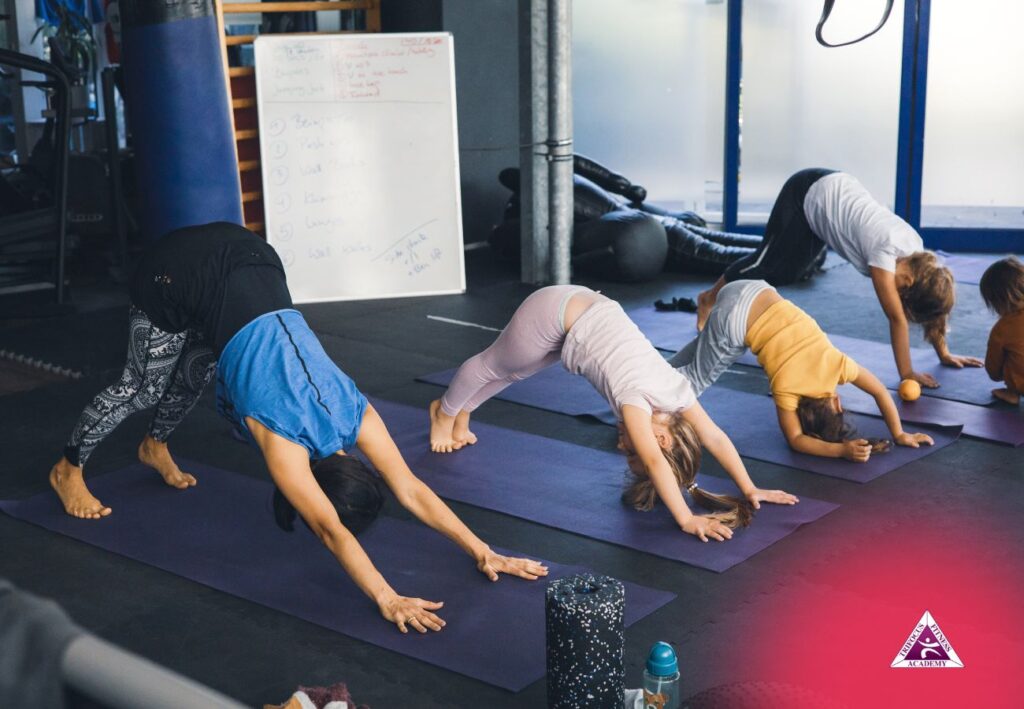
Functional fitness is all about getting your body ready for the tasks you do every day, so you can do what you need to do safely and easily. Mobility is one of the cornerstones of functional fitness. You will find that muscles and joints are affected when they lack an adequate range of motion, making even simple movement uncomfortable or injurious. This is where yoga can serve as a fantastic tool.
Unlike high-intensity exercises, which tend to test one’s limits, yoga aims for a more balanced, mindful approach. It assists in muscle elongation, joint range of motion and body awareness. And these benefits are key to promoting functional mobility, the kind of movement that helps you get through your day more easily with less strain.
Yoga exercise focuses on balance, coordination, and core stabilisation, all of which are vital aspects of functional strength. Yoga movements work various muscle groups and connect the mind with the body, giving you a solid foundation for real-life actions. Whether you’re rising from the floor, lifting a child or pulling that can from a high shelf, so much of what we do depends on our capacity to move with ease and confidence.
Understanding Mobility and Its Role in Functional Fitness
Mobility is the capacity to actively move a joint through its entire range of motion under control. It is not to be confused with flexibility, which refers to the passive lengthening of a muscle. Flexibility is one thing, but mobility has relevance. It involves strength, control and power in movement. A lack of mobility leads to restricted movement, compensation, and an increased risk of injury.
Functional fitness classes centre around workouts that replicate everyday movements. Consider bending down to pick something up, turning to reach something behind you, or stepping one foot over a stair while climbing. These movements involve muscles and joints working together in perfect unity. With tight hips, your squat can be shallow and even harmful to your lower back. If you are stiff in your shoulders, it becomes a challenge to go overhead.
Yoga exercise builds mobility via active movement and controlled holds. So, in a lunge pose, the hips open and ankles stretch, while the core stabilises. You’re not only increasing the range of motion but also teaching your body how to manage that movement safely. It also means you do better in your everyday duties and workouts.
Yoga also improves proprioception — your sense of where your body is in space. Your increased body awareness will allow you to move with purpose and confidence. Regular yoga practice, however, has been shown to improve overall mobility, build strength to support proper posture, and help prevent injuries caused by chronic tension or imbalances.
By combining yoga with functional fitness, they can enjoy the best of both strength and flexibility. It just prepares your body to move well, not be strained.
Key Yoga Poses That Boost Mobility in Daily Movement
Some yoga poses are especially beneficial for increasing the mobility of your most important joints and muscles for functional motion. These stretches aren’t so much about deep flexibility, but capacity within usable ranges of motion in the hips, shoulders, spine and ankles, all necessary for everyday activities.
Downward-Facing Dog
This traditional pose also stretches the hamstrings, calves, shoulders and spine. It improves overall alignment by lengthening the posterior chain. While you hold this pose, you’re conditioning your body to distribute weight evenly and engage muscles that support functional movement (like walking, lifting, and sitting with good posture).
Low Lunge (Anjaneyasana)
Low lunges open the hips and stretch the hip flexors, which are often shortened from prolonged sitting. This position also stretches and strengthens the ankles and extends through the spine. When you do it, squatting, climbing stairs, and getting up from a seated position usually feel smoother and more coordinated.
Cat-Cow Sequence
This kind of spinal sequence is wonderful for general mobility in your back and neck. You develop more flexibility and power over the vertebrae as you flex from an arched back to a rounded one. This may help prevent stiffness, particularly in people who sit for long hours.
Garland Pose (Malasana)
A deep squat to strengthen and open the hips, ankles and groin. It emulates a natural kneeling position, which is necessary for functional strength. Maintaining this position with breath control helps your lower body become more mobile and stable.
Thread the Needle
This shoulder-opening upper back twist targets the rotator cuffs and the thoracic spine. It’s excellent for improving swivel movement, which will help with reaching, lifting, twisting, and turning.
By adding these yoga postures to your weekly routine, you teach your body to move more efficiently (pain-free) in real life. They’re basic, but they are practical tools for improved mobility and strength in the places you need it most.
How Yoga Enhances Strength and Flexibility Without Overloading the Body
One of the reasons Yoga is so effective at increasing mobility in functional fitness is that it makes you stronger without putting as much wear on your body as many high-impact workouts do. When incorporated into a well-rounded, balanced program that includes weight and interval training to boost metabolism, yoga provides all-over strength, flexibility, and joint integrity through bodyweight resistance and sustained holds.
Unlike heavy lifting or intensive repeats, yoga increases strength steadily and under control. For instance, a Warrior II will challenge your legs and hips as you stretch through the inner thighs and ankles. Plank poses are great for building shoulder and core stability, which are crucial for efficient movement mechanics.
Yoga also supports balanced development. Most people also overtrain specific muscles, resulting in tightness in some and weakness in others. Yoga, by working the entire body symmetrically, accomplishes just this. This is balanced strengthening to maintain joint alignment and prevent compensations that can lead to pain or injury.
Another key benefit is recovery. Yoga exercise promotes relaxation through breathwork and mindful movement, lowering cortisol levels and allowing muscles to recover more quickly. You can still stay mobile and active without overloading your joints or becoming tired. Easy flow and restorative sessions are the perfect movement on rest days, continuing mobility without taxing your system.
Yoga exercise increases your strength and flexibility, which can help you live longer. For functional fitness, it provides a base, so the body isn’t just strong, it’s supple and adaptable. The result is more control, less stiffness and better overall performance in workouts and on a day-to-day basis.
Building a Yoga Routine for Long-Term Functional Health
Developing a consistent Yoga exercise practice is one of the most effective ways to support long-term mobility and health. The intention is not to master exceedingly difficult poses or take hour-long classes every day, but to move the body regularly in ways that help bring it back into balance, improve your movement quality, and decrease your risk of injury.
Start Small and Stay Consistent
You don’t need hour-long sessions to get anywhere. Even 10 to 15 minutes a day of purposeful movement can go a long way in improving mobility. Instead, zero in on those where you feel tight or limited range and make an agreement to move those joints throughout the day with some regularity.
Include Variety
Alternate between active flows and more meditative, deep-stretch sessions. A vinyasa-style practice helps build strength and coordination, while yin or restorative classes help expand flexibility and release tension. This balance ensures that your program caters to all components of functional movement.
Pay Attention to Breath
Breath is a central aspect of yoga and plays a significant role in how your nervous system responds to movement. In addition to helping you relax, deep breathing improves oxygen flow and supports muscle activation. It also makes you stay aware and less stressed, which can affect how well we move or our posture all day long.”
Make It Practical
Be yoga to your daily needs. If you have a sit-all-day job, this is where you want to focus on mobility in the hips and spine. If you’re active or athletic, concentrate on recovery and joint range of motion. May your yoga sustain and nourish your living, not the other way around.
Track Your Progress
You may not see solutions in mobility as clearly as you do successes in muscle growth, but they are just as important. Notice how your movements feel. Are you squatting deeper? Standing taller? Feeling fewer aches? These are the signs that your yoga practice is working.
Incorporating Yoga into your weekly routine is a dependable and supportive practice that will help you stay mobile, strong, and aligned, all arguably essential for healthy, functional movement, whether we are young or old.
Conclusion
Functional fitness isn’t about lifting more or running faster. It’s about moving better in day-to-day life. Yoga is a great way to achieve this, as needed, addressing tightness or weakness and improving overall muscle control. Yoga teaches the body to be more adaptable, reduces the risk of injury, and supports better movement in daily activities. Mobility from yoga is the freedom of movement in your joints and the control that comes with it.
That comes in handy for everything from bending and reaching to standing and walking. Yoga is also an anti-compromiser of posture, which is itself a significant driver of how efficiently or inefficiently your body moves and how much stress it experiences as you’re doing basic things. More generally, yoga trains your mind to be in the present moment. This body-mind relationship is at the heart of understanding how we move, and undoing patterns that cause pain or limitation. The more in-tune and aware you are, the easier it is to move appropriately and respond to your body’s requests.
Contact Trifocus Fitness Academy
Explore the rewarding path of becoming a certified Yoga instructor. Unleash your potential and inspire others on your journey with Trifocus Fitness Academy’s comprehensive Yoga program.

Frequently Asked Questions
Yoga exercise improves functional mobility by increasing joint range of motion, muscle coordination, and movement patterns. The body stays aligned and stiffness is reduced, while supporting muscles are strengthened through mindful movement and specific poses. These benefits help you leverage more efficiently in daily activities such as bending, lifting or walking. Unlike passive stretching, yoga practice builds strength within mobility, giving you control and stability across the range of motion.
Low lunge and pigeon. Your hips will thank you for these two yoga poses designed to keep things flexible. These stretches open the hip flexors, glutes and other muscles surrounding them, which can tighten after sitting for long periods. Better hip mobility helps promote better posture and safer movement when you’re running through squats, climbing stairs, or picking things up off the ground. It takes 30 seconds or more in each pose, while breathing deeply, for the muscles to relax and balance out.
Yoga can be a way to stretch and strengthen the body, offering a more full-body approach than typical static stretching. Stretching can help increase muscle length passively, whereas yoga offers active flexibility training and movement through the full range of motion. This is important for functional fitness because control and mobility are inextricably linked. Regular yoga helps relax stiff muscles, strengthen your stabilisers, and align your joints. This is what makes yoga a more practical and sustainable mobility option within a well-rounded fitness program.
Yes, yoga is very achievable for beginners, including people with physical limitations. Most poses can be adapted with props, such as blocks, or practised sitting down. The point is not to take an extreme stretch, but to slowly encourage movement and awareness. There is flexibility indicating a path to increasingly better form managing stiffness, and strength to assist in that direction. Newbies can start slowly with styles like Hatha or restorative.
For best results, practitioners should practice yoga at least three times a week. Quick 15- to 30-minute sessions can also be incredibly effective, primarily if ballistic work is performed on smaller areas such as the hips, shoulders, and spine. Consistency matters more than duration. Repeated motion retrains your body to be open, aligned, and responsive. With practice, your movement will be smoother and less constrained by stiffness or tension, which can undermine your sense of well-being in everyday life and reduce back pain.
Yoga exercise, over the long term, increases mobility and balance by strengthening movements you’re not used to, which positively reinforce your body’s mechanics. The benefits of this include forgiveness, slightly better shot coordination, a lower risk of injury, and greater durability during daily activities. Practising long-term also helps mobility, spinal and mental focus, leading to greater movement efficiency. Unlike quick fixes, yoga focuses on long-term effects by teaching your muscles and joints to work more effectively together.