
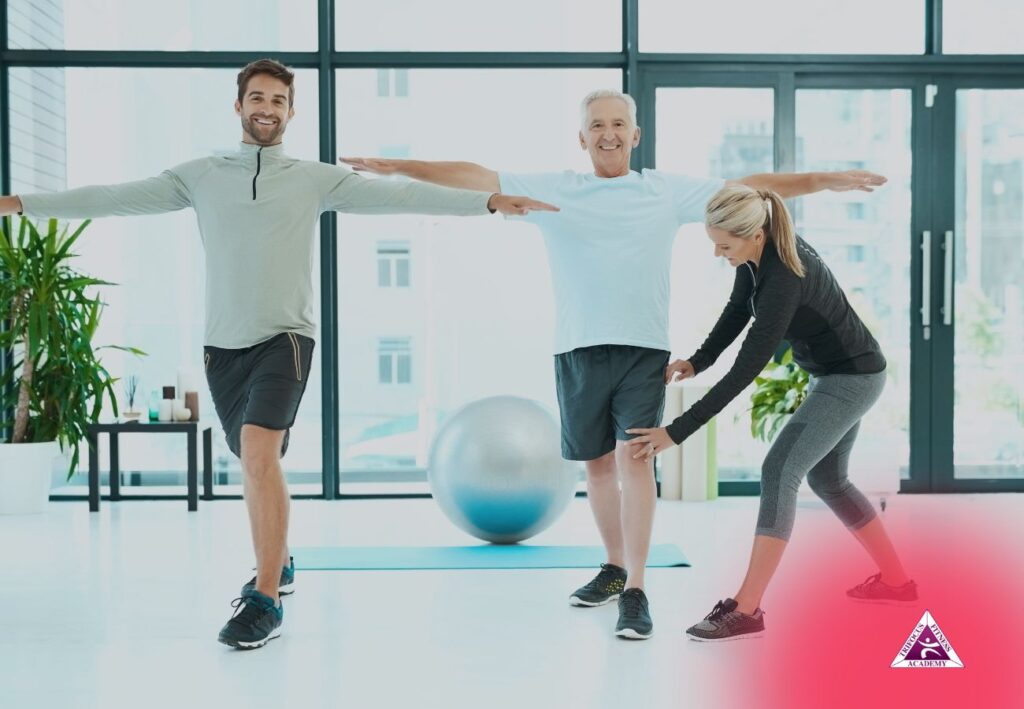
Anyone must work with a professional during rehabilitation and physical therapy following injury, illness, or surgery. Although one-on-one therapy sessions are necessary, the ongoing provision of exercise classes is a powerful and adjunctive intervention in the rehabilitative process.
Created and instructed by trained professionals, the Exercise class marries the power of healing movement with the positive influence of shared life experience and the psychological benefits of togetherness to offer an environment that encourages healing, motivates, and results in progress that lasts.
Group exercise in rehab or clinical settings can assist in strengthening, increasing flexibility and stability, and restoring function. Whether you’re recovering from orthopaedic surgery, managing a chronic condition, rehabbing from a stroke or addressing other physical concerns, Group Exercise provides the structure, support and motivation that’s often lacking for people in recovery who are on their own. It unites individuals from similar points in the adaptive process, unifying them in purpose and connection that can further drive motivation and provide generalisable resilience.
How Group Exercise Enhances the Rehabilitation Process
The recovery process is often slow and involves time, energy, and repetition to produce change. Group Exercise addresses the physical challenges of rehab and provides emotional and social support, resulting in a deeper healing experience. When done correctly, it can supplement one-on-one physical therapy and hasten a patient’s return to levels of normal function.
On the physical side, Exercise class increases strength, flexibility, coordination, and cardiovascular endurance – the four cornerstones of our rehab. These types of classes are usually clinically led protocols addressing specific conditions such as joint replacements, stroke recovery, spinal injuries and chronic pain syndromes. Movements are meant to keep it mobile and avoid complications such as muscle wasting or stiffening of the joints.
Being part of a group helps you adhere to consistency. Adherence is one of the most challenging obstacles to successful rehabilitation. As a structure and an accountability, Group Exercise is a good place to bend over backwards. When everyone knows they are supposed to show up in a group, it becomes easier to keep being there. Motivation and engagement are also positively boosted by encouragement from peers and teachers.
Intellectually, being around others keeps the mind active. Recalling a series, reacting to cues, and multitasking during movement taxes brain function. This is particularly relevant in neurologic rehabilitation, where cognitive stimulation is the treatment.
Psychologically, Group Exercise fosters emotional hardiness. Injury and sickness can cause depression, anxiety, or hopelessness. Group Exercise offers a community space where participants don’t feel alone in their recovery. You find that, surrounded by other people with similar difficulties, you gain more confidence and hope.
Types of Group Exercise Programs in Physical Therapy
The need for rehab is not all equal; therefore, Group Exercise programs need to be specific to the condition and stage of rehab. Whether inside a hospital, an outpatient setting or a community health and wellness centre, the form and type of Exercise class provided can have a material impact on the result.
Classes of Orthopaedic Rehabilitation
These are for people post op from surgeries like joint replacements, ACL repairs or spinal surgeries. The exercises focus on joint mobility, muscle conditioning, and pain alleviation. Exercise class: Unlock your potential. Patients can now do functional, everyday movements such as sit-to-stand, squats or balance exercises, assisted and supervised in a safe environment.
Neurologic Rehabilitation Protocols
Group Exercise programs focusing on neuroplasticity assist patients in stroke, Parkinson’s, and multiple sclerosis rehabilitation. They are frequently composed of dual-task activities, coordination exercises, and gait enhancement. Many of these programs incorporate cognitive tasks to help stave off functional losses in the brain and motor function.
Heart and lung rehab classes
For people who have heart disease or have had a cardiac event, meeting in a group with others to exercise takes the edge off because working out can be low-paced and progressive over time to boost the cardiovascular system. Sessions typically also include low-intensity aerobic exercise, breathing exercises and flexibility work, all monitored by a specialist to ensure safety.
Workshops for Balance and for Falls Prevention
These exercise classes are designed for senior adults and people with vestibular disturbances, which concentrate on proprioception, core strength, and reactive stepping. Students will be taught how to fix their posture, regain their balance, become distance sensitive, and be more stable in real life!
Programs for Managing Chronic Pain
These classes are comprised of low-impact aerobic exercise, gentle stretching exercises, and relaxation activities to reduce the perception of pain and increase function. Exercise class Participation in Group Fitness is intended to help patients cope with chronic pain, such as fibromyalgia or arthritis, by encouraging regular, controlled activity and offering peer support.
Each program should be customisable to include collateral exercises that accommodate various fitness levels, while meeting the rehabilitation goals of participants as they advance through the program.
Safety and Clinical Considerations in Group Exercise
When included, safety and clinical oversight of group exercise in physical therapy or rehab programs is not an option. As this approach brings together people with a variety of diagnoses, handicaps and recovery status, programs must be well planned and led by professional staff.
One of the key safety precautions is clinical screening before a participant enters a class. Mobility, cardiovascular risk profile, cognitive function, and the presence of movement restrictions should be evaluated in each person. This will help the Exercise class to be more suitable and individualised.
A therapeutic exercise qualification or the equivalent must have been completed by the instructor, along with a degree in human kinetics or physical therapy. They need to moderate the intensity of the workout, intervene with hands-on support when necessary, and spot the signs your client is pushing too hard or may be getting into trouble.
Environment matters as well. These exercise class spaces should be open spaces free of hazards and have access to adaptation equipment such as therabands, lightweights, stability balls, and chairs. Floors should be non-slip and have emergency response procedures.
Another important factor is class size. With a smaller party group, there is more observation and individual concentration. Instructors can provide instant feedback and modify movement for individuals with special needs or who have reduced mobility.
Vital signs and fatigue should be followed as well. Instructors in cardiac or pulmonary rehab might use pulse oximeters or blood pressure monitors to monitor health metrics while exercising. “Frequent breaks, pacing, and a gradual warm-up and cool-down can mitigate risk.
Creating an Effective Group Exercise Program in Rehab Settings
Developing a successful Group Exercise program for rehabilitation is more than just throwing some bodies in a room and making them move. It needs to be carefully planned for, managed, and led from a clinical perspective, with the patient at the helm focusing on safety, progress, and emotional care.
The target population must be the first step. Would class members include orthopaedic post-surgical patients, stroke survivors or individuals with chronic diseases? This is where we help shape the Exercise classes’ format, programming and intensity.
Then hire the trained teachers. The leader should ideally be a physical or occupational therapist or exercise scientist with formal training and experience in rehabilitation settings. Their expertise guarantees the exercises are safe and beneficial for the group’s specific requirements.
There should be a distinct and progressive program structure. Classes may start with light warm-ups, move to specific movement patterns (such as squats, balance work or walking training) and end with cool-downs focused on stretching and relaxation. Music, basic props, or interactive games can enhance engagement.
Tracking progress is crucial. Objective measurements, such as timed-up-and-go tests, range of motion, or pain scales, to measure improvement over time, can help track improvements and further tailor the program. 8 Those undergoing the treatment ought to be told about the stages they’re going through — it helps with morale and provides participants with hard evidence of their comebacks.
Building community also adds value. Getting participants to share milestones, partner with each other for activities, celebrate group accomplishments, trust and be trustworthy. This support structure encourages people to return and keep up the habit.
Conclusion
Group Fitness can greatly complement rehab or physical therapy, providing a safe, structured and socially stimulating environment in which healing can flourish. From orthopaedic rehabilitation to neurological rehab, chronic pain management, and cardiac conditioning, group exercise is an essential piece of the puzzle for getting people back on their feet and living the independent, active lives they were meant to.
The great thing about exercise classes in a rehab setting is that they are versatile. It accommodates a broad group of patients and conditions, and promotes accountability, motivation, and emotional health. When it becomes a shared journey — led by professionals, guided by purpose and supported by community — it enhances recovery.
Contact the Trifocus Fitness Academy
The Trifocus Fitness Academy offers specialised online and internationally accredited Group Exercise courses that have been designed to outfit professionals with all of the skills and knowledge needed to find success as a professional Group Exercise Specialist.

Frequently Asked Questions
Rehabilitation is enhanced with Group Fitness, which builds strength, mobility, flexibility and endurance in an organised and motivating atmosphere. It is an adjunct to individual physical therapy that emphasises essential movement patterns and facilitates regularity. Being in a group makes you more accountable for staying on track with your recovery plan. It also offers emotional support, decreasing a sense of isolation and increasing confidence. Group Fitness empowers people recovering from an injury, complications from surgery or a chronic condition. It allows people to heal at their own pace, alongside others in similar communities, while achieving clinical outcomes.
Yes, when trained professionals work with the population, Group Fitness is effective for people in Personal Training. Classes are often guided by certified therapists or instructors who adjust movements to an individual’s abilities and recovery phase. Workouts are intended to minimise risk and maximise benefit, and they are a series of controlled, low-impact exercises that promote recovery. This group approach also provides benefits of peer support and simultaneously adheres to safety protocols such as providing clear instructions, adaptive equipment, and supervision.
Successful rehabilitation group exercise programs include Ortho recovery classes, Neuro-rehab workouts, Cardiac and Pulmonary functioning fitness, and Chronic pain movement therapy. Each targets specific needs — for example, restoring joint mobility after surgery, improving gait after a stroke, or enhancing lung function following illness. Group Fitness formats incorporate light resistance, bodyweight, or stretching to empower and heal without exhausting the body.
Absolutely. A reciprocal Group Fitness influence is manifested in rehabilitating the patients’ mental status. Healing from an injury or illness usually entails a certain amount of physical isolation and emotional unrest. We have group settings to interact with others, to counter loneliness, and to offer mutual encouragement. The exercise routine even helps to lift spirits by releasing endorphins and creating a sense of achievement. Many participants gain emotional release from moving in tandem with others who know their struggles.
Group Exercise and individual physical therapy provide differing functions, yet are complementary. Physical therapy is based on personalised treatment plans and hands-on care for impairments. In Group Exercise, however, you get that structure and community atmosphere to develop and reinforce those skills. It fosters overall fitness, functional movement and social connectedness. Conversely, group exercise promotes persistent activity outside the clinically monitored environment, aiding the patient’s transition from rehabilitation to lifelong activity.
Also available on Groupon, anyone in rehab for injuries, surgeries, or chronic conditions should take Group Exercise. This also covers those who are healing from joint replacement, neurologic events such as stroke, heart disease, respiratory diseases, and pain syndromes. Group exercise is also perfect for older adults concerned with balance or fall prevention. Since certified instructors teach these classes and can be modified for various fitness levels, they are accessible and safe for many people.