
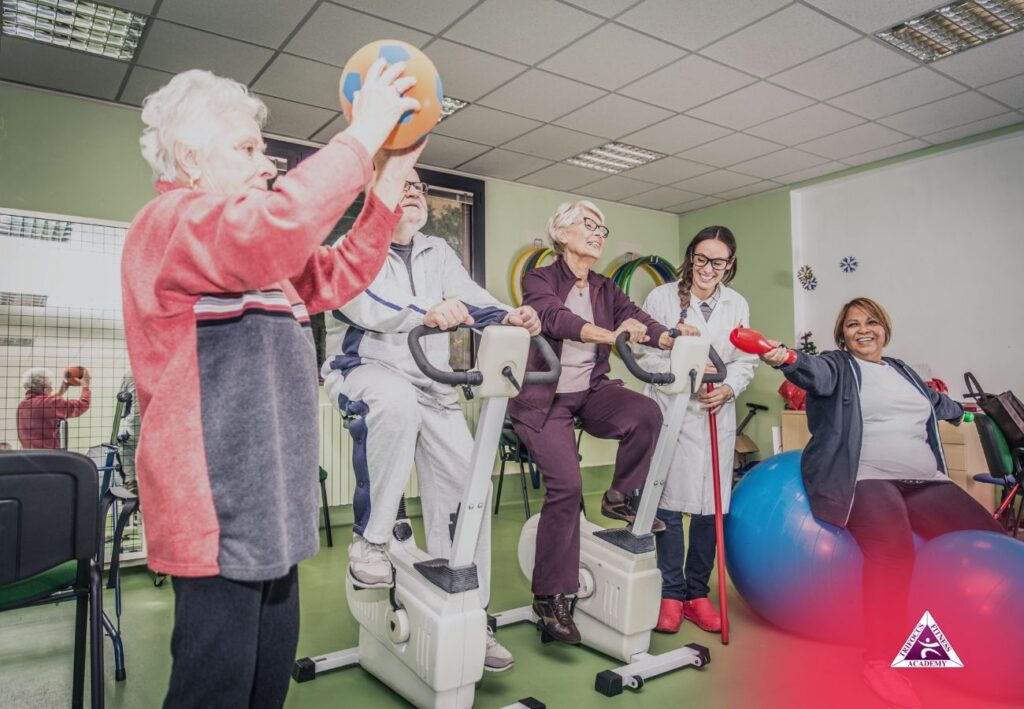
Regarding health and fitness, not everything fits everyone, especially people with physical, medical, or emotional concerns. For this reason, Group Fitness for special populations has blossomed into a dynamic, all-inclusive way of participating in physical activity.
Special populations, such as individuals with disabilities, chronic diseases, older adults, pregnant women, and other groups, also may need specific modifications to exercise safely and effectively. Group Fitness fosters a welcoming, non-intimidating environment where everyone feels as if they are “in this together,” and are supported, embraced and inspired.
Unlike general fitness classes, special populations Group Fitness programs are designed explicitly for ability level, medical and safety issues in mind. Most of these classes are taught by adaptive or therapeutic exercise instructors, and the moves are tailored to what each participant can comfortably do. Whether from a chair or the floor, to balance drills and adaptive yoga, Group Exercise gets you moving.
The Role of Group Exercise in Inclusive Fitness
Group Exercise is essential for making fitness accessible to those with varying health issues, mobility challenges, or neurodevelopmental disorders. Traditional gym settings may feel intimidating, alienating, or even impossible for specific populations. Group Exercise fills that void by providing a no-judgment space, where modifications are the standard, and everyone is encouraged to meet their unique goals.
At the core of an inclusive Group Fitness offering is accessibility. That means modifying exercises for different skills, providing both seated and standing options, incorporating assistive devices, and even creating spaces conducive to moving through with a mobility device. It also features sensory-friendly spaces for those who are autistic or have cognitive-associated conditions that may find loud noises or challenging routines too much.
A second, critical way Group Fitness serves is in community development. People in special groups often have the same social obstacles but fewer chances to form connections. In group classes, there is a sense of camaraderie, reduced isolation, and shared achievements. The power of the group allows for accountability, motivation and emotional uplift that solo workouts tend to lack.
Group Exercise also offers a controlled, supervised environment where individuals are guided by certified instructors who know how to meet their limitations. For instance, an instructor well-versed in working with older adults can show you how to keep your joints healthy, reduce the risk of falling, and safely increase your flexibility. Likewise, an instructor who has trained a student with a neurological condition like Parkinson’s or MS recognises the value of stability and neuromuscular control.
Types of Group Exercise Programs for Special Populations
Group Exercise for special populations isn’t a single format; it’s a variety of programming that meets people at their stage. These are carefully crafted for that mission; to address what is needed simultaneously, enable joy, energy, and structure of community-based movement.
Adaptive Exercising for People with Disabilities
Group Exercise classes are accessible to individuals with physical, cognitive or developmental disabilities. Workouts may include seated aerobics, resistance band training, cardio for people in wheelchairs, or aquatic therapy. Teachers provide simple instructions and may use pictures or objects to make them more engaging.
Senior Fall Prevention and Fitness Programs
As we age, it becomes more and more essential to keep strong, flexible, and balanced. Group Fitness for older adults must be a functional, mobility, and bone density workout with good posture. Exercises could encompass tai chi, chair yoga, low-impact aerobics and gentle strength training with light weights or bands. These exercises are combined with floor-based fall prevention exercises and cognitive challenges.
Group Classes: Prenatal and Postnatal Exercise
For both prenatal and postpartum moms, Group Fitness is ideal for managing symptoms and preparing for childbirth and recovery. They’re created with modifications for your current trimester, focus on pelvic floor health and often feature baby-friendly postnatal templates.
Patients with chronic disease perform group exercise.
People who are struggling with ongoing conditions (for example, chronic back pain, diabetes, arthritis, MS, or heart disease) also benefit from targeted exercise. These courses usually involve low-impact activity, stretching, and movement to work on endurance, which can be adjusted to fatigue/pain/ limited mobility. Having that group dynamic also holds you accountable while giving you some emotional support.
Neuroadaptive Gym Classes
For people with diseases like Parkinson’s or conditions like stroke and traumatic brain injury, these Group Exercise sessions are focused on neuroplasticity, coordination, and dual-task training. Boxing, rhythmic movements and circuit-based routines are popular ones.
The key to all these programs’ successful results lies in personalised programming and inclusivity, making each participant feel capable, supported, and celebrated.
Modifying Group Exercise for Safety and Effectiveness
Safety and adaptation are key factors in any successful Group Exercise program for special populations. Participants may experience various physical, cognitive or sensory issues, so instructors must tailor sessions sensitively, but always maintain a positive and inclusive group atmosphere.
And the first step is the pre-screen test. Prospective Group Exercise class members are usually screened for medical history, mobility status, risk of heart attacks, and special condition considerations. This gives the trainer an idea of how to plan accordingly and can safely track the development.
The answer in class is change. There should be various ways to perform movements—seated, assisted, and with minimal resistance. For instance, a balance drill may be accomplished while standing with stability, sitting on a chair or a stability ball. While drawing makes them available, visual modelling, tactile cues and slower tempos help make them accessible, particularly to those with cognitive impairments.
Equipment needs to be adopted and user-friendly. Resistance bands, little hand weights, stability balls, foam blocks — these provide options for folks but don’t make them feel swamped. Sensory-sensitive groups need to consider music volume, lighting and room set-up.
Fatigue and vital signs should be checked as another element of safety. Some people participating in the race might tire sooner because of their condition. However, instructors can build in water breaks, start with an easy warm-up and end with a slow cool-down, and do verbal and visual check-ins to understand how class members feel.
Social, Emotional, and Psychological Benefits of Group Exercise
Group Fitness delivers more than just physical benefits but profound emotional and mental benefits — particularly for “special populations” that may endure feelings of isolation, discrimination or little social contact. These group sessions can be a lifeline for mental health and overall joy.
The social aspect of Group Fitness is essential. Given the debilitating nature of chronic illness, disability, and age-related impairment, individuals living with these conditions may face challenges in finding opportunities for fulfilling communication. A little encouragement and togetherness from Group Exercise. It allows participants to forge relationships, celebrate progress and feel part of a collective experience, thus staving off loneliness and maintaining morale.
Psychological: It improves self-esteem and self-confidence. Finishing a workout, nailing a new movement or just showing up frequently may lead to a sense of accomplishment. This independence often carries over into more participation in life.
Group Exercise also offers emotional regulation. The form, function, and release of endorphins that you obtain from your workouts aid in decreasing anxiety and depression. Participants can physically and emotionally express themselves in this secure, non-competitive environment without worrying about condemnation.
For those with developmental disabilities or cognitive impairments, Group Exercise may also contribute to behavioural change and improved attention span. It’s an energy release, an outlet for expression, a way to practice the art of listening, and interacting with others in a social environment.
Conclusion
Group Fitness for special populations is about more than fitness: equality, connection, and empowerment. By modifying movement to accommodate the range of individual ability within those at risk due to physical, cognitive, and emotional challenges, Group Fitness makes health and wellness accessible, relevant, and inclusive.
The benefits for participants are profound. On a physical level, Group exercise promotes ease of movement, strength, stability, and flexibility. Emotionally, it is a confidence builder and eases isolation. Psychically: it makes way for expression, accomplishment, and joy. This multi-dimensional effect makes Group Fitness the fastest-growing component of adaptive and rehabilitative fitness.
Contact the Trifocus Fitness Academy
The Trifocus Fitness Academy offers specialised online and internationally accredited Group Exercise courses that have been designed to outfit professionals with all of the skills and knowledge needed to find success as a professional Group Exercise Specialist.

Frequently Asked Questions
Special Populations Group Fitness is a fitness class designed for people with special needs, such as seniors, individuals with disabilities, chronic health issues, extreme obesity or other significant neurological conditions. Classes are designed to be safe, accessible, and to support personal growth, with modifications provided to suit a student’s level. Group fitness offers functional strength, mobility and endurance training, allowing participants to remain active and socially engaged regardless of age or fitness levels.
Group Exercise Special Populations Several populations of people benefit from Group Exercise. Among these are seniors, individuals with chronic medical conditions, with physical or cognitive limitations, and pregnant and postpartum women, as well as those requiring neurological rehabilitation. Group Fitness is a safe and structured way to move and exercise under a certified fitness professional’s guidance and move toward better health. In addition to physical development, the participants enjoy emotional connection and interaction with other people.
There are Special Population-focused Group Fitness classes available. These vary from chair-based aerobics for people with mobility limitations, adaptive yoga and tai chi for balance and relaxation, senior strength and fall prevention programs, to programs for those suffering from various chronic conditions such as arthritis or heart disease. Other formats feature neuroadaptive training for Parkinson’s and stroke recovery, or prenatal and postnatal group classes to support safe movement during and after pregnancy. Every class is adapted for safety and comfort, so you can move in a way that builds strength, confidence and community.
“Group Exercise is also flexible, so we don’t leave anyone out either – we’re great at modifying or cueing to a seated option, reduced intensity or simple equipment like a resistance band or lightweight.” They could have visual prompts for hearing difficulties or be slower for those with cognitive impairments. Pre-class questionnaires help teachers understand participants’ physical restrictions, medical problems and reasons for attending. Adjustments are made for safety and effective movement.
Yes, Group Exercise is safe for people with a disability or a chronic condition, if properly trained professionals lead classes. The teachers are trained to tailor the exercises to the needs of different participants with any physical, sensory, or cognitive limitations by adapting exercises and supervising the participants closely. Sessions are floor-based (standing or sitting), and programmed to be gentle and adaptable, focusing on safety, function and injury prevention. Whether you have arthritis, are disabled in some way, have heart disease, or suffer from a neurological disease, you benefit from organised, supported movement.
Group fitness has significant emotional benefits for special populations. It creates connection, diminishes feelings of isolation, and provides a space where participants feel visible and safe. The team structure instils a sense of belonging and allows people to develop self-esteem through shared success. When you exercise regularly, you’re making it easier to tap into the release of endorphins, and you’re also giving yourself something you can count on each week as added structure and routine. For those with disabilities, chronic illness, and age-related difficulties, Group Fitness can provide a sense of independence, togetherness and an uplifting boost to mental health.